Can’t Afford Insurance Deductible?
Discover practical steps and options when facing inability to cover your insurance deductible, from payment plans to financial aid programs.

Insurance deductibles represent the initial out-of-pocket expense policyholders must cover before their provider contributes to claims. When financial constraints prevent payment, various outcomes and remedies exist across health, auto, and home insurance sectors. Understanding these dynamics helps mitigate risks like claim denials or policy lapses.
Defining Deductibles Across Insurance Types
Deductibles function as a cost-sharing mechanism, requiring insured individuals to pay a predetermined amount from their own funds for covered losses or services. In health insurance, for instance, a $1,500 deductible means covering 100% of eligible expenses until reaching that threshold, after which coinsurance applies.
Auto and homeowners policies often use fixed dollar amounts or percentages. A $500 auto deductible on a $10,000 claim yields a $9,500 payout from the insurer. Percentage deductibles in property insurance, such as 2% of a $100,000 home value, equate to $2,000 subtracted from claims.
| Insurance Type | Typical Deductible Range | Example Impact |
|---|---|---|
| Health | $1,000–$5,000 annually | Pay full costs until met; then coinsurance (e.g., 20%). |
| Auto | $200–$1,000 per claim | $500 deductible on $5,000 repair = $4,500 insurer payment. |
| Homeowners | $500–$2,500 or 1–5% | 2% on $200,000 home = $4,000 out-of-pocket. |
These structures encourage responsible usage while keeping premiums manageable. Higher deductibles typically lower monthly costs, suiting low-claim filers.
Immediate Consequences of Non-Payment
Failing to pay a deductible halts claim processing. Insurers withhold coverage until the amount is settled, leaving individuals responsible for full repair or medical bills. In health scenarios, this delays treatments or results in personal debt for services rendered.
- Claim denial or suspension until payment.
- Accumulation of provider bills, potentially leading to collections.
- No impact on credit from the insurer directly, but unpaid medical debts over $500 may appear after 180 days.
Policy cancellation risks arise if non-payment patterns emerge, though single incidents rarely trigger this. Out-of-pocket maximums cap total annual exposure post-deductible.
Negotiation Strategies with Providers and Insurers
Proactive communication opens doors to flexible arrangements. Many hospitals and repair shops offer interest-free payment plans for deductibles, spreading costs over months.
Insurers may advance deductible payments via loans, repayable from claim proceeds, or defer until settlement. Requesting billing adjustments or financial hardship discounts proves effective, especially with proof of income constraints.
- Contact insurer promptly post-claim.
- Provide financial documentation (pay stubs, bank statements).
- Explore in-network providers for lower negotiated rates.
Health plans often exclude preventive services from deductibles, covering them fully regardless.
Financial Assistance and Government Programs
Low-income qualifiers access state aid, charity care, or hospital indigent programs reducing or waiving deductibles. Medicaid expansions cover eligible adults, bypassing private deductibles.
Health Savings Accounts (HSAs) paired with high-deductible plans allow tax-free savings for such expenses. Employer-sponsored plans sometimes subsidize deductibles via HRAs.
For auto/home, state insurance departments oversee fairness; complaints can prompt reviews. Non-profits like modafinil offer claim assistance grants in disasters.
Long-Term Alternatives to Avoid Future Issues
Opting for lower deductibles raises premiums but ensures affordability during claims. Budgeting via emergency funds or increasing savings targets prevents recurrence.
Review policies annually: Progressive notes high-deductible plans suit infrequent claimants, saving on premiums. Shopping comparatives via agents reveals better fits.
| Option | Pros | Cons |
|---|---|---|
| Lower Deductible | Reduced upfront costs | Higher premiums |
| HSA/High-Deductible Plan | Tax advantages, lower premiums | Large initial outlay needed |
| Payment Plans | No interest, manageable monthly | Extended repayment period |
Health Insurance Specifics: Copays and Coinsurance
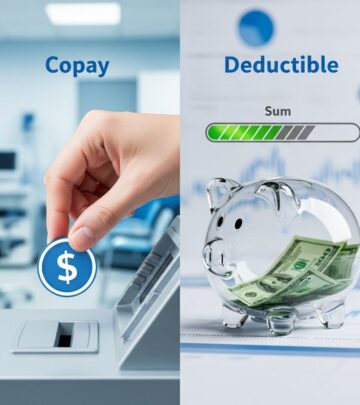
Beyond deductibles, copays (fixed fees, e.g., $30/visit) and coinsurance (percentage, e.g., 20%) apply. Copays often count toward out-of-pocket max but not always deductibles.
Example: $3,000 deductible met, then 20% coinsurance on $10,000 bill = $2,000 more out-of-pocket until max hit, insurer covers rest.
Auto and Property Insurance Ramifications
Unpaid auto deductibles delay vehicle fixes, risking safety and legal issues like inspections. Home repairs left pending exacerbate damage.
Raising deductibles from $200 to $1,000 cuts premiums significantly, per III data.
Preventive Measures and Policy Optimization
Build cash reserves equal to one year’s deductible. Utilize wellness incentives waiving copays. Multi-policy bundling discounts overall costs.
Track expenses via apps to monitor progress toward deductible fulfillment.
Frequently Asked Questions
Does unpaid deductible affect credit score?
Directly from insurer, no. But provider debts sent to collections can, after 180 days for medical over $500.
Can I skip paying deductible?
No; claims remain unpaid, shifting full burden to you.
Do copays apply before deductible?
Typically no; some plans charge them while accruing toward deductible.
What’s out-of-pocket maximum?
Annual cap on your spending; deductible/coinsurance count toward it.
Are there deductible waivers?
Rare; some for preventive care or catastrophes, check policy.
This comprehensive guide equips you to handle deductible shortfalls effectively, preserving coverage and financial stability.
References
- How do deductibles, coinsurance and copays work? — Blue Cross Blue Shield of Michigan. 2025. https://www.bcbsm.com/individuals/help/how-health-insurance-works/deductibles-coinsurance-copays/
- Understanding your insurance deductibles — Insurance Information Institute. 2025. https://www.iii.org/article/understanding-your-insurance-deductibles
- Health insurance deductibles — Blue Cross NC. 2025. https://www.bluecrossnc.com/members/knowledge-center/what-is-a-deductible
- How Your Medical Benefits Work: What Is A Deductible? — HOP Benefits. 2025. https://www.hopbenefits.com/how-your-medical-benefits-work-what-is-a-deductible/
- What Is an Insurance Deductible? — Progressive. 2025. https://www.progressive.com/answers/what-is-insurance-deductible/
- What’s the Difference Between a Deductible vs Copay? — MetLife. 2025. https://www.metlife.com/stories/benefits/deductible-vs-copay/
Similar Articles








Read full bio of medha deb