Skip the Canned Food Aisle. Here’s How to Start Canning at Home
Learn how to can your own food at home to save money, reduce waste, and enjoy fresh produce year-round with our beginner's guide.
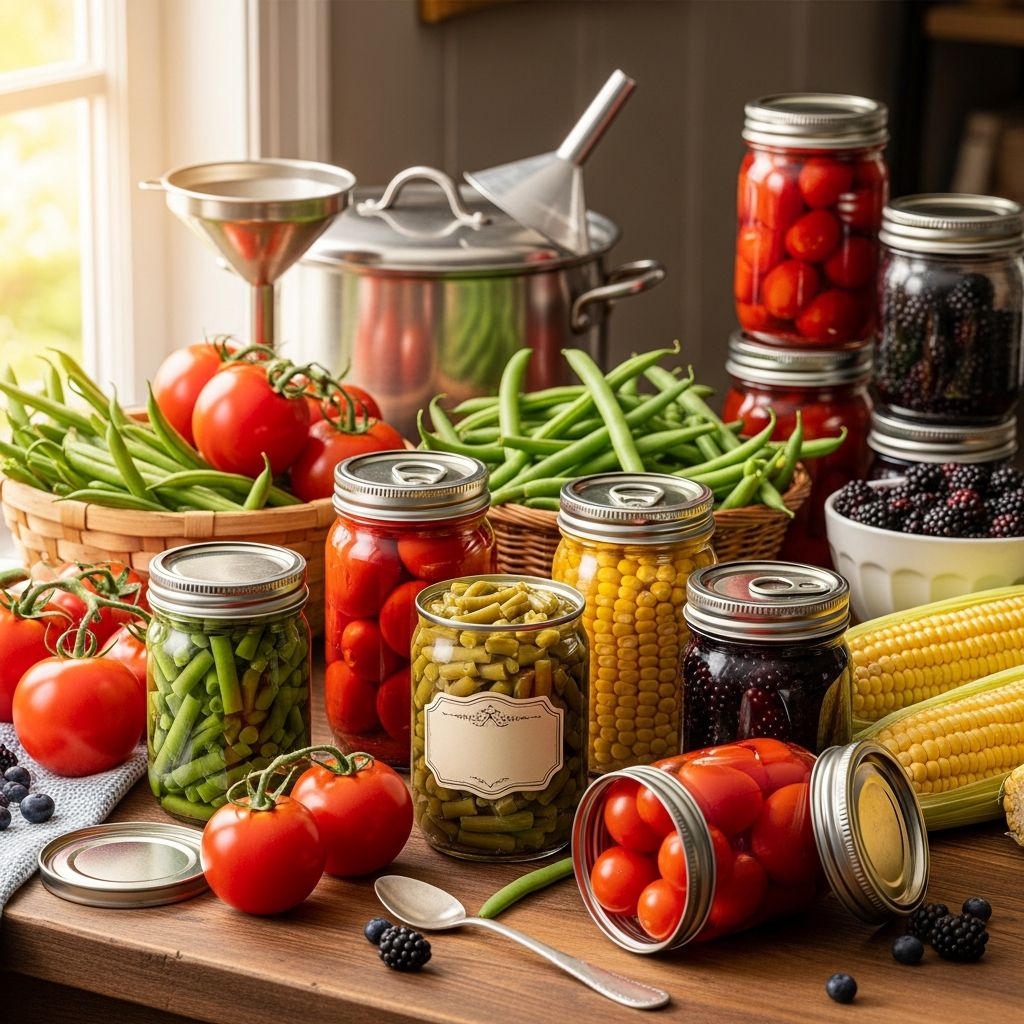
Canning food is a time-honored preservation method that seals fresh produce, meats, and meals into shelf-stable jars lasting a year or more, helping households slash grocery bills and combat food waste.
With rising food prices, home canning empowers you to stock your pantry with nutritious, custom-preserved goods at a fraction of store-bought costs. Whether from your garden, farmers’ markets, or grocery sales, canning turns surplus into savings.
What Is Canning?
Canning involves heating filled jars to eliminate bacteria, then sealing them under vacuum pressure for long-term storage without refrigeration. This process creates an airtight environment where harmful microbes cannot survive.
Originating in the early 19th century, modern home canning uses tested recipes from authoritative sources like the USDA to ensure safety. It preserves flavor, nutrients, and color better than freezing for many items.
Why Can Your Own Food?
- Cost Savings: A single quart of home-canned pickles costs under $2 in ingredients versus $8+ at stores, with upfront equipment paying off after one season.
- Food Security: Stock a year’s supply of staples like beans, sauces, and fruits, providing peace of mind during shortages or price spikes.
- Customization: Control ingredients—no additives, all organic if desired—and tailor flavors to your taste.
- Waste Reduction: Preserve garden gluts or sale produce, extending usability far beyond fresh shelf life.
- Quality: Fresher taste and higher nutrition compared to mass-produced cans.
Equipment You’ll Need
Starting canning requires a modest investment in durable tools that last decades. Initial costs range from $50-$300 depending on methods.
| Item | Purpose | Cost Estimate | Notes |
|---|---|---|---|
| Mason Jars (pints/quarts) | Hold food | $12-18 per dozen | Reusable; buy cases annually for breakage |
| Lids & Rings | Seal jars | $5-10 per dozen | Lids single-use; rings reusable |
| Water Bath Canner | High-acid foods | $30-50 | Large pot with rack |
| Pressure Canner | Low-acid foods | $200-400 | Essential for veggies, meats; lasts lifetime |
| Jar Lifter, Funnel, Bubble Remover | Safe handling | $20 kit | Prevents burns, ensures proper seals |
Opt for All-American pressure canners for reliability on various stoves, including glass tops if manufacturer-approved. Jars and canners are built to endure generations with proper care.
Water Bath Canning vs. Pressure Canning
Choose the method based on food acidity: pH above 4.6 requires pressure to kill botulism spores.
- Water Bath Canning: Submerge jars in boiling water (212°F). Safe for high-acid foods like fruits, pickles, jams. Simple, low-cost entry point.
- Pressure Canning: Uses 10-15 PSI steam heat (240-250°F). Mandatory for low-acid items: vegetables, meats, soups, meals. Weighted gauge models preferred for precision.
Always follow USDA altitude adjustments: add processing time above 1,000 feet.
Safe Canning Practices
Botulism risk demands strict adherence to tested recipes from USDA or National Center for Home Food Preservation (NCHFP). Key rules:
- Use only approved recipes—do not alter proportions.
- Sterilize jars by boiling 10 minutes.
- Fill hot, leave 1/2-inch headspace, remove air bubbles, wipe rims clean.
- Process exact times; cool undisturbed 12-24 hours.
- Check seals: lids should not flex. Refrigerate unsealed jars.
- Store in cool, dark place; inspect for spoilage before use.
Common errors: insufficient headspace, old lids, or pressure fluctuations on incompatible stoves.
Best Foods for Beginners
Start with forgiving high-acid items before low-acid challenges.
- Fruits: Peaches, apples, berries—easy water bath.
- Pickles: Cucumbers into dills or bread-and-butter; massive savings from garden surplus.
- Jams/Jellies:
- Tomatoes: Crush for sauce (add lemon juice for acidity).
- Low-Acid: Green beans, potatoes, chicken—pressure only.
Strawberries, grapes; pectin sets sweetness.
Grocery store produce works if fresh; prioritize sales for ROI.
Simple Beginner Recipes
Bread and Butter Pickles (Water Bath, Yields 4 Pints)
- Slice 4 lbs cucumbers, 4 onions; salt 2 hours, rinse.
- Boil vinegar, sugar, mustard seeds, turmeric, celery seeds.
- Pack hot into jars, process 10 minutes.
- Cost: ~$1.50/pint vs. $4+ store.
Green Beans (Pressure, Yields 7 Quarts)
- Pack raw trimmed beans into jars, add salt.
- Fill with boiling water, 1-inch headspace.
- Process pints 20 min, quarts 25 min at 11 PSI (dial) or 10 PSI (weighted).
- Savings: $2/quart vs. $5+ canned.
Spaghetti Sauce (Pressure, Yields 7 Quarts)
Combine crushed tomatoes, onions, garlic, herbs; pressure 20 min. Custom flavors beat store jars costing $8/quart.
Cost Comparison: Home Canning vs. Store-Bought
| Item | Home Cost (per Quart) | Store Cost | Savings |
|---|---|---|---|
| Bread & Butter Pickles | $1-2 | $8-15 | 75-90% |
| Green Beans | $1.50 | $5+ | 70% |
| Chicken Stock | $2 | $6-10 | 67% |
| Spaghetti Sauce | $3 | $8 | 63% |
| Peaches | $2.50 | $7 | 64% |
After $250-400 initial setup, annual costs drop to $100 for lids/jars. A year’s pantry (50-100 jars) saves $500+.
Tips for Success
- Buy in bulk during peak season; grow your own for max savings.
- Batch process weekly to avoid burnout.
- Label jars with contents/date.
- Join forums for troubleshooting, but stick to official guidelines.
- Reuse rings; compost failed seals.
- For glass-top stoves, verify canner compatibility.
Integrate with waste reduction: can excess before spoilage, like overripe fruits.
Frequently Asked Questions (FAQs)
What is the safest way to start canning?
Begin with water bath for high-acid foods using USDA recipes. Invest in a quality pressure canner for expansion.
Does home canning really save money?
Yes—significant after year one. Pickles save 75-90%, meats 60%+ per jar.
Water bath or pressure canner first?
Water bath for fruits/pickles; pressure for all else to ensure safety.
How long does canned food last?
1-2 years at peak quality; safe longer if seals intact and stored properly.
Can I can on a glass stovetop?
Yes, if manufacturer confirms it handles canning weight/heat; test with water batches.
What if a jar doesn’t seal?
Refrigerate and use within a week; check for chips or debris on rim next time.
References
- Complete Guide to Home Canning — National Center for Home Food Preservation (NCHFP), University of Georgia. 2023-09-01. https://nchfp.uga.edu/publications/publications_usda.html
- United States Standards for Grades of Canned Foods — United States Department of Agriculture (USDA). 2024-01-15. https://www.fsis.usda.gov/food-safety/safe-food-handling-and-preparation/food-safety-basics/home-canning
- Buying An All American 30 Quart Pressure Canner — NW Edible. 2022-06-10. https://nwedible.com/buying-an-all-american-30-quart-pressure-canner-the-good-the-bad-and-the-ugly/
- Complete Guide to Pressure Canning — USDA Food Safety and Inspection Service. 2025-03-20. https://www.fsis.usda.gov/food-safety/safe-food-handling-and-preparation/home-food-preservation/home-canning
- Food Waste Reduction Guidelines — USDA Economic Research Service. 2024-11-05. https://www.ers.usda.gov/topics/food-markets-prices/food-waste-loss/
Similar Articles








Read full bio of Sneha Tete