Candlestick Patterns Guide: Key Patterns And Trading Tips
Master candlestick patterns to decode market trends and boost your trading decisions with proven strategies.
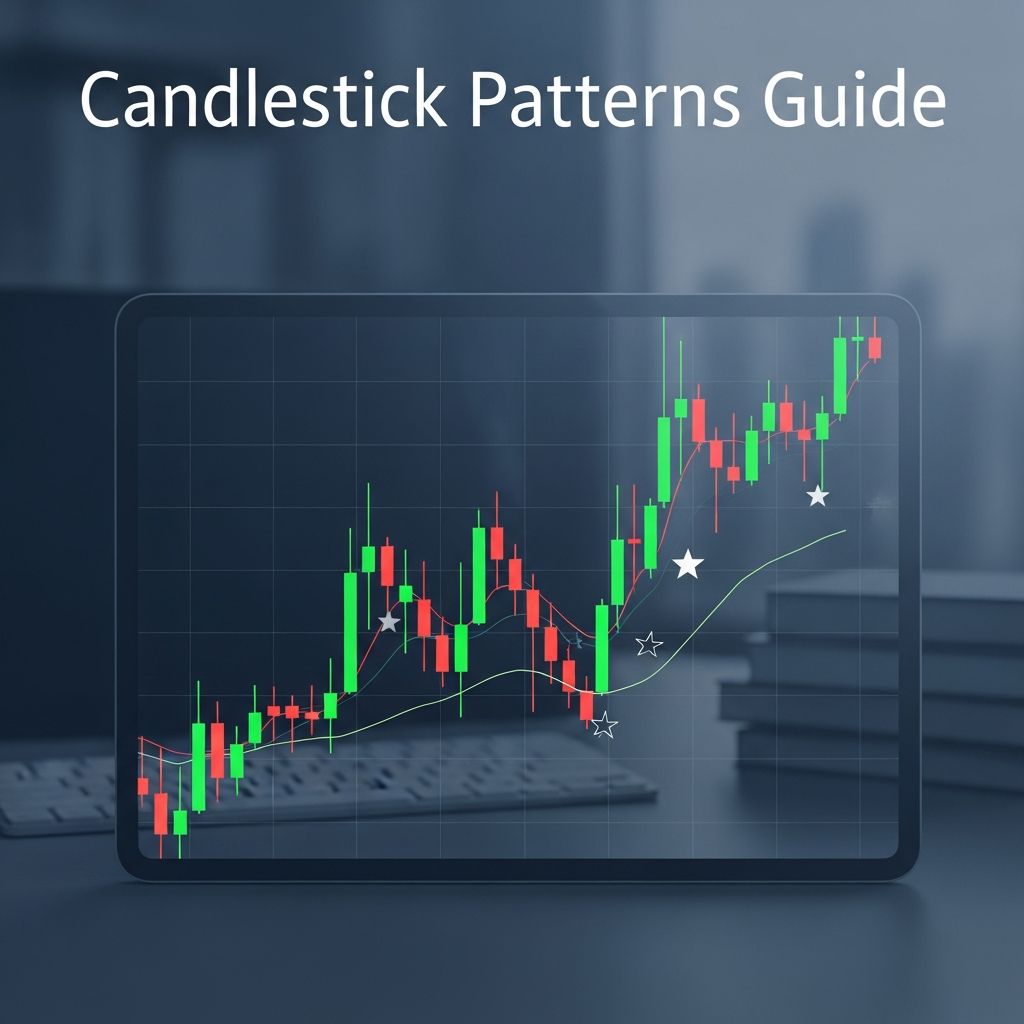
Candlestick patterns offer traders a visual method to interpret price action and predict potential market directions. Originating from 18th-century Japanese rice traders, these charts display open, high, low, and close prices within specific time frames, helping identify shifts in buyer and seller dynamics.
Understanding Candlestick Anatomy
Each candlestick consists of a rectangular body and thin lines called shadows or wicks. The body shows the range between opening and closing prices. A green or white body indicates the close was higher than the open, signaling bullish momentum. A red or black body means the close was lower, pointing to bearish pressure.
The upper shadow extends from the body top to the session’s highest price, while the lower shadow reaches the lowest price. Long shadows suggest price rejection: an upper shadow shows sellers overpowering buyers at highs, and a lower shadow indicates buyers defending lows.
- Body size: Wide bodies reflect strong directional moves; narrow ones show indecision.
- Shadow length: Long shadows denote volatility and rejection.
- Color: Green for upward closes, red for downward.
Why Candlestick Patterns Matter in Trading
These patterns reveal market psychology, where repeated formations signal probable outcomes. Single, dual, or multi-candle setups predict reversals or continuations, especially at support/resistance levels. Traders combine them with volume and trends for confirmation, reducing false signals.
In intraday, options, or futures trading, patterns help time entries and exits. For instance, they highlight exhaustion after trends, aiding risk management.
Key Bullish Reversal Patterns
Bullish patterns emerge at downtrend bottoms, suggesting upward shifts as buying intensifies.
Hammer and Inverted Hammer
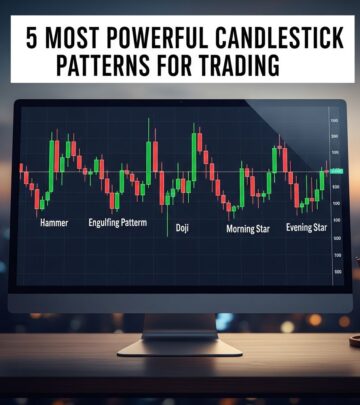
The hammer features a small upper body and long lower shadow, appearing after declines. It shows sellers drove prices low, but buyers repelled them, closing near the open. A green body strengthens the signal.
The inverted hammer has a small body with a long upper shadow. Buyers pushed prices up, but sellers rejected higher levels, yet the close near open hints at building support.
Engulfing and Piercing Patterns
Bullish engulfing involves a small red candle followed by a larger green one fully covering the prior body. It signals buyers overwhelming sellers post-downtrend.
Piercing line shows a long red candle then a green one opening lower but closing above the first’s midpoint, indicating buying strength.
Multi-Candle Bullish Formations
Morning star is a three-candle setup: long red, small-bodied gapped candle (indecision), then long green gapping up. It marks selling exhaustion.
Three white soldiers display three consecutive green candles with higher opens and closes, small shadows, confirming sustained buying after downturns.
Essential Bearish Reversal Patterns
Bearish patterns form at uptrend tops, warning of downward turns as selling dominates.
Hanging Man and Shooting Star
Hanging man mirrors hammer shape but at peaks: small body, long lower shadow. It suggests buyers failed to hold gains amid selling.
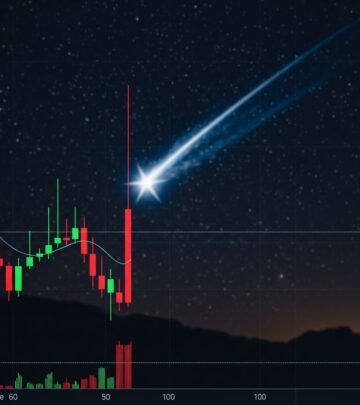
Shooting star has a small body and long upper shadow after advances, with sellers rejecting highs.
Bearish Engulfing and Dark Cloud Cover
Bearish engulfing features a small green candle engulfed by a larger red one, showing seller takeover.
Dark cloud cover resembles piercing line inversely: long green followed by red opening higher but closing below the prior midpoint.
Three Black Crows
This three-candle bearish pattern has consecutive long red bodies with lower closes, short shadows, signaling persistent selling after uptrends.
Continuation Patterns for Trend Confirmation
Not all patterns reverse trends; some affirm ongoing momentum.
Harami Patterns
Bullish harami: large red candle followed by small green inside it, hinting at pause in downtrends.
Bearish harami: large green then small red within, suggesting uptrend weakening.
Falling and Rising Three Methods
Falling three methods (bearish): long red, three small green inside its range, then another red, confirming downtrend.
Rising three methods (bullish): long green, three small red, then green, sustaining uptrend.
Comparing Popular Patterns
| Pattern | Candles | Context | Signal |
|---|---|---|---|
| Hammer | 1 | Downtrend bottom | Bullish reversal |
| Shooting Star | 1 | Uptrend top | Bearish reversal |
| Bullish Engulfing | 2 | Downtrend | Bullish reversal |
| Bearish Engulfing | 2 | Uptrend | Bearish reversal |
| Morning Star | 3 | Downtrend | Bullish reversal |
| Three Black Crows | 3 | Uptrend | Bearish reversal |
Trading Strategies with Candlesticks
Confirm patterns with volume spikes, support levels, or indicators like RSI. Enter trades post-confirmation candle; set stops below pattern lows for longs, above highs for shorts.
Backtest on platforms like NinjaTrader for reliability. Use multiple timeframes: daily for swings, intraday for scalps.
- Wait for next candle close to validate.
- Risk 1-2% per trade.
- Combine with moving averages.
Common Mistakes to Avoid
- Trading without context: Patterns alone fail; check trends.
- Ignoring volume: Low-volume signals weaken.
- Overtrading minor patterns: Prioritize strong ones like engulfing.
- No stop-losses: Always protect capital.
Advanced Tips for 2026 Traders
With AI tools and high-frequency trading, patterns evolve. Focus on liquidity zones and news catalysts. Practice on demos before live markets.
Frequently Asked Questions
What is the most reliable candlestick pattern?
Engulfing patterns often prove strongest with volume confirmation, but none guarantee success—use confluence.
How do I read candlesticks for beginners?
Start with body color for direction, shadows for rejection, then study patterns in trending markets.
Are candlesticks useful for day trading?
Yes, on 5-15 minute charts for quick signals in volatile assets like futures.
Do candlesticks work in all markets?
Effective in stocks, forex, crypto; best in liquid markets with volume data.
Should I use candlesticks alone?
No—pair with fundamentals, trends, and risk management for better odds.
References
- How to Read Candlestick Charts for Intraday, F&O and Trading — Groww. 2023. https://groww.in/blog/how-to-read-candlestick-charts
- Trading with Candlestick Patterns — NinjaTrader. 2024. https://ninjatrader.com/futures/blogs/trading-with-candlestick-patterns/
- 16 Candlestick Patterns Every Trader Should Know — IG International. 2023. https://www.ig.com/en/trading-strategies/16-candlestick-patterns-every-trader-should-know-180615
- How To Trade Candlestick Patterns Like A Pro — Tradeciety. 2024. https://tradeciety.com/how-to-trade-candlestick-patterns-like-a-pro
- Candlestick Patterns: The Updated Complete Guide (2025) — Morpher. 2025. https://www.morpher.com/blog/candlestick-patterns
Similar Articles








Read full bio of Sneha Tete