Candlestick Charting: What Is It and How to Use It
Master candlestick charts to identify trends and make informed trading decisions.
Introduction to Candlestick Charts
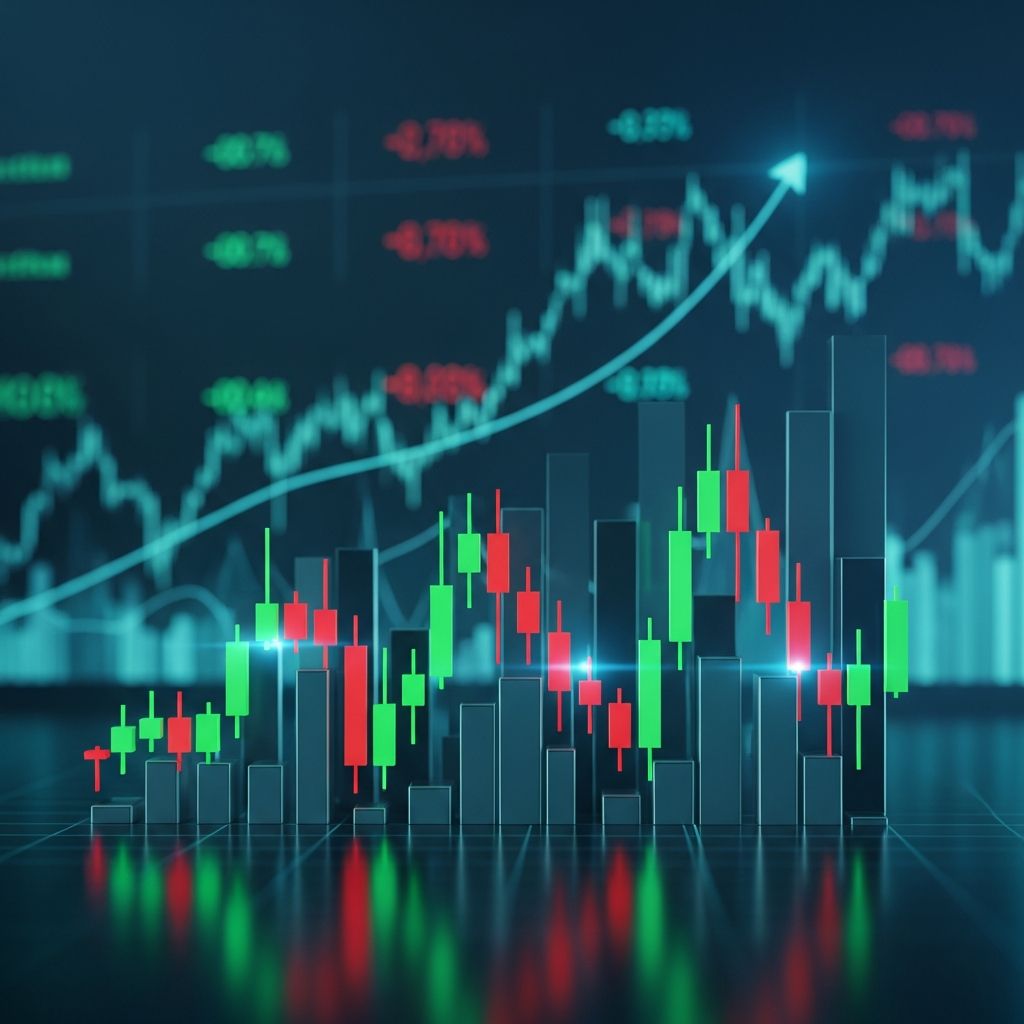
Candlestick charts are one of the most popular and effective tools used by traders and investors worldwide to analyze market prices and predict future movements. Originally developed in Japan during the 18th century for rice trading, candlestick charts have become a fundamental component of modern technical analysis. They display price movements in a visually intuitive way that makes it easier to identify trends, support and resistance levels, and potential trading opportunities compared to traditional line or bar charts.
The primary advantage of candlestick charts is their ability to show the relationship between opening, closing, high, and low prices within a specific time period. This comprehensive price information allows traders to quickly assess market sentiment and make more informed trading decisions. Whether you’re a day trader, swing trader, or long-term investor, understanding how to read and interpret candlestick charts is an essential skill for success in the financial markets.
The Anatomy of a Candlestick
Each candlestick represents price movement during a specific time period, which could range from one minute to one month, depending on the chart timeframe selected. Understanding the basic components of a candlestick is crucial for effective technical analysis.
Key Components of a Candlestick:
- Body (Real Body): The rectangular portion of the candlestick that represents the opening and closing prices. The body fills the space between these two price levels.
- Wick (Shadow or Tail): The thin lines extending above and below the body that represent the highest and lowest prices reached during the time period.
- Opening Price: The first price at which an asset traded during the time period represented by the candlestick.
- Closing Price: The final price at which an asset traded during the time period.
- High (Upper Shadow): The highest price reached during the time period, shown by the top of the upper wick.
- Low (Lower Shadow): The lowest price reached during the time period, shown by the bottom of the lower wick.
Understanding Bullish and Bearish Candlesticks
Candlesticks are color-coded to indicate market direction. The color convention helps traders quickly identify whether buyers or sellers had control during the period represented by each candlestick.
Bullish Candlesticks (Green or White):
A bullish candlestick indicates that the closing price is higher than the opening price, representing upward price movement and buyer control. The body of a bullish candlestick extends from the opening price at the bottom to the closing price at the top. This shows that despite possible price fluctuations during the period, buyers ultimately drove the price higher, which is a positive sign for those holding long positions or considering buying the asset.
Bearish Candlesticks (Red or Black):
A bearish candlestick indicates that the closing price is lower than the opening price, representing downward price movement and seller control. The body extends from the opening price at the top to the closing price at the bottom. This demonstrates that sellers were stronger than buyers during the period, causing the price to decline from the opening to the closing, which is generally negative for long positions.
Common Candlestick Patterns
Experienced traders use specific candlestick patterns to identify potential price reversals, continuation of trends, or consolidation phases. Recognizing these patterns can significantly improve trading accuracy and timing.
Reversal Patterns
Reversal patterns signal a potential change in the prevailing trend. These patterns are particularly valuable because they provide early warning of trend changes.
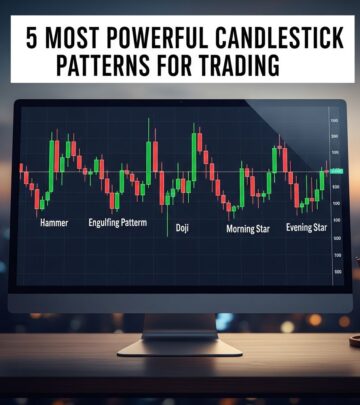
- Hammer: A bullish reversal pattern consisting of a small body with a long lower wick and minimal upper wick. It suggests that sellers pushed prices lower but buyers regained control, indicating a potential reversal from a downtrend.
- Hanging Man: Similar in appearance to a hammer but occurs in an uptrend. It indicates potential weakness and may signal a reversal to the downside.
- Engulfing Pattern: A two-candlestick pattern where the second candle completely engulfs the previous candle’s body. Bullish engulfing patterns suggest upward reversal, while bearish engulfing patterns suggest downward reversal.
- Morning Star: A three-candle bullish reversal pattern that appears at the bottom of a downtrend, consisting of a bearish candle, a small-bodied candle, and a bullish candle that closes well into the first candle’s body.
- Evening Star: The bearish equivalent of the morning star, appearing at the top of an uptrend with a bullish candle, a small-bodied candle, and a bearish candle that closes well into the first candle’s body.
- Doji: A candlestick with virtually no body where the opening and closing prices are almost identical. It suggests indecision in the market and potential reversal points.
Continuation Patterns
Continuation patterns suggest that the existing trend will persist after a brief consolidation period.
- Bullish Harami: A two-candlestick pattern where a small bullish candle sits within the body of a larger bearish candle, suggesting potential uptrend continuation.
- Bearish Harami: A small bearish candle within a larger bullish candle, indicating potential downtrend continuation.
- Spinning Tops: Small-bodied candlesticks with long wicks that appear during trends, suggesting the trend will continue after consolidation.
How to Read and Interpret Candlestick Charts
Analyzing Price Action
Effective candlestick chart reading involves observing multiple elements simultaneously. Traders should examine the size of the body relative to the wicks, the overall trend direction, and the position of support and resistance levels. Large bullish bodies suggest strong buying pressure, while large bearish bodies indicate strong selling pressure. Long wicks suggest significant price rejection at certain levels, providing valuable information about market indecision or failed attempts to reach certain price targets.
Timeframe Considerations
Different timeframes provide different perspectives on price movement. A one-minute chart shows short-term price action and is useful for scalpers, while daily or weekly charts show the bigger picture relevant to position traders and investors. Combining multiple timeframes—analyzing both short-term and long-term trends—provides a more complete picture of market dynamics and improves trading decisions.
Volume Integration
While candlestick charts display price information, combining them with volume data creates a more powerful analytical tool. High volume accompanying a large bullish candle suggests strong buying conviction, while high volume with a bearish candle indicates strong selling pressure. Low volume on significant price moves may suggest the movement lacks conviction and could reverse.
Advantages of Candlestick Charts
- Visual Clarity: The color-coded design makes it easy to quickly identify bullish and bearish periods at a glance.
- Comprehensive Information: Each candlestick displays four key prices (open, close, high, low) in a single visual element.
- Pattern Recognition: Specific formations have been studied extensively and have demonstrated predictive value over centuries of trading.
- Psychological Insight: Candlestick patterns reveal buyer and seller behavior, helping traders understand market psychology.
- Flexibility: Works effectively across all asset classes including stocks, forex, commodities, and cryptocurrencies.
- Multiple Timeframes: Applicable to short-term intraday trading and long-term investment strategies.
Limitations and Considerations
While candlestick charts are powerful tools, traders should recognize their limitations. Patterns are not guaranteed to predict future price movements, and false signals can occur. Market conditions, fundamental factors, and unexpected news events can override technical signals. Additionally, candlestick analysis is subjective—different traders may interpret the same pattern differently. Successful trading requires combining candlestick analysis with other technical indicators, fundamental analysis, and proper risk management strategies.
Using Candlestick Charts in Trading Strategy
Entry and Exit Signals
Traders use candlestick patterns to determine optimal entry points for trades. A bullish reversal pattern at a support level might signal an entry opportunity for a long position, while a bearish pattern at resistance might signal a short entry. Exit signals can be generated when opposing patterns form or when price action contradicts the established pattern, indicating the trade thesis is invalid.
Risk Management
Candlestick analysis helps establish logical stop-loss levels. For example, a trader might place a stop-loss below the lower wick of a hammer pattern, as price closing below this level would invalidate the bullish signal. This approach to stop-loss placement helps traders limit losses while giving trades room to work.
Frequently Asked Questions (FAQs)
Q: What is the best timeframe for candlestick analysis?
A: The best timeframe depends on your trading style. Day traders use 1-minute to 15-minute charts, swing traders use hourly to daily charts, and position traders use daily to weekly charts. Regardless of timeframe, candlestick patterns work effectively across all time periods.
Q: Can candlestick patterns predict future price movements?
A: Candlestick patterns show historical price relationships and market psychology, but they don’t guarantee future price movements. They should be combined with other analysis tools and risk management strategies for best results.
Q: Are candlestick charts suitable for all types of securities?
A: Yes, candlestick charts work effectively for stocks, bonds, commodities, currencies, cryptocurrencies, and indices. Any tradeable asset with open, close, high, and low prices can be analyzed using candlestick charting.
Q: How many candlesticks should I analyze to identify patterns?
A: Most basic candlestick patterns consist of 1-3 candles, while more complex patterns may involve 4-5 candles. Context from additional surrounding candlesticks helps confirm pattern validity.
Q: What is the difference between candlestick charts and bar charts?
A: Both display the same data (open, close, high, low), but candlestick charts use filled bodies and wicks that are easier to visualize quickly, while bar charts use small horizontal lines. Candlestick charts are generally considered more intuitive.
References
- Nison, Steve. “Japanese Candlestick Charting Techniques: A Contemporary Guide to the Ancient Investment Techniques of the Far East.” — Prentice Hall Press. 2001. https://www.pearson.com/
- Technical Analysis from A to Z.” — Schwager, Jack D. McGraw-Hill Professional. 1999. https://www.mhprofessional.com/
- CME Education Resources – Understanding Candlestick Charts.” — CME Group. 2024. https://www.cmegroup.com/education/
- FINRA Investor Education – Technical Analysis.” — Financial Industry Regulatory Authority. 2024. https://www.finra.org/investors/
- CFA Institute – Technical Analysis Resources.” — CFA Institute. 2024. https://www.cfainstitute.org/
Similar Articles








Read full bio of medha deb