Canceling a Car Purchase After Signing: Your Legal Options
Discover when and how you can legally withdraw from a car deal post-signature, avoiding costly mistakes in vehicle transactions.
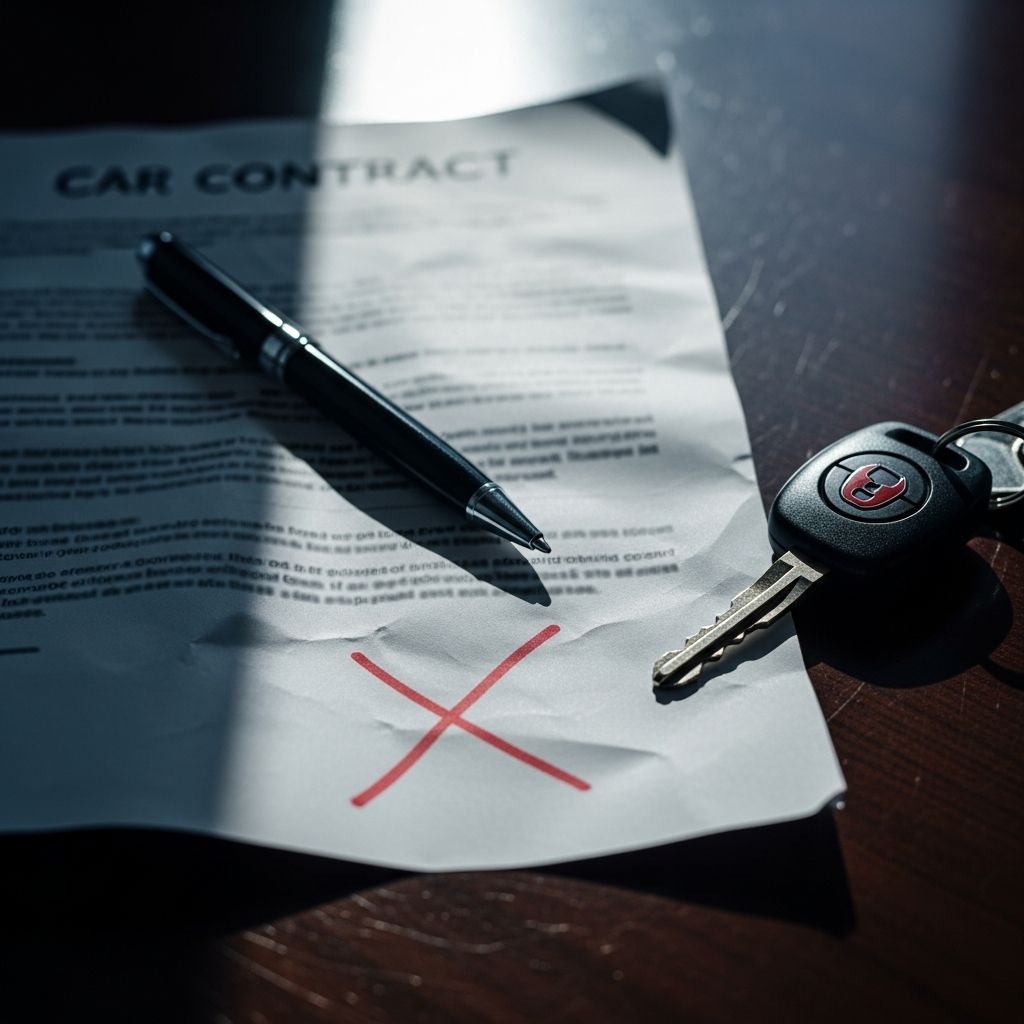
Once you’ve inked a deal at a dealership, walking away isn’t straightforward, but specific legal avenues exist depending on contract terms, state regulations, and dealer actions. This guide details when cancellation is feasible, the processes involved, and strategies to protect your interests during high-stakes auto transactions.
Understanding the Binding Nature of Car Sales Contracts
Car purchase agreements are legally enforceable documents that commit both buyer and seller to the transaction terms. Unlike some consumer goods, vehicles lack a universal federal right to cancel post-signature, making most deals final upon execution. Dealers often include clauses waiving return policies, emphasizing the importance of due diligence before signing.
Key elements in these contracts include price, financing details, warranties, and delivery obligations. Any ambiguity or unmet condition can potentially open doors for rescission, but buyer’s remorse alone rarely suffices. State variations play a crucial role; for instance, some regions mandate disclosures that, if ignored, provide leverage for buyers.
Common Scenarios Allowing Contract Rescission
Several circumstances can render a signed agreement voidable. Recognizing these empowers buyers to act swiftly.
- Financing Contingencies (Yo-Yo Sales): If the deal hinges on loan approval and financing fails, contracts may dissolve. In ‘yo-yo’ scenarios, dealers permit taking the vehicle home pending lender confirmation; denial requires prompt return of the car in original condition, with full refund of deposits and trade-ins. Buyers lack symmetric rights—dealers initiate cancellation here.
- Dealer Misrepresentation or Fraud: False claims about vehicle history, mileage, features, or loan terms violate federal laws like the Truth in Lending Act (TILA). Providing inaccurate Retail Installment Sales Contracts (RISC) or withholding copies at signing offers grounds for rescission. Courts have voided deals for falsified financial data or omitted disclosures.
- Breach of Delivery Promises: Failure to provide the exact model, trim, color, or features agreed upon constitutes non-performance, allowing cancellation. This includes unfulfilled add-ons like extended warranties or accessories.
- Consumer Protection Violations: Deceptive practices, hidden fees, or high-pressure tactics breach state attorney general guidelines and federal statutes, enabling contract nullification. Undue influence or duress, such as coercion during negotiations, further supports claims.
- Lemon Law Applicability: For new vehicles with undisclosed defects emerging soon after purchase, state lemon laws permit returns or refunds, though timing and proof are stringent.
The Myth of Cooling-Off Periods for Vehicles
Many expect a three-day grace period akin to home sales, but the FTC’s Cooling-Off Rule explicitly excludes dealership purchases. This federal provision applies only to door-to-door, workplace, or temporary-location sales over $25, not standard auto lots. State laws occasionally offer limited windows, but they’re rare and jurisdiction-specific—always verify locally.
| Scenario | Applies To | Duration | Penalty-Free? |
|---|---|---|---|
| Federal Cooling-Off Rule | Home/Workplace Sales | 3 Days | Yes |
| Car Dealerships | Standard Purchases | None | N/A |
| State-Specific Auto | Varies (e.g., Used Cars) | 1-3 Days (Rare) | Sometimes |
Step-by-Step Guide to Attempting Cancellation
Act methodically to maximize success and minimize disputes.
- Review the Agreement Thoroughly: Scrutinize for contingencies, deadlines, and cancellation clauses. Note any ‘as-is’ disclaimers or arbitration mandates.
- Document Everything: Gather emails, ads, verbal promises (recorded if legal), and vehicle condition photos. Evidence strengthens claims of misrepresentation.
- Notify the Dealer in Writing: Send a certified letter detailing violations, demanding rescission, full refund, and vehicle return logistics. Reference TILA or state laws explicitly.
- Return the Vehicle Promptly: If possession obtained, deliver it undamaged with all accessories. Expect potential mileage/use fees unless waived by law.
- Contact Regulators: File complaints with your state attorney general, FTC, or DMV if uncooperative. Mediation often resolves issues faster than litigation.
- Seek Legal Counsel: Consumer attorneys offer free consultations; many work on contingency for viable cases.
Potential Costs and Risks of Backing Out
Even valid claims incur hurdles. Dealers may deduct restocking fees (up to $500 in some states), mileage charges (e.g., $0.25/mile over 250 miles), or administrative costs. Credit impacts arise from temporary financing pulls. Repossession looms if payments lapse post-‘yo-yo’ denial. Litigation, while winnable, demands time and evidence.
For used cars, outcomes improve slightly due to fewer regulations, but dealership policies govern. New vehicle deals bind tighter, with loans activating immediately.
State Variations in Buyer Protections
Laws differ widely:
- California mandates used car buyers’ guides and offers limited rescission for odometer fraud.
- Texas enforces ‘three-day’ rights only for specific door-to-door auto sales.
- Florida’s Motor Vehicle Repair Act aids defect claims but not remorse.
Consult state consumer protection sites for precise rules.
Preventive Measures Before Signing
Avoid post-signature woes:
- Test drive extensively and obtain Carfax reports.
- Secure pre-approval financing to sidestep contingencies.
- Negotiate explicit return clauses (rarely granted).
- Read every document before signing; walk away if rushed.
- Bring a trusted advisor to counter pressure tactics.
Frequently Asked Questions
Can I cancel just because I changed my mind?
No, buyer’s remorse doesn’t qualify under standard laws.
What if financing falls through after driving off?
Return within 24-48 hours per contract; expect full refund if contingent.
Does lemon law help with new cars?
Yes, after multiple failed repairs for substantial defects.
How long do I have to rescind for TILA violations?
Typically 3 days for certain disclosures, but varies.
Can dealers charge fees for returns?
Yes, reasonable ones like depreciation, unless prohibited.
Expert Strategies for Dispute Resolution
Leverage arbitration clauses common in contracts—they’re faster than courts. Join auto consumer groups for templates and support. Track emerging laws, as states increasingly scrutinize dealership practices amid rising complaints.
In summary, while challenging, cancellation is possible with solid grounds. Prioritize prevention through informed buying.
References
- 3 Day Right to Cancel Car Purchase: Right or Wrong? — NoFightingWithTitan. 2023. https://nofightingwithtitan.com/3-day-right-to-cancel-car-purchase/
- Cancelling a New Car Purchase Agreement With a Dealership — The Consumer Law Group. 2024. https://www.theconsumerlawgroup.com/faqs/cancelling-a-new-car-purchase-agreement-with-a-dealership.cfm
- CAN YOU CANCEL a Bad Car Deal? YES!!! — YouTube (Kevin Hunter). 2023-10-15. https://www.youtube.com/watch?v=CrEgnk3kleo
- Can you back out of buying a car after signing papers? — Chase.com. 2025. https://www.chase.com/personal/auto/education/buying/can-you-back-out-of-buying-a-car-after-signing-papers
- Can You Return a Car You Just Bought? — Edmunds. 2024. https://www.edmunds.com/car-buying/unwinding-the-deal-what-are-your-rights.html
- Cold Feet? How to Cancel A Car Purchase — Capital One. 2024. https://www.capitalone.com/cars/learn/finding-the-right-car/cold-feet-how-to-cancel-a-car-purchase/1229
- Buyer’s Remorse: The FTC’s Cooling-Off Rule May Help — FTC Consumer. 2023-05-01. https://consumer.ftc.gov/articles/buyers-remorse-ftcs-cooling-rule-may-help
Similar Articles








Read full bio of Sneha Tete