401(k) and IRA: Can You Have Both?
Discover if you can contribute to a 401(k) and IRA simultaneously, explore limits, tax benefits, and strategies for 2026 retirement savings.
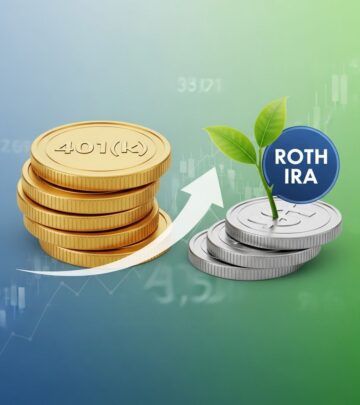
Many individuals wonder whether they can participate in both a workplace 401(k) plan and an individual retirement account (IRA) at the same time. The answer is straightforward: yes, it is entirely possible and often advisable to maintain both accounts to optimize retirement savings. These two vehicles complement each other, offering distinct advantages in contribution flexibility, tax treatment, and investment choices. This article delves into the rules, limits, and strategies for 2026, helping you build a robust retirement portfolio.
Understanding the Basics of 401(k) and IRA Accounts
A 401(k) is an employer-sponsored retirement plan that allows employees to defer a portion of their salary into investments, often with matching contributions from the employer. It provides high contribution limits and potential tax deductions. On the other hand, an IRA is a personal account you open independently, available as traditional (tax-deductible contributions, taxable withdrawals) or Roth (after-tax contributions, tax-free growth and withdrawals). Both are powerful tools for long-term wealth building, and there’s no regulation prohibiting simultaneous use.
Combining them diversifies your savings approach: the 401(k) leverages employer matches for free money, while the IRA offers broader investment options like individual stocks or ETFs not always available in 401(k) menus.
2026 Contribution Limits for 401(k) Plans
For 2026, the employee deferral limit for 401(k), 403(b), most 457 plans, and the Thrift Savings Plan rises to $24,500, up from $23,500 in 2025. Those aged 50 and older qualify for a catch-up contribution of $8,000, enabling totals up to $32,500. Individuals aged 60-63 may access a special super catch-up of $11,250 if their plan permits.
The overall limit, including employer contributions, increases to $72,000 or 100% of compensation, whichever is less. Roth 401(k) options follow identical limits, allowing tax-free growth alongside traditional deferrals.
| Age Group | Standard Limit | Catch-Up (50+) | Super Catch-Up (60-63) | Total Possible |
|---|---|---|---|---|
| Under 50 | $24,500 | N/A | N/A | $24,500 + employer |
| 50-59 or 64+ | $24,500 | $8,000 | N/A | $32,500 + employer |
| 60-63 | $24,500 | $8,000 | $11,250 | Up to $35,750 + employer |
2026 IRA Contribution Limits and Rules
IRA limits (for both traditional and Roth) are lower at $7,500 for those under 50, with a $1,100 catch-up for age 50+, totaling $8,600. These apply combined across all your IRAs; you cannot exceed them by splitting between traditional and Roth.
Unlike 401(k)s, IRA eligibility hinges on earned income, and Roth contributions phase out at higher incomes: for singles, full contributions below $153,000 MAGI, phasing out to $168,000; for joint filers, below $242,000 to $252,000.
| Year | Under 50 | 50 and Older |
|---|---|---|
| 2025 | $7,000 | $8,000 |
| 2026 | $7,500 | $8,600 |
Key Benefits of Holding Both a 401(k) and IRA
- Maximized Savings: Contribute the full $24,500 to your 401(k) (plus match) and still add $7,500 to an IRA, potentially exceeding $30,000+ annually in personal contributions.
- Tax Diversification: Mix pre-tax 401(k)/traditional IRA with Roth options for tax-free income in retirement.
- Investment Flexibility: IRAs typically offer lower fees and more choices than employer plans.
- Employer Match: Never leave free money on the table by maxing 401(k) matches first.
- Rollovers: Move 401(k) funds to an IRA upon job change for better control.
Tax Deduction Rules for Traditional IRA Contributions
If covered by a workplace plan like a 401(k), traditional IRA deductibility phases out based on MAGI. For 2026:
- Singles: Full deduction ≤$81,000; partial $81,000-$91,000; none ≥$91,000.
- Joint filers (contributor covered): Full ≤$129,000; partial $129,000-$149,000; none ≥$149,000.
- Non-covered spouse (joint): Full ≤$242,000; partial $242,000-$252,000; none ≥$252,000.
Roth IRAs are never deductible but offer tax-free withdrawals. Consider a backdoor Roth if income exceeds direct limits: contribute to traditional IRA (non-deductible), then convert to Roth.
Strategic Approaches to Dual Contributions
Prioritize based on your situation:
- Contribute enough to 401(k) for full employer match—it’s an immediate 50-100% return.
- Max out IRA for flexibility, especially Roth if eligible.
- Then return to 401(k) to hit annual limits.
For high earners, use mega backdoor Roth in 401(k) plans allowing after-tax contributions up to the $72,000 total limit.
Potential Drawbacks and Considerations
While beneficial, watch for:
- Fees: Compare expense ratios across accounts.
- Withdrawals: 401(k)s have stricter rules (loans possible, but early penalties); IRAs allow penalty-free withdrawals for first home or education.
- Required Minimum Distributions (RMDs): Both require them at age 73 (traditional); Roth IRAs do not.
- Income Limits: Plan around phase-outs annually.
Comparison of 401(k) vs. IRA Features
| Feature | 401(k) | IRA |
|---|---|---|
| Contribution Limit (2026, under 50) | $24,500 | $7,500 |
| Catch-Up (50+) | $8,000 | $1,100 |
| Employer Match | Yes | No |
| Investment Options | Limited to plan | Extensive |
| Loans | Often yes | No |
| Creditor Protection | Strong | Strong (ERISA) |
Frequently Asked Questions (FAQs)
Can I contribute to both 401(k) and IRA in the same year?
Yes, there are no restrictions on having both accounts or contributing to each annually, as long as you meet eligibility rules.
What if my income is too high for Roth IRA?
Consider backdoor Roth conversions or Roth 401(k), which has no income limits.
Does employer 401(k) match count toward my limit?
No, matches are separate from your $24,500 deferral limit but count toward the $72,000 total.
Can I roll over my 401(k) to an IRA while working?
Typically no, until separation from service, but check for in-service withdrawals.
Are there penalties for early withdrawals from both?
Yes, 10% penalty plus taxes before 59½, with exceptions like hardships or substantially equal payments.
Planning for Long-Term Success
Integrating a 401(k) and IRA into your strategy amplifies compounding growth. Start early, automate contributions, and review annually for limit changes. Consult a tax advisor for personalized advice, especially with phase-outs or conversions. By leveraging both, you position yourself for a secure retirement.
References
- 401(k) limit increases to $24,500 for 2026, IRA limit increases to $7,500 — Internal Revenue Service. 2025-11-13. https://www.irs.gov/newsroom/401k-limit-increases-to-24500-for-2026-ira-limit-increases-to-7500
- 401(k) Contribution Limits | 2026, 2025 and Earlier — ADP. Accessed 2026. https://www.adp.com/resources/articles-and-insights/articles/4/401k-contribution-limits.aspx
- 2026 401(k) Contribution Limits Issued by the IRS — American Society of Pension Professionals & Actuaries. 2025-11-13. https://www.asppa-net.org/news/2025/11/2026-401k-contribution-limits-issued-by-the-irs/
- What are 2026 401(k) and IRA max contribution limits — Principal Financial Group. Accessed 2026. https://www.principal.com/individuals/learn/what-are-2026-401k-and-ira-max-contribution-limits
- IRA contribution limits for 2025 and 2026 — Fidelity Investments. Accessed 2026. https://www.fidelity.com/learning-center/smart-money/ira-contribution-limits
- Retirement contribution limits for 2026 — Voya. Accessed 2026. https://www.voya.com/individuals/learn/retirement-contribution-limits-2026
Similar Articles








Read full bio of medha deb