Can You Buy a Home for Retirement?
Explore key factors to determine if purchasing a house in retirement fits your financial plan and long-term security needs.
Deciding to purchase a home during retirement requires careful evaluation of your financial resources, ongoing expenses, and future needs. Many retirees aim for homeownership to achieve stability, but rising costs and fixed incomes make it challenging. This guide examines critical aspects to help you determine feasibility.
Understanding Your Retirement Income Landscape
Retirement income typically includes Social Security benefits, pension payments, withdrawals from retirement accounts like 401(k)s or IRAs, and possibly part-time earnings. According to data from the Population Reference Bureau, older renters often face higher poverty rates—31% for those 65 and older compared to 13% for homeowners—highlighting the importance of stable income for housing decisions.
Calculate your annual income by summing guaranteed sources first. Social Security’s average monthly benefit for retired workers was around $1,900 in recent years, but this varies by earnings history. Add expected IRA required minimum distributions (RMDs), which begin at age 73, and any annuities. Tools from official sources like the Social Security Administration can project benefits accurately.
- Social Security: Primary income for 90% of retirees, inflation-adjusted annually.
- Pensions: Declining but valuable if available from prior employers.
- Investments: Sustainable withdrawal rates, often 4% rule, to preserve principal.
- Other: Rental income, part-time work, or government assistance programs.
Aim for housing costs not exceeding 30% of gross income to avoid burden, as persistent high costs link to health declines among seniors.
Breaking Down Total Homeownership Costs
Beyond the purchase price, homeownership in retirement involves property taxes, insurance, maintenance, utilities, and HOA fees if applicable. Bankrate’s analysis weights affordability at 40% in retirement location rankings, using metrics like cost-of-living indexes, sales taxes, and property taxes.
Property taxes average 1.1% of home value nationally but vary; for a $300,000 home, that’s $3,300 yearly. Homeowners insurance averages $1,500-$2,500, spiking in high-risk areas like hurricane zones. Maintenance typically costs 1-2% of home value annually—$3,000-$6,000 for that $300,000 property.
| Expense Category | National Average Annual Cost | High-Risk Area Example |
|---|---|---|
| Property Taxes | $3,000 | $5,000+ (e.g., Northeast) |
| Homeowners Insurance | $2,000 | $4,000+ (coastal states) |
| Maintenance/Repairs | $4,000 | $6,000 (older homes) |
| Utilities | $3,600 | $5,000 (cold climates) |
| HOA Fees | $0-$3,000 | $5,000+ (gated communities) |
Total non-mortgage costs can exceed $12,000 yearly, per Urban Institute insights on senior housing burdens including utilities and taxes. Factor in location: moving from high-cost states like California to affordable ones like West Virginia can stretch savings, but align with lifestyle.
Navigating Mortgage Options as a Retiree
Qualifying for a mortgage post-retirement hinges on debt-to-income (DTI) ratios under 43%, using all income sources. Lenders scrutinize fixed incomes, requiring two years of stable receipts for non-employment income. Reverse mortgages allow tapping home equity without monthly payments, but they accrue interest and reduce inheritance.
FHA loans for seniors or VA loans for veterans offer lower down payments. However, Primerate Mortgage notes long-term costs like rising insurance in climate-risk areas must be projected. Compare:
- Conventional Mortgage: Needs 20% down, stable income proof.
- Reverse Mortgage: Age 62+, no payments until home sale or death.
- Downsizing Loan: Bridge financing for selling current home first.
Pre-approval from lenders clarifies borrowing power before house hunting.
Risks of Overextending in Retirement Housing
High housing costs correlate with poorer health outcomes for older adults, especially renters facing instability. Homeowners without mortgages enjoy better self-rated health, but new purchases risk DTI strain. Urban Institute reports seniors on fixed incomes battle affordability, accessibility, and availability crises.
Inflation erodes purchasing power; a home affordable today may burden tomorrow. PRB studies link cost burdens over 30% of income to skipped medications or meals, exacerbating conditions. Climate risks elevate insurance—wildfire or flood-prone areas see premiums double national averages.
Smart Strategies to Make It Work
Enhance affordability by relocating to low-tax, low-cost states like Delaware, topping Bankrate lists for retiree value. Downsize to reduce mortgage needs or choose accessible single-story homes. Policy suggestions from Urban Institute include zoning for accessory dwelling units (ADUs) to generate rental income.
Build buffers: Aim for 6-12 months’ expenses in emergency funds. Consult fee-only financial planners for personalized projections. Consider communities with amenities offsetting maintenance.
Alternatives to Traditional Home Buying
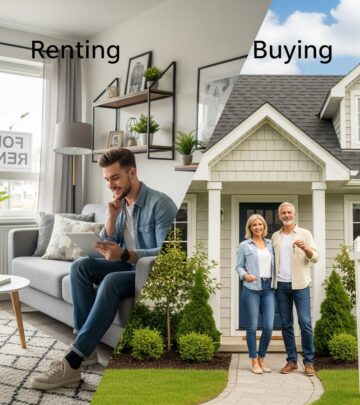
Not all retirees need full ownership. Renting frees capital for investments, though less stability. Co-housing or senior communities offer shared costs. Leasing with buy options provides flexibility.
- Renting: No maintenance, but potential rent hikes.
- 55+ Communities: Tailored amenities, often with HOAs.
- Shared Equity: Family contributions for down payments.
Weigh pros/cons: Ownership builds equity; renting preserves liquidity.
Step-by-Step Affordability Checklist
- Project total retirement income for 30 years.
- Estimate full home costs using local data.
- Check DTI with mortgage calculators.
- Research locations via Bankrate or similar tools.
- Factor healthcare: Medicare gaps cost $5,000+ yearly.
- Stress-test for 20% inflation or market dips.
- Consult professionals: Advisors, realtors specializing in seniors.
Common Pitfalls to Avoid
Underestimating repairs on older homes leads to surprises. Ignoring HOA fine print traps in unwanted fees. Emotional buys without math overlook sustainability. Bankrate emphasizes affordability’s primacy amid savings shortfalls.
FAQs
What’s the 30% housing rule in retirement?
Housing should not exceed 30% of income to prevent financial stress linked to health issues.
Can I get a mortgage at 65?
Yes, with proven income; reverse mortgages suit equity-rich retirees.
Best states for affordable retirement homes?
Delaware, West Virginia per Bankrate, balancing costs and quality.
How does homeownership affect health?
Stable ownership correlates with better outcomes versus burdened renting.
Should I downsize before buying?
Often yes, freeing equity and simplifying maintenance.
References
- Senior Living Affordability: A Top Priority For Retirement Location — MyLifeSite. 2024. https://mylifesite.net/blog/post/senior-living-affordability-a-top-priority-for-choosing-a-retirement-location
- Affordability Should Be a Top Priority in Your Retirement Planning — Buena Vida Estates. 2024. https://www.buenavidaestates.org/why-affordability-should-be-a-top-priority-in-your-retirement-planning/
- More Than Shelter: How Housing Affordability Is Linked to Older Americans’ Health — Population Reference Bureau (PRB). 2023. https://www.prb.org/news/more-than-shelter-how-housing-affordability-is-linked-to-older-americans-health/
- How to Choose the Right Retirement Location in 2026 — Prime Rate Mortgage. 2026. https://www.primeratemortgage.com/blog/303854/purchasing-a-home/how-to-choose-the-right-retirement-location-in-2026
- America’s Housing Market Is Failing Older Adults — Urban Institute. 2023. https://www.urban.org/urban-wire/americas-housing-market-failing-older-adults
Similar Articles








Read full bio of medha deb