Can I Get My Money Back From Ex After 14 Years?
Exploring legal options to recover money lent to an ex-partner after 14 years: statutes of limitations, small claims court, and practical steps.

Recovering money lent to an ex-partner after 14 years is challenging but possible depending on your state’s statute of limitations, available evidence, and the nature of the debt. Most personal loans between individuals fall under statutes of 3-10 years, meaning time-barred claims are common, though exceptions like written agreements or acknowledgments can extend deadlines.
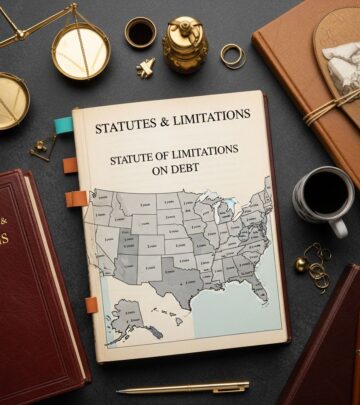
What Is the Statute of Limitations on Debt?
The statute of limitations (SOL) is the maximum time period after which a creditor can legally sue to collect a debt. For personal loans or informal debts between ex-partners, this typically ranges from 3 to 10 years from the date of last payment or acknowledgment, varying by state and debt type.
- In many states like Florida, the SOL for written contracts is 5 years, oral agreements 4 years.
- California allows 4 years for written contracts, 2 years for oral.
- New York: 6 years for most debts.
- Exceptions: Partial payments or written promises to pay restart the clock.
If the SOL has expired, the debt is ‘time-barred,’ and courts won’t enforce collection via lawsuit, but ethical collection attempts may still occur.[Federal Trade Commission guidelines on FDCPA]
Does the Statute of Limitations Apply to Money Owed by an Ex?
Yes, money owed by an ex is treated as any other unsecured personal debt. Whether a casual loan, shared expenses, or formal promissory note, the SOL clock starts from the breach (missed repayment) or last activity.
- Oral agreements: Shortest SOL (2-6 years).
- Written IOUs or emails: Longer (3-10 years).
- Co-signed debts: Separate rules apply if you’re on the hook to a third party.
Key factors: Prove the debt existed with texts, bank transfers, or witnesses. After 14 years, most SOLs have lapsed unless recently acknowledged.
How to Check Your State’s Statute of Limitations on Debt
Use this table for quick reference on SOL by state for common debt types (written contracts/personal loans). Always verify with a local attorney as laws evolve.
| State | Written Contracts | Oral Agreements | Open Accounts |
|---|---|---|---|
| Florida | 5 years | 4 years | 4 years |
| California | 4 years | 2 years | 4 years |
| Texas | 4 years | 4 years | 4 years |
| New York | 6 years | 6 years | 6 years |
| Illinois | 10 years | 5 years | 5 years |
| Pennsylvania | 4 years | 4 years | 4 years |
Source: Summarized from Nolo.com state-by-state guides and state statutes (e.g., Florida Statutes §95.11). For precise application, consult state bar resources.
Steps to Recover Money from Your Ex
- Gather Evidence: Collect bank statements, texts, emails, checks, or witness statements proving the loan amount, terms, and non-repayment.
- Send a Demand Letter: Politely request repayment with a deadline, citing evidence. Certified mail for proof.
- Check SOL: Confirm if still enforceable in your state.
- File in Small Claims Court: Ideal for debts under $5,000-$10,000 (varies by state). No lawyer needed; low fees ($50-200).
- Negotiate Settlement: Offer partial payment to avoid judgment.
- Enforce Judgment: If won, use wage garnishment or liens (additional steps/costs).
Can You Sue Your Ex in Small Claims Court After 14 Years?
Only if within SOL. Small claims is efficient for personal debts up to jurisdictional limits (e.g., $8,000 in Florida, $10,000 in California).
- Pros: Fast (1-3 months), inexpensive, no attorneys.
- Cons: Must serve papers, attend hearing; enforcement not automatic.
- After 14 years, success hinges on proof of recent acknowledgment (e.g., ‘I’ll pay you back’ text within SOL period).
Pro tip: File where defendant resides or debt incurred.
What If the Statute of Limitations Has Passed?
If time-barred:
- Can’t sue, but can still ask for voluntary repayment.
- Don’t threaten lawsuit (illegal under FDCPA).
- Consider mediation or family counseling if amicable split.
- Tax implications: Forgiven debt over $600 may be taxable income to you.
Real-Life Examples: Recovering Debt from Ex-Partners
Reader stories highlight outcomes:
- Success: Sarah in Texas recovered $3,000 via small claims with Venmo records (within 4-year SOL).
- Failure: Mike in NY couldn’t sue after 7 years on oral $5,000 loan; no evidence.
- Partial Win: Lisa negotiated 50% repayment post-divorce via demand letter.
Common theme: Documentation is king.
How to Prove You Lent Money to Your Ex
- Bank transfers labeled ‘loan to [name]’.
- Emails/texts discussing repayment.
- Witnesses to agreement.
- Promissory notes (even handwritten).
- Avoid commingling with gifts; intent to repay must be clear.
Should You Use a Collections Agency or Lawyer?
For debts over $1,000 or complex cases:
- Collections Agency: 25-50% fee; they handle chasing.
- Lawyer: $200-500/hour; best for high-value or disputed claims.
- DIY first via demand letter—90% settle without court.
Preventing Future Issues: Lessons from Long-Term Unpaid Loans
- Always get written agreements for loans over $100.
- Use apps like Splitwise for shared expenses.
- Consider gifting small amounts to avoid debt drama.
- Post-breakup: Freeze joint accounts immediately.
Frequently Asked Questions (FAQs)
Is money given to an ex considered a gift or loan?
A: Courts presume gifts in relationships unless proven otherwise with evidence of repayment expectation.
What if my ex acknowledged the debt recently?
A: Yes, restarts SOL clock—save that text/email!
Can I report to credit bureaus?
A: No, personal debts aren’t reported unless assigned to a professional collector.
Does bankruptcy discharge ex-partner debt?
A: Yes, if unsecured and listed; creditor gets notice.
International ex? Can I collect?
A: Extremely difficult; SOL and jurisdiction issues multiply.
Expert Tips from Financial Advisors
Certified advisors recommend: ‘Treat personal loans like business—document everything. If uncollectible, write off as a lesson and focus on building emergency savings.’ Aligns with debt management strategies like avalanche/snowball for future financial health.
References
- Statutes of Limitations on Debt Collection by State — Nolo (Thomson Reuters). 2025-06-15. https://www.nolo.com/legal-encyclopedia/statute-limitations-state-laws-chart.html
- Fair Debt Collection Practices Act (FDCPA) — Federal Trade Commission (FTC.gov). 2024-03-01. https://www.ftc.gov/legal-library/browse/rules/fair-debt-collection-practices-act-text
- Small Claims Court Procedures by State — National Center for State Courts. 2025-01-10. https://www.ncsc.org/topics/small-claims-court
- Florida Statutes Chapter 95: Limitations of Actions — Florida Legislature (.gov). 2025. http://www.leg.state.fl.us/statutes/index.cfm?App_mode=Display_Statute&URL=0000-0099/0095/0095ContentsIndex.html
- Debt Collection FAQs — Consumer Financial Protection Bureau (CFPB.gov). 2024-11-20. https://www.consumerfinance.gov/consumer-tools/debt-collection/
Similar Articles








Read full bio of Sneha Tete