Finance A Salvage Title Car: Risks, Options, And Costs
Learn financing options for salvage title vehicles and what lenders require.

Can I Finance a Salvage Title Car?
Financing a salvage title car presents unique challenges that differ significantly from securing traditional auto loans. A salvage title indicates that an insurance company has declared the vehicle a total loss, typically due to significant damage from accidents, floods, or other catastrophic events. This classification dramatically impacts the vehicle’s resale value and insurability, making lenders hesitant to provide standard auto financing. However, financing options do exist for those willing to navigate a more complex lending landscape and understand the associated risks and costs.
The primary obstacle in securing financing for a salvage title vehicle is that most mainstream lenders view these cars as high-risk investments. Since the vehicle has already been written off as a total loss, lenders worry about recovering their investment if the borrower defaults on the loan. This reality means that traditional auto loans from major banks are rarely available, and those seeking financing must explore alternative lending channels and creative financial solutions.
Understanding Salvage Titles
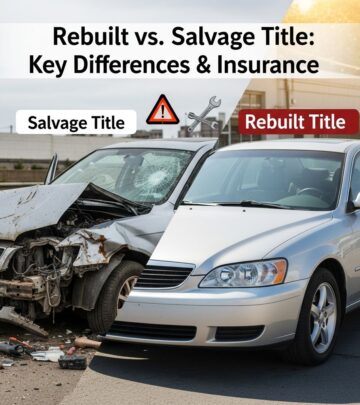
Before exploring financing options, it is essential to understand what a salvage title means and how it affects your vehicle’s value and insurability. A salvage title is issued by state motor vehicle departments when an insurance company declares a vehicle a total loss. This typically occurs when repair costs exceed 70 to 80 percent of the vehicle’s pre-loss value, though this threshold varies by state. Once a vehicle receives a salvage title, it cannot be driven legally on public roads until it is repaired, inspected, and receives a rebuilt title.
The presence of a salvage title can reduce a vehicle’s market value by up to 40 percent or more, depending on the extent of the damage and the make and model of the car. This significant depreciation makes lenders reluctant to accept the vehicle as collateral, as it limits their ability to recover losses through resale if you default on the loan. Additionally, obtaining comprehensive and collision insurance for a salvage title vehicle is considerably more difficult, with many insurers refusing coverage entirely or charging substantially higher premiums.
Traditional Auto Loan Options
Securing a traditional auto loan for a salvage title vehicle is extraordinarily difficult and rarely successful through conventional lenders. Major national banks such as Wells Fargo, Chase, and Bank of America typically do not offer auto loans for salvage title vehicles. These institutions have strict underwriting guidelines that preclude financing for vehicles declared total losses by insurance companies.
However, it is not entirely impossible to obtain financing from major banks if you have an exceptionally strong personal relationship with your bank’s branch management and an excellent credit history. This path requires direct conversations with branch managers and potentially multiple levels of approval from bank executives. Success in these cases is rare and depends more on your banking history and personal connections than on standard lending criteria.
Your best opportunities for traditional auto financing come from smaller regional banks and community financial institutions that may have more flexible lending policies. These lenders sometimes consider salvage title vehicles, particularly if you can demonstrate that the car has been professionally repaired, inspected, and received a rebuilt title certification. Even with these smaller institutions, approval is not guaranteed, and you should be prepared for higher interest rates and stricter terms than you would receive for a vehicle with a clean title.
Title Loans as a Financing Alternative
Title loans represent one of the most accessible financing options for salvage title vehicles. Unlike traditional auto loans, title loans use the vehicle itself as collateral and focus less on credit history and more on the vehicle’s condition and value. Title loan lenders typically assess the borrower’s ability to repay based on income rather than credit score, making these loans available to individuals with poor or limited credit histories.
To qualify for a salvage title loan, you must meet several requirements. These include being at least 18 years old, having a clear salvage title in your name, providing proof of income, submitting a valid government-issued photo identification, and providing proof of residency. Many title lenders also require recent photographs of the vehicle or conduct in-person inspections to assess its condition and value.
The approval process for title loans is typically streamlined compared to traditional auto loans. You can often complete the entire application online and receive approval within 24 hours, with funds available via direct deposit within one to two business days. This quick funding process makes title loans attractive for those who need emergency cash quickly. However, it is crucial to understand the significant drawbacks of title loans before proceeding.
Title loans come with substantially higher interest rates than traditional auto loans, sometimes exceeding 300 percent annually. Additionally, if you fail to repay the loan, the lender can repossess your vehicle immediately, leaving you without transportation. Lenders typically loan between 25 to 50 percent of your car’s appraised value, meaning you cannot access large amounts of cash through this option. Despite these limitations, title loans remain a viable option for those unable to qualify for other types of financing.
Personal Loan Options
Personal loans represent another avenue for financing a salvage title vehicle. Unlike title loans and auto loans, personal loans do not require collateral, meaning you do not risk losing your vehicle if you default on the loan. This provides significant peace of mind for borrowers who depend on their vehicles for daily activities and transportation.
Personal loans typically have more favorable terms and lower interest rates than title loans, particularly if you have a decent credit score. However, approval for personal loans often depends heavily on your credit history and debt-to-income ratio. If you have poor credit, you may struggle to secure a personal loan at all, or face rates that are only marginally better than title loan options.
The advantage of personal loans is flexibility. Since these loans are unsecured, the lender does not care what you use the funds for, and you can use a personal loan to purchase a salvage title vehicle outright or to finance repairs and restoration costs. This flexibility makes personal loans an attractive option for those with reasonable credit and stable income.
Credit Union Financing
Credit unions often provide more flexible lending options than traditional banks and may be willing to finance salvage title vehicles under certain circumstances. Many credit unions have less stringent underwriting guidelines and are more willing to work with members who have imperfect credit histories or unconventional financing needs.
Credit unions frequently offer quick approval processes and often do not require comprehensive credit checks, making them accessible for individuals with poor credit ratings. As member-owned institutions, credit unions prioritize member relationships and may be more willing to take calculated risks on loans that traditional banks would automatically decline. Additionally, credit union loans typically feature lower interest rates than title loans or online lenders.
To obtain financing through a credit union, you typically must be a member of that institution. If you are not currently a member of a credit union, joining is usually straightforward and requires minimal requirements. Contact your local credit union to inquire about salvage title financing options and membership eligibility.
Home Equity Loans and Lines of Credit
If you own a home, you may have access to home equity loans or home equity lines of credit (HELOC) to finance a salvage title vehicle. These options allow you to borrow against the equity in your home, typically at lower interest rates than unsecured personal loans or title loans. Home equity loans and HELOCs generally offer favorable terms and longer repayment periods than other financing options.
However, using a home equity loan or HELOC to finance a salvage title vehicle comes with significant risks. If you default on the loan, the lender can foreclose on your home, putting your primary residence at risk. This makes home equity financing suitable only for those confident in their ability to repay and comfortable with this level of risk.
Requirements and Documentation
Regardless of which financing option you choose, lenders will require specific documentation to process your application. Understanding these requirements in advance streamlines the application process and increases your chances of approval.
Essential documents typically include:
- Vehicle title (typically a clear salvage title in your name)
- Valid government-issued photo identification
- Proof of income (recent paystubs, tax returns, or bank statements)
- Proof of residency (utility bills, lease agreements, or driver’s license)
- Vehicle identification number (VIN)
- Recent photographs of the vehicle or in-person inspection availability
- Insurance documentation (for some lenders)
- A mechanic’s statement regarding the vehicle’s condition (for traditional auto loans)
Having these documents prepared and organized before applying for financing significantly speeds up the approval process. Digital copies of most documents can be submitted online, making the entire process convenient and accessible from home.
Improving Your Chances of Approval
Several strategies can increase your likelihood of approval and potentially secure better loan terms when financing a salvage title vehicle. First, invest in improving your vehicle’s condition. Addressing minor mechanical issues, fixing body damage, and thoroughly cleaning the vehicle’s interior and exterior enhances its appeal to lenders and increases its appraised value. These improvements demonstrate to lenders that you take vehicle maintenance seriously and that the car is genuinely roadworthy.
If possible, have a professional mechanic inspect the vehicle and provide a detailed report on its condition and safety. This independent assessment carries significant weight with lenders and provides third-party verification that the vehicle is reliable and safe to operate. For those seeking traditional auto loans, obtaining insurance pre-approval that indicates the insurer is willing to cover the vehicle serves as valuable proof that the car meets safety and quality standards.
Additionally, strengthening your personal financial profile improves approval odds. Work to improve your credit score before applying by paying down existing debt and ensuring all bills are paid on time. Maintain steady employment and be prepared to demonstrate a strong debt-to-income ratio. Lenders are more willing to approve loans for borrowers who appear financially stable and capable of meeting their obligations.
Understanding the Costs and Risks
Before committing to financing a salvage title vehicle, carefully consider the total costs involved beyond the purchase price. Many salvage vehicles require significant repairs and restoration work. If you are planning to rebuild the vehicle to obtain a rebuilt title, factor in inspection fees, rebuilt title application costs, replacement parts, and professional labor. These expenses can quickly exceed your initial purchase price, particularly if the vehicle suffered extensive damage.
Additionally, obtaining comprehensive and collision insurance for a salvage or rebuilt title vehicle is substantially more expensive than insuring a clean title vehicle, if you can obtain coverage at all. Many insurers refuse to insure salvage title vehicles, while others charge premiums that are 10 to 50 percent higher than comparable clean title vehicles. Budget for these increased insurance costs when determining the true expense of vehicle ownership.
Interest rates and fees associated with salvage title financing also merit careful consideration. Title loans and online personal lenders typically charge substantially higher rates than traditional auto loans. Calculate the total amount you will pay over the loan’s lifetime, including all interest and fees, to ensure the financing makes financial sense. Sometimes, saving to purchase a salvage title vehicle with cash is more economical than financing the purchase at inflated interest rates.
Comparing Financing Options
To make an informed decision about financing a salvage title vehicle, compare the key features and terms of different financing options:
| Financing Option | Interest Rates | Collateral Required | Approval Speed | Credit Requirements |
|---|---|---|---|---|
| Title Loans | Very High (200-300%+) | Yes (Vehicle) | Very Fast (1-2 days) | Minimal |
| Personal Loans | Moderate (6-36%) | No | Fast (3-7 days) | Fair to Good |
| Credit Union Loans | Low to Moderate (4-18%) | Varies | Moderate (3-5 days) | Fair to Good |
| Home Equity Loans | Low to Moderate (3-10%) | Yes (Home) | Moderate (5-10 days) | Good to Excellent |
| Bank Auto Loans | Low to Moderate (3-10%) | Yes (Vehicle) | Slow (7-14 days) | Good to Excellent |
Frequently Asked Questions
Q: What exactly is a salvage title?
A: A salvage title is issued when an insurance company declares a vehicle a total loss due to significant damage, typically when repair costs exceed 70-80 percent of the vehicle’s pre-loss value. The vehicle cannot be driven legally until it is repaired, inspected, and receives a rebuilt title.
Q: Can I get a traditional auto loan for a salvage title car?
A: Obtaining a traditional auto loan for a salvage title vehicle is extremely difficult. Most major banks do not offer this financing. Your best options are smaller regional banks, credit unions, or online lenders, and only if the vehicle has been repaired and received a rebuilt title.
Q: What are title loans and how do they work?
A: Title loans use your vehicle as collateral and typically offer quick approval and funding. However, they charge very high interest rates (200-300%+ annually) and carry the risk of vehicle repossession if you default.
Q: What documents do I need to apply for salvage title financing?
A: Required documents typically include your salvage title, government-issued ID, proof of income, proof of residency, vehicle VIN, recent vehicle photos, and sometimes a mechanic’s inspection report or insurance pre-approval.
Q: How much of the vehicle’s value can I borrow with a title loan?
A: Title lenders typically loan 25 to 50 percent of your car’s appraised value, which is considerably less than traditional auto loans offer.
Q: Are there alternatives to salvage title financing?
A: Yes, alternatives include personal loans, credit union loans, home equity loans, or saving to purchase the vehicle with cash. Each option has different requirements, interest rates, and risks.
Q: How can I improve my chances of approval?
A: Improve your vehicle’s condition, obtain a professional mechanic’s inspection, secure insurance pre-approval, improve your credit score, and maintain stable employment and income.
Making Your Decision
Financing a salvage title vehicle requires careful consideration of your personal financial situation, timeline, and risk tolerance. While securing traditional auto financing is challenging, alternative options exist for those willing to explore them. The best choice depends on your credit score, income stability, vehicle condition, and how quickly you need funding.
Before proceeding with any financing option, thoroughly research the lender, understand all terms and conditions, and calculate the total cost of ownership including purchase price, financing costs, repairs, and insurance. Ensure that financing a salvage title vehicle aligns with your financial goals and that you can comfortably afford the monthly payments without jeopardizing your financial stability.
References
- Salvage Title Loans Explained — MontanaCapital. 2024. https://montanacapital.com/can-i-get-a-title-loan-on-a-salvage-title/
- Salvage Title Loan Fully Explained — CreditNinja. 2024. https://www.creditninja.com/blog/salvage-title-loan-fully-explained/
- Getting An Auto Loan For A Salvage Title — Consumers Credit Union. 2024. https://www.consumerscu.org/blog/can-you-get-an-auto-loan-for-a-vehicle-with-a-salvage-title
- Can You Finance a Salvage Title Car? — Wheelsaway. 2024. https://www.wheelsaway.com/finance-a-salvage-title-car/
- Can You Finance a Salvage Title? — SoFi. 2024. https://www.sofi.com/learn/content/can-you-finance-a-salvage-title/
- Salvage Title Loans — LoanMart. 2024. https://www.800loanmart.com/title-loan-resources/salvage-title-loans/
- Banks and Credit Unions That Finance Salvage or Rebuilt Title Cars — Buycrosscut. 2024. https://www.buycrosscut.com/blog/banks-that-finance-salvage-title-cars
Similar Articles








Read full bio of Sneha Tete