Calculating Present and Future Value of Annuities
Master annuity calculations: Learn PV and FV formulas for retirement planning.

Annuities are financial products that provide a series of regular payments over a specified period. Understanding how to calculate the present and future value of annuities is crucial for retirement planning, investment decisions, and financial forecasting. Whether you’re evaluating pension options, planning for retirement income, or assessing investment opportunities, mastering these calculations will help you make informed financial decisions.
Understanding Annuities
An annuity is a contract between you and an insurance company or financial institution where you make payments (either as a lump sum or over time) and receive regular income payments in return. These payments can be fixed or variable and may continue for a specific period or throughout your lifetime. Annuities serve multiple purposes in financial planning, including:
- Providing guaranteed income during retirement
- Creating a predictable cash flow stream
- Protecting against longevity risk
- Offering tax-deferred growth on investments
- Ensuring funds are available when needed
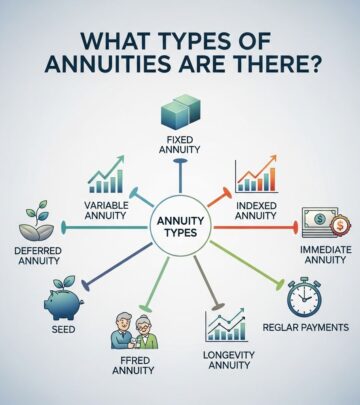
Before diving into calculations, it’s essential to understand the different types of annuities. Immediate annuities begin payments shortly after purchase, while deferred annuities delay payments until a future date. Fixed annuities provide guaranteed payments, whereas variable annuities depend on investment performance.
What Is Present Value?
Present value (PV) represents the current worth of future cash flows, discounted at a specific interest rate. In the context of annuities, present value tells you how much a series of future payments is worth in today’s dollars. This concept is fundamental to financial decision-making because it accounts for the time value of money—the principle that money available today is worth more than the same amount in the future.
The present value calculation becomes essential when you’re evaluating whether to accept a lump sum settlement or receive periodic payments. For example, if you’re offered a choice between receiving $100,000 today or $15,000 annually for 10 years, calculating the present value of those future payments helps you determine which option is more financially advantageous.
Key factors affecting present value include:
- The interest rate or discount rate applied
- The number of payment periods
- The amount of each payment
- The timing of payments (beginning or end of period)
- Inflation and economic conditions
What Is Future Value?
Future value (FV) represents the amount that a series of regular payments will grow to at a specified future date, assuming a certain interest rate or rate of return. When calculating the future value of an annuity, you’re essentially determining how much money you’ll have accumulated after making consistent deposits or payments over time, including the interest earned on those payments.
Future value calculations are particularly useful for retirement planning, as they help you understand how much wealth you’ll accumulate through regular contributions to retirement accounts such as 401(k)s, IRAs, or other investment vehicles. For instance, if you contribute $500 monthly to a retirement account earning 6% annually, calculating the future value shows how much you’ll have available at retirement.
Factors influencing future value include:
- The regular payment amount
- The interest rate or rate of return
- The number of payment periods
- The frequency of compounding
- Whether payments are made at the beginning or end of each period
Present Value of an Ordinary Annuity Formula
An ordinary annuity refers to a series of equal payments made at the end of each period. The formula for calculating the present value of an ordinary annuity is:
PV = PMT × [1 – (1 + r)^-n] / r
Where:
- PV = Present Value
- PMT = Payment amount for each period
- r = Interest rate or discount rate per period
- n = Total number of payment periods
Let’s consider a practical example. Suppose you’re offered an annuity that pays $5,000 at the end of each year for 5 years, and the discount rate is 5%. Using the formula:
PV = $5,000 × [1 – (1.05)^-5] / 0.05
PV = $5,000 × [1 – 0.7835] / 0.05
PV = $5,000 × 0.2165 / 0.05
PV = $5,000 × 4.3295
PV = $21,647.50
This means that receiving $5,000 annually for 5 years is equivalent to receiving approximately $21,647.50 in today’s dollars, assuming a 5% discount rate.
Present Value of an Annuity Due Formula
An annuity due involves payments made at the beginning of each period rather than at the end. Since payments are received earlier, an annuity due will have a higher present value than an ordinary annuity. The formula is:
PV (Annuity Due) = PMT × [1 – (1 + r)^-n] / r × (1 + r)
The main difference is the multiplication by (1 + r) at the end, which accounts for the earlier receipt of payments. Using our previous example but with payments at the beginning of each year:
PV (Annuity Due) = $5,000 × 4.3295 × 1.05
PV (Annuity Due) = $22,704.88
Notice the difference: the annuity due is worth approximately $1,057.38 more than the ordinary annuity, demonstrating the value of receiving payments earlier.
Future Value of an Ordinary Annuity Formula
To calculate how much your regular contributions will accumulate over time, use the future value formula for an ordinary annuity:
FV = PMT × [((1 + r)^n – 1) / r]
Where:
- FV = Future Value
- PMT = Payment amount for each period
- r = Interest rate or rate of return per period
- n = Total number of payment periods
For example, if you contribute $2,000 at the end of each year for 10 years to a retirement account earning 6% annually:
FV = $2,000 × [((1.06)^10 – 1) / 0.06]
FV = $2,000 × [(1.7908 – 1) / 0.06]
FV = $2,000 × [0.7908 / 0.06]
FV = $2,000 × 13.1808
FV = $26,361.60
After 10 years of contributions, your account would grow to approximately $26,361.60, including the interest earned on your deposits.
Future Value of an Annuity Due Formula
When payments are made at the beginning of each period, use the annuity due formula:
FV (Annuity Due) = PMT × [((1 + r)^n – 1) / r] × (1 + r)
Using the same example with payments at the beginning of each year:
FV (Annuity Due) = $2,000 × 13.1808 × 1.06
FV (Annuity Due) = $27,922.90
By making payments at the beginning of each period, your account would accumulate to approximately $27,922.90, which is $1,561.30 more than with an ordinary annuity.
Key Differences Between Ordinary Annuities and Annuities Due
Understanding the distinction between these two types is critical for accurate calculations:
| Feature | Ordinary Annuity | Annuity Due |
|---|---|---|
| Payment Timing | End of each period | Beginning of each period |
| Present Value | Lower (later payments) | Higher (earlier payments) |
| Future Value | Lower | Higher (more time to earn interest) |
| Formula Adjustment | Base formula | Multiply by (1 + r) |
| Common Examples | Most loans, monthly payments | Rent, insurance premiums |
Practical Applications in Retirement Planning
These calculations have numerous real-world applications for retirement planning:
- Pension Evaluation: Compare pension payouts with lump-sum options by calculating present values
- Retirement Savings Goals: Determine how much you need to contribute monthly using future value calculations
- Annuity Purchases: Assess whether purchasing an annuity is worth the cost
- Estate Planning: Calculate the present value of guaranteed income streams for beneficiaries
- Investment Decisions: Compare annuities with other investment options using time-value calculations
Factors Affecting Annuity Values
Several factors significantly influence both present and future value calculations:
- Interest Rates: Higher rates increase future values but decrease present values
- Time Period: Longer periods allow more growth in future value calculations
- Payment Frequency: More frequent payments can yield different results
- Inflation: Reduces the real value of future payments
- Risk and Creditworthiness: Affects the appropriate discount rate to use
Using Financial Calculators and Software
While manual calculations are valuable for understanding concepts, financial professionals and individuals often use specialized tools:
- Financial calculators with annuity functions
- Spreadsheet software with built-in financial functions
- Online annuity calculators
- Professional financial planning software
- Banking and investment platform tools
These tools can handle complex scenarios with varying payment amounts, multiple rate changes, and irregular periods.
Frequently Asked Questions (FAQs)
Q: What’s the difference between present value and future value?
A: Present value calculates what future payments are worth today, while future value determines what current or regular payments will accumulate to in the future. Present value uses discounting, while future value uses compounding.
Q: Why would someone choose an annuity over a lump sum?
A: Annuities provide guaranteed income, protection against outliving your money, structured cash flow, and can offer tax advantages. However, lump sums offer flexibility and control over investments.
Q: How does inflation affect annuity calculations?
A: Inflation reduces the purchasing power of future payments. To account for inflation, use a real discount rate (nominal rate minus inflation rate) in your calculations.
Q: Can annuity formulas be used for non-retirement investments?
A: Yes, these formulas apply to any regular series of payments, including loans, savings plans, bond calculations, and investment returns analysis.
Q: What happens if payment frequency changes?
A: You must adjust both the interest rate and number of periods to match the payment frequency. For monthly payments, divide the annual rate by 12 and multiply periods by 12.
Q: Is an annuity due always better than an ordinary annuity?
A: An annuity due has higher present and future values because payments are received or made earlier. However, “better” depends on your circumstances, cash flow needs, and investment opportunities.
References
- The Theory and Practice of Interest Rates — Society of Actuaries. 2024. https://www.soa.org
- Time Value of Money in Financial Decision Making — Corporate Finance Institute. 2024. https://corporatefinanceinstitute.com
- Retirement Income Planning: A Guide to Annuities — U.S. Securities and Exchange Commission (SEC). 2023. https://www.sec.gov/investor/pubs/annuities.pdf
- Financial Mathematics for Insurance Professionals — American College of Financial Services. 2024. https://www.theamericancollege.edu
- Pension and Annuity Basics for Retirement Planning — U.S. Department of Labor. 2023. https://www.dol.gov/agencies/ebsa
Similar Articles








Read full bio of Sneha Tete