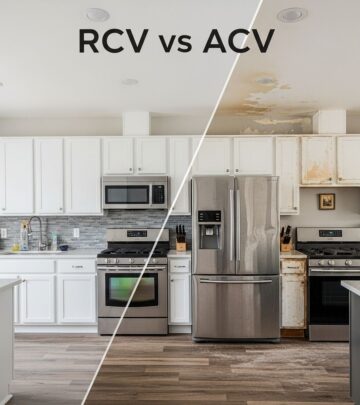
Home Replacement Cost: 5-Step Guide To Accurate Estimates
Master the art of determining your home's rebuild value to secure optimal insurance coverage and financial protection.

Determining the replacement cost of your home is essential for setting the right dwelling coverage limit on your homeowners insurance policy. This figure represents the amount needed to rebuild your house from the foundation up using current materials and labor rates, excluding land value. Accurate calculation prevents underinsurance, which could leave you paying out-of-pocket after a loss, or overinsurance, leading to unnecessary premiums.
Why Replacement Cost Matters More Than Market Value
Many confuse replacement cost with market value, but they serve different purposes. Market value includes land, location desirability, and economic factors, potentially making it higher or lower than rebuild costs. Replacement cost focuses solely on reconstruction expenses at today’s prices, crucial for insurance claims.
For instance, a home in a prime urban area might have a high market value due to location but lower replacement costs if built modestly. Conversely, rural properties with custom features could cost more to rebuild than their sale price suggests. Insurers prioritize replacement cost to ensure full recovery post-disaster.
Core Factors Driving Replacement Cost
Several variables influence the final estimate. Understanding them helps refine your calculations.
- Square Footage: The primary driver; larger homes demand more materials and labor.
- Construction Quality and Materials: Premium features like granite counters or slate roofs elevate costs over basic builds.
- Home Age and Condition: Older structures may require pricier specialty materials or code upgrades.
- Location-Specific Costs: Labor rates, material availability, and regional regulations vary widely—coastal areas often exceed inland prices due to storm-resistant requirements.
- Building Codes and Ordinances: Modern codes might mandate elevated foundations or energy-efficient systems, adding 10-30% to estimates.
- Labor Market: Skilled worker shortages in some areas inflate hourly rates significantly.
In 2022, the average U.S. cost to build a home stood at $280,226, but this varies by region and home specs.
Simple DIY Method: Square Footage Multiplier
The quickest starting point multiplies your home’s livable square footage by the local rebuild cost per square foot. Research area averages from builder associations or recent construction projects—national figures range $125-$250 per square foot, but localize for precision.
Example Calculation: For a 2,500 sq ft home at $160/sq ft: 2,500 × 160 = $400,000 baseline. Adjust upward for high-end finishes (+20%) or downward for basic construction (-10%).
| Home Size (sq ft) | Low-End Cost/sq ft | Average Cost/sq ft | High-End Cost/sq ft | Estimated Total (Average) |
|---|---|---|---|---|
| 1,500 | $120 | $150 | $200 | $225,000 |
| 2,000 | $130 | $160 | $220 | $320,000 |
| 3,000 | $140 | $170 | $240 | $510,000 |
| 4,000 | $150 | $180 | $260 | $720,000 |
This table illustrates regional variations; always verify local data.
Advanced Tools: Digital Replacement Cost Estimators
Online and insurer-provided calculators offer refined estimates by inputting detailed home data. Tools like those from insurers or standalone software (e.g., Craftsman’s Estimator) factor in ZIP code-specific pricing, material databases, and code updates.
To use effectively:
- Gather measurements: Total sq ft, stories, roof type, foundation.
- Document features: Fireplace count, flooring types, appliances.
- Enter location: ZIP code pulls regional labor/material rates.
- Review output: Cross-check against recent local builds.
These tools update for inflation and supply chain shifts, outperforming static multipliers.
Professional Assessments for Precision
For utmost accuracy, engage experts. Options include:
- Insurance Company Valuation: Free via agent software; provide home details for tailored report.
- Independent Appraiser: On-site inspection ($300-$600) yields comprehensive breakdowns, ideal for unique homes.
- Local Contractor Bid: Solicit rebuild quotes from 2-3 builders familiar with codes.
Appraisers excel at capturing nuances like historic elements or seismic retrofits that software misses.
Common Mistakes and How to Avoid Them
Underestimating leads to 20-40% coverage gaps, per industry data. Pitfalls include:
- Ignoring inflation: Costs rise 5-10% yearly; review annually.
- Omitting detached structures: Garages, sheds add 10-15%.
- Confusing with actual cash value: ACV deducts depreciation; opt for replacement cost coverage.
- Over-relying on Zillow-type tools: These estimate market, not rebuild value.
Reassess every 3-5 years or post-renovation/major market shifts.
Enhancing Coverage: Beyond Basic Replacement Cost
Standard policies cover up to the limit, but extensions protect against spikes:
- Extended Replacement Cost: 20-50% over limit for surprises.
- Guaranteed Replacement Cost: Unlimited rebuild, premium but comprehensive.
- Ordinance/Law Coverage: Funds code upgrades post-loss.
These are vital amid 2020s construction inflation.
Step-by-Step Guide to Finalizing Your Estimate
Combine methods for confidence:
- Calculate DIY baseline.
- Run through 2+ online tools.
- Consult insurer/agent for software estimate.
- Hire appraiser if discrepancies exceed 10%.
- Set dwelling limit at or above highest figure, plus extensions.
Track via spreadsheet: Date, Method, Estimate, Notes.
Frequently Asked Questions
What exactly does replacement cost cover?
It covers rebuilding the structure with like-kind materials, including labor, debris removal, and permits—but not land or personal property.
How often should I update my estimate?
Annually for high-risk areas; every 3 years otherwise, or after improvements.
Does location affect replacement cost?
Yes, profoundly—urban/coastal builds cost more due to labor, codes, and materials.
Can I use my home’s purchase price?
No; it includes land and doesn’t reflect current rebuild economics.
What’s the difference between RCV and ACV?
RCV pays full rebuild; ACV subtracts depreciation, often 20-50% less.
Regional Cost Trends and Future Outlook
U.S. averages hover $150-$200/sq ft, but expect upward pressure from labor shortages and material volatility. Western states average higher due to seismic/wildfire codes; Midwest lower. Monitor via RSMeans data or local builder reports.
Proactively calculating empowers better policy choices, safeguarding your investment.
References
- How to Calculate the Replacement Cost of Your Home — Experian. 2023. https://www.experian.com/blogs/ask-experian/how-to-calculate-home-replacement-cost/
- What is dwelling replacement cost in home insurance? — Progressive Insurance. 2024. https://www.progressive.com/answers/home-replacement-cost/
- How To Calculate the Right Replacement Cost for Your Home Insurance — Newbrook Insurance. 2023. https://www.newbrookins.com/blog/how-to-calculate-the-right-replacement-cost-for-your-home-insurance.aspx
- Understanding Replacement Cost Estimators in Home Insurance — Total CSR. 2024. https://totalcsr.com/insurance-agency-blog/how-replacement-cost-estimator-works/
- Replacement Cost Estimator for Homeowners Insurance — Bankrate. 2025-02-01. https://www.bankrate.com/insurance/homeowners-insurance/replacement-cost-estimator/
- Home Replacement Cost Valuation Guide — IRMI. 2023. https://www.irmi.com/articles/expert-commentary/home-replacement-cost-valuation-guide
Similar Articles








Read full bio of medha deb