How to Calculate Compound Interest on Checking and Savings
Learn how compound interest works, how to calculate it, and how different accounts and compounding schedules can accelerate your savings growth.
Calculate Compound Interest on Your Checking and Savings
Compound interest is one of the most powerful tools available to help money in a checking or savings account grow over time. It allows you to earn interest not only on the amount you initially deposit, but also on the interest that has already been credited to your balance.
By understanding how compound interest works, how to calculate it, and how different bank products apply it, you can make better choices about where to keep your money and how to reach your savings goals more efficiently.
What Is Compound Interest?
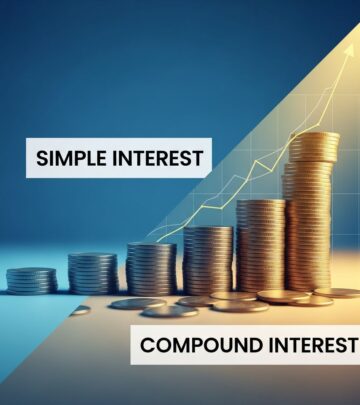
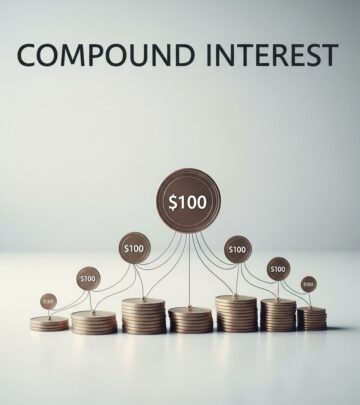
Compound interest is interest calculated on both your original principal and on the interest that has been added in previous periods. Each time interest is credited, it becomes part of your balance, and future interest calculations are based on this larger amount.
In contrast, simple interest is calculated only on the original principal, so your interest payment remains the same every period if the rate does not change.
Compound Interest vs. Simple Interest
| Feature | Compound Interest | Simple Interest |
|---|---|---|
| What interest is based on | Principal plus accumulated interest | Original principal only |
| Growth over time | Accelerates; creates a “snowball” effect | Linear; same amount of interest each period |
| Common uses | Checking, savings, CDs, many loans and investments | Certain loans and basic interest calculations |
How Compound Interest Works in Bank Accounts
Most interest-bearing bank accounts, such as savings accounts, many checking accounts, and certificates of deposit (CDs), use compound interest rather than simple interest.
In these accounts, the bank applies a stated interest rate, divides it over the compounding periods, and adds the resulting interest to your balance according to the schedule specified in the account terms.
Key Components That Affect Your Earnings
- Principal (P): The starting balance or initial deposit in your account.
- Interest rate (r): The nominal annual interest rate quoted by the bank (for example, 2% or 4%).
- Compounding frequency (n): How often interest is added to your account—daily, monthly, quarterly, or annually.
- Time (t): How long your money remains on deposit, expressed in years.
- Contributions: Any recurring deposits you add, such as monthly transfers from your paycheck.
Compounding Frequency
Compounding frequency can make a measurable difference in how quickly your money grows. When interest is compounded more often, interest is added to your principal more frequently, which increases the base on which future interest is calculated.
| Frequency | Typical Use | Effect on Growth |
|---|---|---|
| Annually | Some savings products, basic examples | Lowest growth among common compounding schedules |
| Quarterly | Some traditional savings accounts | Moderate growth |
| Monthly | Many interest-bearing checking and money market accounts | Higher growth than quarterly or annual compounding |
| Daily | Many high-yield savings accounts and CDs | Highest growth at a given nominal rate |
How to Calculate Compound Interest
The basic compound interest formula for an account with a fixed interest rate and no additional contributions is:
A = P (1 + r/n)^(n t)
- A = ending balance
- P = starting principal
- r = annual interest rate (in decimal form)
- n = number of compounding periods per year
- t = time in years
This formula assumes you leave both the principal and the interest in the account for the entire period, with no withdrawals.
Step-by-Step Example
Suppose you deposit $10,000 into a savings account that offers a 4% annual interest rate compounded monthly.
- P = 10,000
- r = 0.04
- n = 12
- t = 1 year
Monthly interest rate = 0.04 / 12 = 0.003333…
Number of compounding periods = 12 × 1 = 12
Balance after 1 year:
A = 10,000 × (1 + 0.04/12)^(12)
That yields a value slightly above $10,400, reflecting the compounding effect compared with simple interest of exactly $400 on $10,000 at a 4% annual rate.
Compound Interest With Regular Contributions
Many people fund their savings or interest checking accounts with recurring deposits from each paycheck rather than a single lump-sum deposit. In that case, the calculation involves both the growth of existing savings and the effect of new contributions.
While there is a more complex formula for this scenario, most savers rely on an online compound interest calculator, bank-provided tools, or budgeting software to plug in variables such as starting balance, monthly contribution, interest rate, and compounding frequency.
Compound Interest and APY
Banks often quote both an interest rate and an annual percentage yield (APY) on deposit accounts. The APY reflects the effect of compounding over a full year and is therefore the better figure to use when comparing the true earning potential of different accounts.
APY and Compounding
For a given nominal interest rate, an account that compounds more frequently will have a higher APY. For example, two accounts might each quote a 4% nominal rate, but the account that compounds daily will report a slightly higher APY than one that compounds annually because it pays interest on a growing balance more often.
When you compare checking and savings accounts, focus on the APY to understand how much your money can earn over time, all else equal.
Where You Can Earn Compound Interest
Several common banking and investment products use compound interest to determine your earnings.
Interest-Bearing Checking Accounts
Some checking accounts pay interest on your balance, typically at a lower rate than high-yield savings accounts. Many of these accounts calculate interest daily and credit it monthly.
Interest-bearing checking may be useful when:
- You routinely keep a relatively high balance in checking.
- You want both daily transaction access and a modest return.
- You are willing to meet any minimum balance or activity requirements.
Savings Accounts
Traditional and high-yield savings accounts commonly use compound interest, often calculated daily and credited monthly or quarterly, depending on the institution.
These accounts are generally best suited for:
- Emergency funds and short-term savings goals.
- Money that doesn’t need to be accessed daily.
- Balances large enough to benefit from compounding over time.
Certificates of Deposit (CDs)
Certificates of deposit (CDs) are time deposit accounts where you commit to keeping your money in the account for a fixed term in exchange for a typically higher interest rate than a standard savings account. CDs usually compound interest daily or monthly, and many are insured by the FDIC up to applicable limits when issued by insured banks.
CDs may be suitable when:
- You have cash you do not need to access until the CD matures.
- You want to lock in a rate for a specific period.
- You accept early withdrawal penalties if you access funds before the maturity date.
Strategies to Maximize Compound Interest
Even small changes in rate, compounding frequency, or contribution amounts can significantly affect your long-term balance.
Increase Your Interest Rate When Possible
Higher rates translate into faster growth, especially over long time horizons. You may be able to raise your effective rate by:
- Moving from a traditional savings account to a high-yield savings account.
- Considering CDs when you can commit funds for a set period.
- Comparing APYs from multiple institutions.
Take Advantage of More Frequent Compounding
All else equal, an account with daily compounding will yield more than one with monthly or annual compounding. When comparing accounts with similar APYs, compounding frequency may be less critical, but for equal nominal rates, it can tip the balance in favor of one product.
Start Sooner and Contribute Regularly
Time is one of the most important variables in compound growth. The longer your money stays invested or saved, the more pronounced the compounding effect becomes.
Helpful habits include:
- Setting up automatic transfers from checking to savings each pay period.
- Increasing contributions when your income rises.
- Avoiding unnecessary withdrawals that interrupt compounding.
Example: Comparing Different Compounding Schedules
Consider a $1,000 deposit held for 10 years at a nominal 4% annual interest rate. Ignoring taxes and additional contributions, the ending balance will differ depending on how often interest is compounded.
| Compounding Frequency | Compounding Periods (n) | Approximate Ending Balance |
|---|---|---|
| Annually | 1 | About $1,480 |
| Monthly | 12 | Just over $1,490 |
| Daily | 365 | Approximately $1,492 |
The differences may seem modest in this example, but the effect grows with larger balances, higher rates, and longer time frames.
Using a Compound Interest Calculator
Because compound interest calculations can become complex when you factor in varying contribution patterns, changing rates, or different compounding schedules, many people use an online compound interest calculator to estimate future balances.
A typical calculator will ask you to enter:
- Current account balance or initial deposit.
- Recurring contribution amount and frequency (for example, monthly).
- Annual interest rate or APY.
- Compounding frequency (daily, monthly, quarterly, or annually).
- Number of years you plan to save.
The calculator then applies the appropriate formula to estimate your future balance and total interest earned over the selected period.
Frequently Asked Questions (FAQs)
Q: How is compound interest different from simple interest?
A: With compound interest, you earn interest on your principal and on interest previously credited to your account, which accelerates growth. With simple interest, you earn interest only on your original principal, so the amount earned each period does not increase if the rate is constant.
Q: How often do checking and savings accounts usually compound interest?
A: Many savings and high-yield accounts calculate interest daily and credit it monthly or quarterly, while interest-bearing checking accounts commonly compound daily or monthly. The exact schedule depends on the institution and the account terms.
Q: What is APY and why is it important?
A: APY, or annual percentage yield, reflects the total amount of interest you would earn over a year, including the effects of compounding. It is a standardized measure that makes it easier to compare different accounts with different compounding schedules.
Q: Does a higher compounding frequency always mean a much higher return?
A: More frequent compounding does increase your return at a given nominal rate, but the difference between monthly and daily compounding, for example, is usually modest over short periods. Over long time horizons and with larger balances, however, the difference becomes more noticeable.
Q: How can I make the most of compound interest with limited savings?
A: Even with a modest starting balance, you can benefit from compound interest by starting early, contributing regularly, choosing accounts with competitive APYs, and avoiding unnecessary withdrawals. Over time, these habits allow compounding to have a larger effect.
References
- What Is a Compound Interest Account & How Does It Work? — Western & Southern Financial Group. 2024-02-15. https://www.westernsouthern.com/investments/compound-interest-account
- What Is Compound Interest & How Is It Calculated? — PNC Bank, National Association. 2023-11-01. https://www.pnc.com/insights/personal-finance/save/what-is-compound-interest.html
- Chapter 5: Compound Interest — Federal Deposit Insurance Corporation (FDIC). 2023-05-10. https://www.fdic.gov/consumer-resource-center/chapter-5-compound-interest
- How does compound interest work? — Consumer Financial Protection Bureau (CFPB). 2022-08-18. https://www.consumerfinance.gov/ask-cfpb/how-does-compound-interest-work-en-1683/
- Savings Accounts with Compound Interest Explained — Huntington National Bank. 2023-06-01. https://www.huntington.com/learn/saving/compound-interest-explained
- What is a compound interest account? — Prudential Financial. 2023-04-12. https://www.prudential.com/financial-education/compound-interest-account
- What is a Compound Interest Account? — JPMorgan Chase Bank, N.A. 2023-09-07. https://www.chase.com/personal/banking/education/budgeting-saving/what-is-a-compound-interest-account
Similar Articles








Read full bio of Sneha Tete