Buying Foreclosures With Poor Credit: Expert Guide
Unlock homeownership opportunities through foreclosures even with a low credit score using smart strategies and financing options.
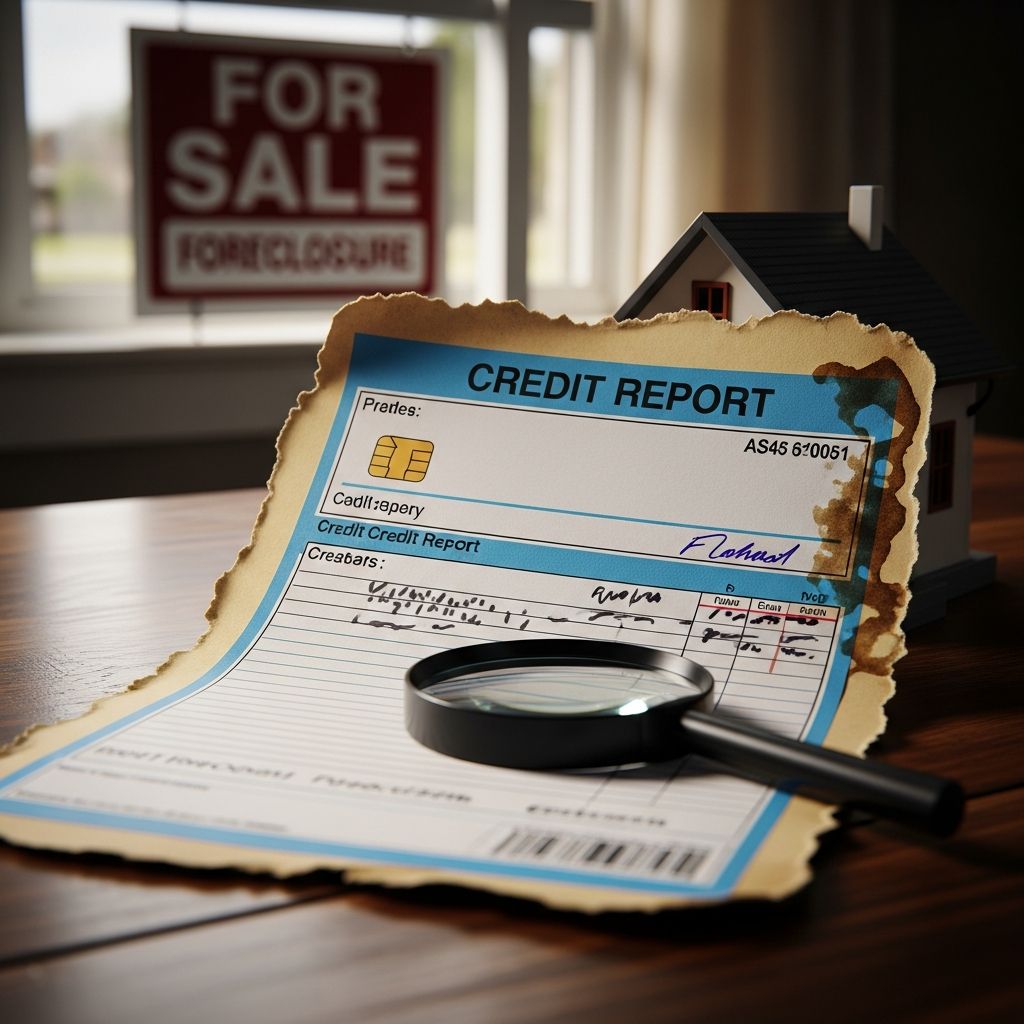
Acquiring a foreclosed property offers a pathway to homeownership for those with suboptimal credit histories by providing discounted prices that offset higher borrowing costs. This guide outlines actionable strategies, financing alternatives, and risk mitigation tactics tailored for buyers facing credit challenges.
Understanding Foreclosure Opportunities for Credit-Challenged Buyers
Foreclosures arise when homeowners default on mortgages, leading lenders to reclaim and resell properties at reduced values. For buyers with poor credit—typically scores below 620—these opportunities shine because steep discounts can accommodate elevated interest rates or down payments. Properties enter the market through auctions, bank-owned (REO) listings, or preforeclosure negotiations, each presenting unique entry points.
Auctions demand quick cash or prearranged financing, often without inspections, heightening risks but promising the deepest savings. REO homes, held by lenders post-auction, allow inspections and agent involvement, suiting financed purchases. Preforeclosures enable direct deals with distressed owners, potentially avoiding auctions altogether. Recent market data shows foreclosures trading 20-30% below comparable values, making them viable despite credit hurdles.
Assessing Your Financial Readiness Despite Low Scores
Before pursuing foreclosures, evaluate your debt-to-income (DTI) ratio, ideally under 43%, stable employment, and cash reserves for deposits or repairs. Poor credit limits conventional loans, but alternatives exist: FHA loans accept scores as low as 500 with 10% down, or 580 for 3.5% down; VA loans ignore scores for eligible veterans; USDA loans suit rural buyers with flexible underwriting.
Non-qualified mortgage (Non-QM) options from portfolio lenders consider bank statements or assets over FICO scores. Calculate affordability using tools that factor repair budgets—foreclosures often need 10-20% extra for fixes. Building reserves cushions against as-is sales common in this niche.
| Loan Type | Min Credit Score | Down Payment | Best For |
|---|---|---|---|
| FHA 203(k) | 500-580 | 3.5-10% | Fixer-uppers |
| VA | No min | 0% | Veterans |
| USDA | 640 (flexible) | 0% | Rural areas |
| Non-QM | Varies | 10-20% | Self-employed |
Finding and Evaluating Foreclosure Listings
Leverage platforms like RealtyTrac, Auction.com, or MLS filters for foreclosures, preforeclosures, and REOs. Partner with a foreclosure-savvy real estate agent experienced in distressed sales—they access exclusive REO portals and decode trustee auction rules. Agents negotiate with asset managers, not emotional sellers, streamlining deals.
- Search MLS for ‘bank-owned’ or ‘foreclosure’ status.
- Monitor county sheriff sales for auction calendars.
- Use HUD.gov for government-held REOs with buyer incentives.
- Check local newspapers for preforeclosure notices.
Scrutinize comps within 180 days, adjusting for condition. Drive-bys reveal curb appeal; interior access varies by stage. Budget for professional inspections uncovering liens, mold, or structural woes absent in as-is deals.
Securing Financing with Subpar Credit Profiles
Obtain preapproval early—it signals seriousness to sellers competing against cash investors. Lenders verify income/assets via Verified Approval, strengthening offers. For auctions, secure bridge loans or hard money despite high rates (10-15%), refinancing post-purchase.
FHA 203(k) loans bundle purchase and rehab costs, ideal for foreclosures needing updates. Credit unions like Solarity offer tailored programs; shop multiple lenders for best terms. Boost approval odds by disputing errors on reports and adding positive tradelines. Expect rates 2-4% above prime, but discounts offset this— a $200K home at 15% off saves $30K, dwarfing extra interest.
Mastering the Auction Process for Maximum Savings
Foreclosure auctions, often sheriff sales, require cashiers checks ($5K-$10K deposits) and as-is acceptance. Research state rules: Ohio mandates deposits scaling with appraisals ($2K-$10K). Online platforms simplify bidding; set max limits to avoid overpaying.
High bidders await court confirmation (30 days), then close within 60. Risks include eviction holdouts or undisclosed liens—title searches are vital. Cash kings dominate, but financed buyers succeed with rapid closers. Aim 10-20% below market; recent sales confirm quick flips if priced right.
- Register for bidding number with deposit.
- Inspect exterior; review title report.
- Bid incrementally to preset max.
- Confirm win; pay balance promptly.
Navigating REO Purchases Smoothly
Banks list REOs via agents, clearing titles and vacating properties. Offers go through asset managers; expect counters near list price but negotiate repairs or closing costs. Preapprovals expedite; inspections flag issues for price reductions.
REOs suit financed buyers—inspections permitted, appraisals standard. Government REOs (Fannie Mae, Freddie Mac) offer 100% financing incentives. Patience pays: these linger longer than auctions, reducing competition.
Mitigating Risks in Distressed Property Deals
As-is sales dominate; allocate 15% budget for surprises like roof replacements ($10K+) or HVAC ($5K). Liens survive auctions unless cleared—hire attorneys for searches. Neighborhood blight or occupancy delays closing; factor evictions (30-90 days).
Insurance challenges arise for damaged homes; shop specialty carriers. Long-term, poor condition impacts resale—plan flips or rentals wisely. Success stories abound: buyers with 550 scores snag $150K REOs for $120K, equity building despite repairs.
Strategic Offer Crafting and Negotiation Tactics
Back offers with preapprovals; include escalation clauses for auctions. REO offers specify timelines (7-14 days inspection), earnest money (1-2%). Preforeclosure short sales need hardship letters, lender approval (45-90 days).
Competitive markets demand over-list bids if comps sell fast; lowball risks rejection. Agents leverage CMAs for leverage. Table sample offers:
| Scenario | List Price | Offer Strategy | Expected Outcome |
|---|---|---|---|
| Auction | $150K | $120K cash | Win if low competition |
| REO | $180K | $165K financed + inspection | Counter to $170K |
| Preforeclosure | $200K | $160K short sale | Approval after review |
Closing the Deal and Post-Purchase Planning
Finalize appraisals/inspections; renegotiate if discrepancies arise. Title insurance protects against liens. Post-close, prioritize repairs for habitability and equity. Refinance after 6-12 months if credit improves, capturing savings.
Tax implications: auctions may trigger back taxes; REOs often clear. Build emergency funds for ownership realities.
Frequently Asked Questions
Can I buy a foreclosure with a 500 credit score?
Yes, via FHA loans or Non-QM options, though expect higher rates and down payments. Preapproval confirms eligibility.
Are foreclosure auctions cash-only?
Most require cash or certified funds, but some allow financing with prior lender commitment.
How much extra budget for repairs?
Plan 10-25% of purchase price; inspections guide specifics.
What’s the difference between auction and REO?
Auctions are faster/riskier without inspections; REOs permit due diligence.
Do foreclosures qualify for first-time buyer programs?
Often yes, especially FHA/VA on REOs.
Key Takeaways for Success
- Team with experienced agents and lenders.
- Prioritize preapprovals and inspections.
- Balance discounts against repair realities.
- Consult attorneys for auctions.
References
- Buying A Foreclosed Home: Pros, Cons and A Step-by-Step Guide — Rocket Mortgage. 2023. https://www.rocketmortgage.com/learn/buying-a-foreclosed-home-pros-cons-and-how-to-purchase
- How to buy a home in foreclosure: a buyer’s guide — Solarity Credit Union. 2024. https://www.solaritycu.org/post/articles/how-to-purchase-a-foreclosure
- How to Buy a Foreclosed Home — PNC Insights. 2024. https://www.pnc.com/insights/personal-finance/borrow/how-to-buy-foreclosed-home.html
- Understanding Ohio’s New Foreclosure Procedures — Hondros College. 2023. https://www.hondros.com/resources/blog/understanding-ohios-new-foreclosure-procedures/
- How To Buy A Foreclosed Home, Step-By-Step — Bankrate. 2025-02-01. https://www.bankrate.com/real-estate/how-to-buy-a-foreclosed-home/
- Buying a Foreclosed Home: What You Need to Know — Zillow. 2024. https://www.zillow.com/learn/buying-a-foreclosed-home/
- The REO Guide: 10 Steps to Buying a Bank-Owned Home — Pennymac. 2024. https://www.pennymac.com/blog/reo-guide-10-steps-to-buying-bank-owned-home
Similar Articles








Read full bio of medha deb