Out-Of-State Private Car Purchases: A Complete Buyer Guide
Master the process of acquiring a vehicle from a private owner across state lines with secure strategies and legal insights.

Purchasing a vehicle from a private seller in another state expands your options for finding the right car at a competitive price, but it introduces unique challenges like varying regulations, logistics, and security risks. This comprehensive guide outlines every critical phase, from initial research to final registration, empowering you to complete the deal confidently and legally.
Why Consider Interstate Private Sales?
Private sales often yield lower costs compared to dealerships, as sellers avoid overhead expenses passed onto buyers. In regions with limited local inventory, out-of-state options via online platforms reveal hidden gems, such as low-mileage models or unique trims unavailable nearby. No federal laws restrict these transactions, making them viable even across long distances, provided you address state-specific requirements proactively.
Key advantages include greater negotiation flexibility and potential savings on taxes or fees, depending on your home state’s rules. However, drawbacks involve self-managing paperwork, heightened scam risks, and transportation logistics, which demand meticulous planning.
Initial Research and Vehicle Selection
Begin by defining your budget, encompassing purchase price, taxes, shipping, inspections, and potential repairs. Use online marketplaces to filter listings by location, price, and features, prioritizing those within drivable or affordable shipping range.
Request the Vehicle Identification Number (VIN) early to run a history report, revealing accidents, ownership changes, liens, or odometer issues. Contact sellers promptly for detailed photos, service records, and condition updates to narrow choices efficiently.
- Verify VIN authenticity to confirm the vehicle’s identity.
- Assess mileage, maintenance history, and modifications.
- Compare similar vehicles locally for pricing benchmarks.
Conducting Thorough Pre-Purchase Checks
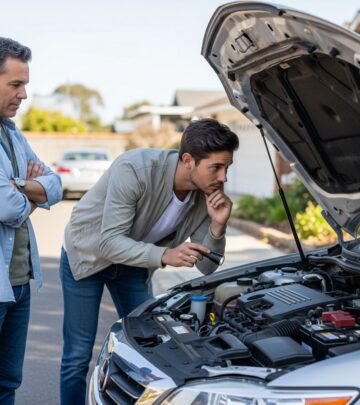
A professional inspection is non-negotiable, especially remotely. Hire an independent mechanic near the seller for a comprehensive evaluation, including engine, transmission, brakes, and frame integrity. This step uncovers hidden defects, justifying price adjustments or deal termination.
Test drives, if feasible, should simulate real-world conditions: highways, city streets, and inclines. For distant buys, video walkthroughs or live mechanic reports suffice. Always cross-check the title for liens via your state’s DMV portal.
| Inspection Aspect | Why It Matters | Red Flags |
|---|---|---|
| Engine and Transmission | Core reliability | Leaks, unusual noises |
| Body and Frame | Structural safety | Rust, misalignment |
| Electronics and Tires | Daily usability | Warning lights, uneven wear |
| Emissions Compliance | Registration eligibility | Failed tests in your state |
Secure Financing and Payment Strategies
Secure pre-approval from your home-state lender using the VIN for precise quotes. This caps spending and strengthens negotiations. Avoid seller financing, as private deals rarely offer it.
For payments, eschew wire transfers or advance deposits due to fraud risks. Optimal methods include:
- Cashier’s Check at a Neutral Bank: Meet at the seller’s local branch for verification and exchange.
- Escrow Services: Third-party holds funds until title and inspection confirmations.
- Bank Wire Post-Inspection: Only after physical verification.
Negotiate firmly, leveraging inspection findings and market data. Aim for 5-15% below asking, with your exit readiness as leverage.
Mastering Title, Bill of Sale, and Documentation
The signed title, free of liens, is paramount. Obtain it before payment, notarized if required by either state. A detailed bill of sale should list price, VIN, date, conditions, and warranties (typically ‘as-is’).
Private sellers must provide odometer disclosure and smog certificates if applicable. Retain copies for your records, as discrepancies can delay registration.
Arranging Transportation and Temporary Permits
Driving home requires a temporary transit permit from your or the seller’s DMV, varying by state (e.g., 30-day allowances in many). Ship via reputable auto transporters for longer distances, budgeting $500-$1500 based on mileage.
Remove out-of-state plates post-sale; your permit or trailer’s registration enables legal movement. Insure coverage during transit through your policy or shipper’s options.
Navigating Taxes, Registration, and Insurance
Pay use tax in your home state upon registration, often crediting any seller-state fees. Emissions testing must comply with local standards; non-compliant vehicles may need modifications.
Update insurance immediately, confirming out-of-state coverage. Register within 30 days typically, submitting title, bill of sale, VIN verification, and proof of insurance.
| State Factor | Typical Requirement | Timeline |
|---|---|---|
| Sales Tax | Home state rate | At registration |
| Title Transfer | Signed docs + fees | 30 days |
| Emissions Test | Local standards | Pre-registration |
| Plates | New issue | Upon approval |
Common Pitfalls and Risk Mitigation
Fraud tops concerns: fake titles, curbstoning (unlicensed flipping), or odometer fraud. Mitigate with VIN checks, inspections, and escrow. Verify seller identity via ID and utility bills.
Logistical hurdles like permit denials or shipping delays require buffer time. Budget 10-20% extra for unforeseen costs.
- Never release funds pre-inspection.
- Document all communications.
- Consult DMVs in both states beforehand.
Private Seller vs. Dealership Comparison
Private buys save money but demand effort; dealerships streamline paperwork with temp tags and warranties at higher prices.
| Aspect | Private Seller | Dealership |
|---|---|---|
| Price | Lower, flexible | Higher, fixed |
| Paperwork | Buyer handles | Dealer manages |
| Warranty | As-is usually | Often included |
| Financing | None | Available |
FAQs
Can I drive a newly bought out-of-state car home without plates?
Yes, with a temporary permit from the relevant DMV, valid for transit only.
Who pays sales tax in interstate private sales?
Your home state collects it during registration.
Is shipping safer than driving?
For long distances, yes, with insured carriers reducing wear and legal risks.
What if the title has a lien?
Payoff must clear before transfer; verify via report.
How soon must I register the car?
Usually 30 days; check your state’s DMV.
References
- Buying a Car Out of State: Everything You Need to Know — Oklahoma Central Credit Union. 2023-05-15. https://www.oucu.org/blog/buying-a-car-out-of-state
- How to Buy a Car Out of State — Carfax. 2024-08-20. https://www.carfax.com/buying/buying-out-of-state
- 7 TIPS for How to Buy a Car OUT OF STATE — The Homework Guy Team (YouTube). 2022-11-10. https://www.youtube.com/watch?v=ud5EVdhoe7g
- Buying a Car Out of State — Progressive. 2024-03-12. https://www.progressive.com/answers/buying-a-car-out-of-state/
- Buying a car long-distance from a private seller: how to pay securely — KeySavvy. 2023-09-05. https://www.keysavvy.com/blog/how-to-pay-out-of-state-private-seller
- Buying a Car from a Private Seller: A Helpful Guide — RateGenius. 2024-01-18. https://www.rategenius.com/buying-a-car-from-a-private-seller-a-helpful-guide/
Similar Articles








Read full bio of Sneha Tete