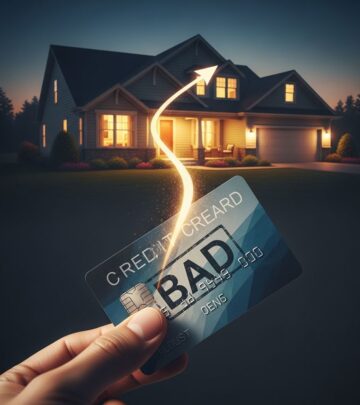
Buying A Home Without Credit History: 6 Steps To Get Approved
Discover practical strategies and loan options to achieve homeownership even without an established credit score or history.

Acquiring property without a traditional credit profile is feasible through specialized lending practices and government-supported programs that prioritize financial reliability over credit scores. Lenders evaluate alternative indicators like consistent bill payments and income stability to approve mortgages for such buyers.
Understanding Credit’s Role in Home Financing
A credit score summarizes your borrowing track record, signaling to lenders your repayment dependability. Without it, conventional automated approvals falter, but manual reviews allow deeper assessments of your fiscal habits. Programs from federal agencies accommodate this gap, enabling access to housing finance for debt-averse or new-to-credit individuals.
Established credit often unlocks favorable rates, yet its absence doesn’t bar entry. Lenders scrutinize employment duration, earnings consistency, and non-traditional payment records to gauge risk. This shift emphasizes holistic financial health over numeric scores.
Manual Underwriting: The Core Pathway for No-Credit Buyers
Manual underwriting involves human evaluators reviewing documents to confirm payment discipline sans credit reports. This method suits those lacking scores by substituting proofs from everyday obligations. Expect rigorous documentation to demonstrate 12+ months of reliability.
Key documents typically include:
- 12 months of rent receipts verifying timely payments
- Utility statements (electricity, water, gas) showing on-schedule settlements
- Telecom bills for phone or internet services
- Insurance payment histories for auto or renters policies
- Bank statements spanning 12-24 months
- Recent pay stubs and employment verification
- Two years of tax returns (W-2s or 1099s)
These build a narrative of responsibility, often satisfying lenders for conventional or government loans. The process extends approval times but broadens eligibility.
Government-Backed Loans Tailored for Limited Credit
Federal programs lower barriers for underserved buyers. FHA loans, insured by the Department of Housing and Urban Development (HUD), explicitly permit manual underwriting for no-credit applicants per HUD Handbook 4000.1.
| Loan Type | Min Down Payment (No Credit) | Max DTI Ratio | Other Requirements |
|---|---|---|---|
| FHA | 10% | 36-43% | 12 months reserves; alternative credit proofs |
| VA | 0% | Varies | Residual income focus; military eligibility |
| USDA | 0% | 41% | Rural properties; 640+ score preferred or manual |
FHA stands out for first-timers, mandating a 36% debt-to-income (DTI) cap, 10% down, and reserves equaling 12 mortgage payments for no-credit cases. VA loans for veterans waive down payments and PMI, emphasizing leftover income post-obligations. USDA targets rural areas with full financing if compensating factors exist.
Boosting Approval Odds with Substantial Down Payments
A hefty initial investment reduces lender exposure, easing no-credit approvals. Beyond the standard 3-5%, aim for 10-20% to sidestep private mortgage insurance (PMI) at 20% and signal commitment. This shrinks the loan principal, aligning monthly costs with verified affordability.
For instance, on a $300,000 home, a 20% down payment ($60,000) avoids PMI, potentially saving hundreds monthly. Sources like personal savings or IRA withdrawals (up to $10,000 penalty-free for first-timers) fund this.
Co-Signers and Alternative Financing Tactics
Enlisting a creditworthy co-signer merges their profile with yours, often securing conventional terms. They assume liability, so select trusted parties able to cover payments if needed. This tactic suits family-assisted purchases.
Cash purchases eliminate credit needs entirely, ideal for liquid asset holders. Seller financing or rent-to-own arrangements bypass banks, though rarer and riskier without legal safeguards.
Navigating Debt-to-Income and Reserve Mandates
DTI measures obligations against gross income; no-credit caps hover at 36%, versus 43-50% for scored borrowers. Calculate as (monthly debts / monthly income) x 100. Reserves—liquid funds post-closing—must cover 12 mortgage payments, verifying sustainability.
PMI applies to conventional loans under 20% down, priced at lowest-score rates without credit, inflating costs until 20% equity builds.
Steps to Secure a No-Credit Mortgage
- Assess Finances: Tally income, debts, savings; compute DTI.
- Gather Proofs: Compile 12-24 months of alternative payments.
- Shop Lenders: Seek manual underwriting specialists, especially FHA/VA-approved.
- Boost Down Payment: Save aggressively or tap assistance programs.
- Consider Co-Signer: If viable, add qualified support.
- Apply Broadly: Prequalify without hard inquiries.
Potential Drawbacks and Cost Implications
No-credit paths yield higher rates (0.5-1% premiums) and fees due to perceived risk. Manual processes delay closings by weeks. Future refinancing improves terms as credit builds via mortgage payments reporting to bureaus.
PMI adds $100-300 monthly until equity threshold. Rural USDA limits property choices.
Building Credit Post-Purchase for Future Gains
Homeownership initiates credit formation. Timely mortgage payments establish history within months. Add secured cards or credit-builder loans for diversification. Monitor via annualcreditreport.com; scores rise, enabling refis at lower rates.
Frequently Asked Questions
Can first-time buyers get FHA loans without credit?
Yes, via manual underwriting with 10% down, 36% DTI max, and payment proofs per HUD guidelines.
Do VA loans require credit scores?
No minimum set by VA; lenders often accept manual reviews focusing on residual income for eligible veterans.
How long for manual underwriting?
Typically 2-4 extra weeks versus automated.
Is a 20% down payment necessary?
Not always, but it eliminates PMI and strengthens applications.
Can immigrants buy homes without credit?
Yes, using ITINs and alternative data for FHA/others.
Real-World Success Stories and Statistics
Mortgage Bankers Association 2024 data shows FHA comprising 20%+ of originations, many to no/low-credit buyers. Veterans leverage VA for zero-down entries. Success hinges on documentation discipline and lender expertise.
References
- Can you buy a house with no credit? — Rocket Mortgage. 2024. https://www.rocketmortgage.com/learn/can-you-buy-a-house-with-no-credit
- 7 Proven Ways to Buy a House with No Credit in 2026 — Amerisave. 2026. https://www.amerisave.com/learn/7-proven-ways-to-buy-a-house-with-no-credit
- Can You Buy A House With No Credit? A Complete Guide — Quicken Loans. 2024. https://www.quickenloans.com/learn/can-you-buy-a-house-with-no-credit
- HUD Handbook 4000.1 — U.S. Department of Housing and Urban Development. 2023-12-15. https://www.hud.gov/program_offices/administration/hudclips/handbooks/hsgh
- VA Home Loan Guaranty Program — U.S. Department of Veterans Affairs. 2025. https://www.va.gov/housing-assistance/home-loans/
Similar Articles








Read full bio of Sneha Tete