Buy Low Sell High Strategy: A Practical Approach
Master the buy low sell high strategy with practical tips and real-world insights for investors.
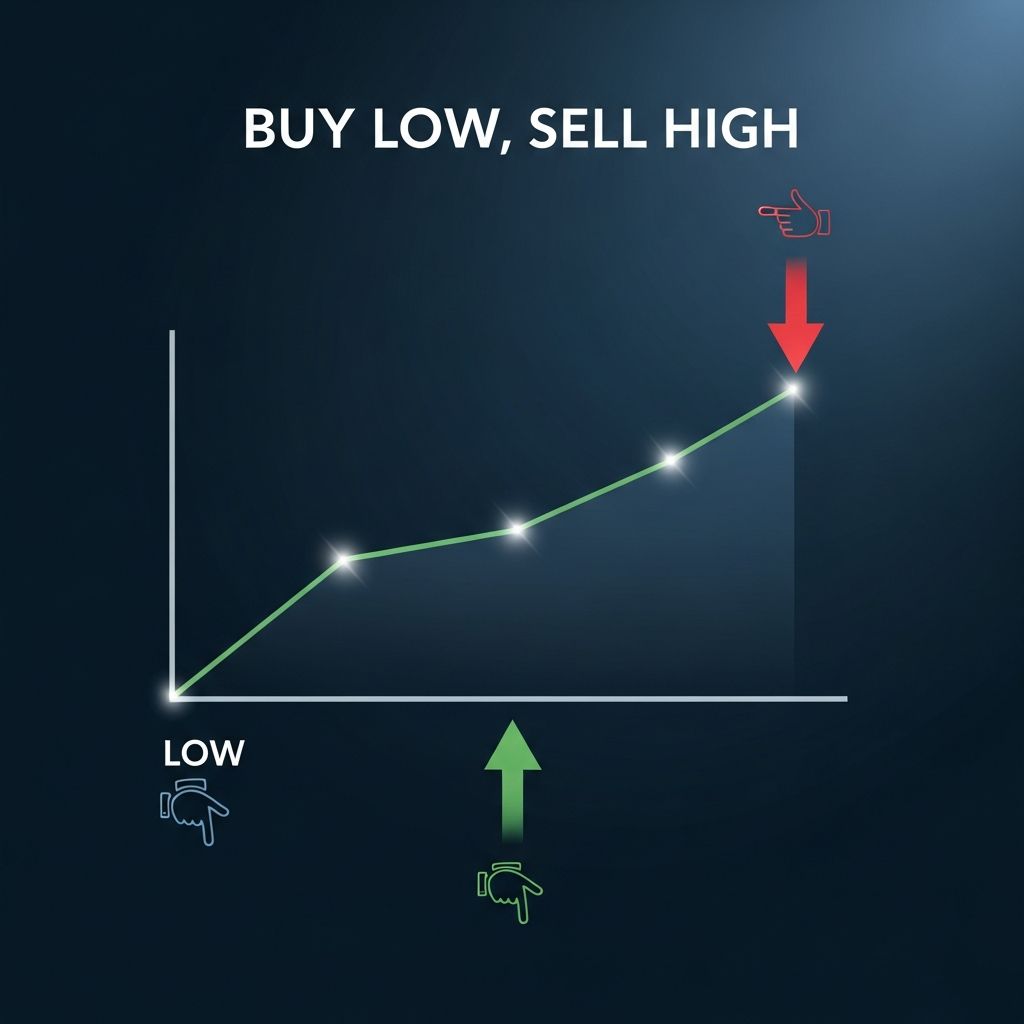
A Closer Look at the Buy Low, Sell High Strategy
The concept of buying low and selling high remains one of the most fundamental principles in investing, yet it is also one of the most difficult to execute consistently. While this strategy sounds deceptively simple, the reality involves navigating complex market dynamics, psychological barriers, and timing challenges. Understanding the nuances of this approach can help investors make more informed decisions and potentially improve their investment returns over time.
The buy low, sell high strategy represents the core objective of most investment activities. Investors purchase securities when prices are relatively depressed, anticipating that values will increase, allowing them to sell at a profit. However, the challenge lies not in understanding the principle, but in identifying when markets are truly ”low” and when they have reached ”high” levels. This article explores practical approaches to implementing this time-honored strategy in contemporary markets.
Understanding Market Cycles and Timing
Market cycles are a natural part of economic activity. Understanding these cycles is crucial for investors looking to buy low and sell high effectively. Markets move through predictable phases characterized by growth, peak, decline, and trough periods. Recognizing where we are in the cycle can provide valuable guidance for investment decisions.
During bull markets, investor optimism drives prices upward as positive economic data and corporate earnings growth fuel demand. Conversely, bear markets emerge when pessimism dominates, causing prices to fall as investors flee to safety. The key to successful investing is identifying these turning points before they become obvious to the broader market.
- Accumulation Phase: Smart investors quietly purchase assets during periods of pessimism and low valuations
- Growth Phase: Prices rise as more investors recognize improving conditions
- Distribution Phase: Early investors begin selling into strength as prices reach elevated levels
- Decline Phase: Prices fall as late-arriving investors realize they paid too much
The Psychology Behind the Strategy
One of the biggest obstacles to successfully implementing a buy low, sell high strategy is psychological. Investors face two primary emotional challenges: fear and greed. When markets decline sharply, fear often overwhelms rational analysis, causing investors to sell at exactly the wrong time. Conversely, during strong bull markets, greed can lead investors to ignore valuation fundamentals and purchase assets at inflated prices.
Research on investor behavior demonstrates that most people are naturally loss-averse, meaning they feel the pain of losses more acutely than the pleasure of equivalent gains. This bias often leads investors to sell winners too early to lock in gains and hold losers too long hoping to break even. This behavior pattern directly contradicts the buy low, sell high philosophy.
Successful investors develop emotional discipline to overcome these biases. They create predetermined investment plans before emotions heat up and stick to them regardless of short-term market movements. This systematic approach removes emotion from the equation and allows more rational decision-making.
Identifying When to Buy: Recognizing Low Prices
Determining whether an asset is truly ”low” requires more than simply looking at current prices. Investors must evaluate prices relative to historical norms, intrinsic value, and fundamental metrics. Several approaches can help identify genuine buying opportunities:
- Valuation Metrics: Price-to-earnings ratios, price-to-book ratios, and dividend yields compared to historical averages help identify undervaluation
- Technical Analysis: Chart patterns, support levels, and trend indicators can signal potential buying opportunities
- Fundamental Analysis: Strong company financials, competitive advantages, and growth prospects suggest value despite current weakness
- Market Sentiment: Extreme negative sentiment often precedes major market rallies, indicating potential buying opportunities
- Sector Weakness: Entire sectors may become depressed during specific economic cycles, creating opportunities in fundamentally sound companies
The most successful investors combine multiple approaches. They don’t simply buy because prices are low; they buy because they’ve identified situations where prices are low relative to the underlying value of the asset. This distinction is crucial for long-term success.
Recognizing When to Sell: Identifying High Prices
While identifying buying opportunities is important, knowing when to sell may be equally critical. Selling decisions require recognizing when prices have moved significantly above intrinsic value and sentiment has become excessively bullish. Several indicators can signal that prices have reached elevated levels:
- Valuation Extremes: When price-to-earnings ratios or other metrics reach historical highs relative to the market average
- Excessive Optimism: When market participants universally agree that prices can only go higher, a potential reversal may be near
- New Investor Categories: When inexperienced investors begin entering markets in large numbers, the late stage of a bull market is often underway
- Media Coverage: Wall Street euphoria and mainstream media coverage of specific stocks often coincide with market peaks
- Technical Resistance: When prices encounter significant resistance levels they cannot break through, it may signal a top
Effective sellers recognize that waiting for the absolute peak is unnecessary and often impossible. Selling when prices have appreciated significantly and valuations appear stretched provides good returns while maintaining prudent risk management. Perfection is not the enemy of good results in investing.
Tools and Techniques for Implementation
Modern investors have numerous tools available to help identify buying and selling opportunities. These resources can enhance decision-making when used appropriately:
| Tool/Technique | Purpose | Best Used For |
|---|---|---|
| Valuation Screens | Filter stocks by price-to-earnings, book value, and other metrics | Identifying undervalued securities |
| Moving Averages | Calculate average prices over specific periods to identify trends | Determining trend direction and potential reversals |
| Relative Strength Index (RSI) | Measures momentum and identifies overbought/oversold conditions | Timing entry and exit points |
| Dividend Yield Analysis | Compare current yields to historical averages | Finding income opportunities at low valuations |
| Economic Indicators | Track GDP, unemployment, inflation, and other macro factors | Anticipating market cycles and reversals |
While these tools provide valuable information, they should complement rather than replace fundamental analysis and sound judgment. The best investors use multiple tools together to build a comprehensive picture of market conditions and individual security valuations.
Risk Management Considerations
Implementing a buy low, sell high strategy without proper risk management can be dangerous. Investors must establish safeguards to protect capital during inevitable market downturns. Key risk management principles include:
- Diversification: Spread investments across multiple securities, sectors, and asset classes to reduce concentration risk
- Position Sizing: Size individual positions appropriately so that no single investment can significantly harm overall portfolio performance
- Stop-Loss Orders: Establish predetermined exit points to limit losses if an investment thesis deteriorates
- Rebalancing: Periodically adjust portfolio allocations to maintain target risk levels
- Emergency Fund: Maintain cash reserves to take advantage of opportunities without forced selling
Conservative investors who follow these principles increase the probability of long-term success compared to those who ignore risk management in pursuit of maximum returns.
Common Mistakes to Avoid
Many investors sabotage their buy low, sell high strategy through recurring mistakes. Awareness of these pitfalls can help investors avoid costly errors:
- Catching Falling Knives: Buying what appears to be a bargain without recognizing that prices may fall further
- Selling Too Early: Exiting winning positions prematurely due to fear or profit-taking impulses
- Holding Losers: Maintaining positions in failing investments hoping for recovery
- Overtrading: Excessive trading generates costs and taxes while reducing long-term returns
- Following the Crowd: Abandoning personal investment thesis to follow popular opinion
- Ignoring Fundamentals: Relying solely on technical analysis or price momentum without evaluating underlying value
Developing awareness of these mistakes and creating systems to avoid them significantly improves investment outcomes over time.
Long-Term Perspective
The most successful buy low, sell high investors maintain a long-term perspective. They recognize that short-term market noise creates opportunities for patient investors who maintain conviction in their analysis. Rather than trading frequently based on daily price movements, they identify meaningful discrepancies between price and value, then allow time for the market to recognize and correct these inefficiencies.
This long-term approach provides several advantages. It reduces transaction costs and taxes, provides time for thesis development to play out, and allows compound returns to accumulate. Historical data demonstrates that long-term investors who stick to sound principles consistently outperform active traders and market-timers.
Frequently Asked Questions
Q: Is it possible to perfectly time the market?
A: No. Even professional investors with sophisticated tools struggle to consistently identify exact market peaks and troughs. The goal should be making reasonable decisions when valuations appear stretched or depressed, not achieving perfection.
Q: How long should I hold an investment after buying low?
A: The holding period depends on your investment thesis. If you identified fundamental value, hold until the market recognizes that value or your original thesis breaks down. This could range from months to years.
Q: What percentage gains should I target before selling?
A: Rather than arbitrary percentage targets, consider selling when valuations reach fair value based on fundamental analysis. Some investments may require 50% gains to reach fair value while others need only 20%.
Q: Should beginners attempt market timing?
A: Beginners should focus on developing strong fundamental analysis skills before attempting sophisticated timing strategies. Dollar-cost averaging through regular investments often produces better results than timing attempts.
Q: How do interest rates affect buy low, sell high strategies?
A: Rising interest rates typically compress valuations and increase discount rates, making stocks less attractive. Falling rates have the opposite effect. Understanding rate dynamics is crucial for valuation analysis.
Q: Can technology help with implementing this strategy?
A: Yes. Screening tools, portfolio tracking software, and alert systems can help investors identify opportunities and manage positions more efficiently. However, technology should support judgment, not replace it.
References
- Behavioral Finance and Investor Psychology — CFA Institute. 2024. https://www.cfainstitute.org/en/research/financial-analysts-journal
- Market Cycles and Economic Analysis — U.S. National Bureau of Economic Research (NBER). 2024. https://www.nber.org
- Valuation Metrics and Investment Performance — Morningstar Investment Research. 2024. https://www.morningstar.com/articles
- Risk Management in Portfolio Construction — Financial Industry Regulatory Authority (FINRA). 2024. https://www.finra.org/investors/learn-to-invest
- Long-term Investment Performance Studies — Vanguard Investment Research. 2024. https://www.vanguard.com/research
- Technical Analysis and Market Timing — Securities and Exchange Commission (SEC). 2024. https://www.sec.gov/investor
Similar Articles








Read full bio of Sneha Tete