Buy Here Pay Here Car Lots: 5 Steps To Evaluate Deals
Discover how buy here pay here dealerships offer quick auto loans for bad credit buyers, weighing benefits against high costs and risks involved.
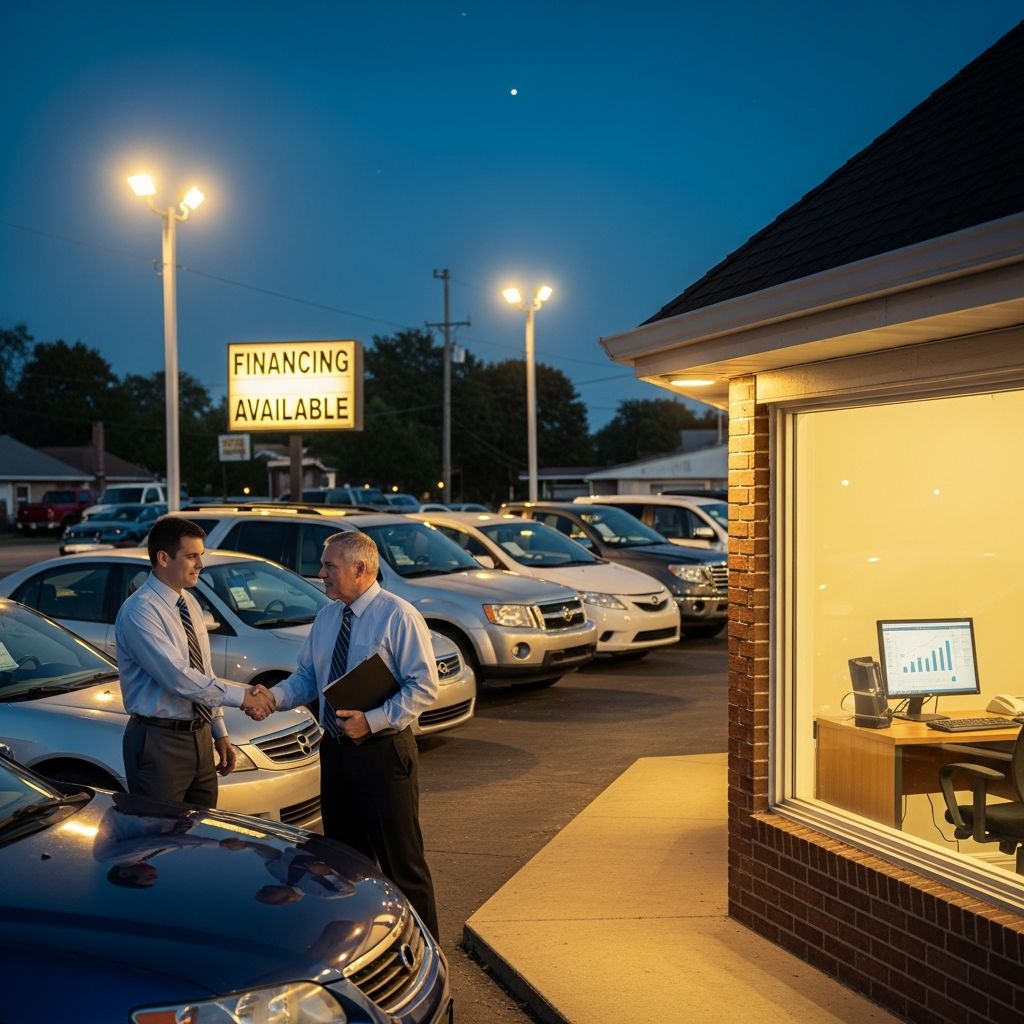
Buy here pay here (BHPH) dealerships provide in-house financing for used cars, targeting buyers with poor or no credit history who struggle with traditional loans. These lots handle both sales and lending, often skipping credit checks in favor of income verification.
Understanding the Core Mechanics of BHPH Financing
At standard dealerships, financing involves third-party banks or credit unions that review your credit score, debt-to-income ratio, and payment history before approving a loan. In contrast, BHPH operations keep everything internal: the dealer assesses your ability to pay based on employment stability, residence proof, and sometimes a down payment, then selects vehicles matching your qualified loan amount.
This streamlined approach means you drive away with a car and loan in one visit, without waiting for external lender approvals. Payments go directly to the dealership, frequently on a weekly or biweekly schedule rather than monthly, which suits cash flow for some but burdens others.
Who Typically Chooses BHPH Dealerships?
BHPH appeals primarily to individuals with subprime credit scores—often below 600—or those without any credit history. Recent immigrants, young adults new to credit, or people recovering from bankruptcy find these lots accessible when banks reject them.
- Bad credit holders denied by banks and credit unions.
- Buyers needing immediate transportation without savings for cash purchases.
- Those prioritizing quick approval over optimal terms.
Dealerships market aggressively with slogans like “no credit check” or “we finance everyone,” drawing in desperate shoppers.
Key Advantages of In-House BHPH Loans
Despite drawbacks, BHPH offers tangible benefits for credit-challenged buyers.
| Advantage | Description |
|---|---|
| High Approval Rates | Focus on income over credit score boosts approval odds significantly. |
| One-Stop Process | Complete purchase and financing on-site, saving time. |
| No Credit Pull Impact | Avoids hard inquiries that could further damage scores. |
These features make BHPH a viable short-term solution for essential mobility, especially in areas with limited public transport.
Major Drawbacks and Hidden Pitfalls
High costs define BHPH loans, starting with interest rates averaging around 20%, far exceeding the 5-10% from prime lenders. Additional fees pile on, and vehicles often sell above market value, leading to immediate negative equity where you owe more than the car’s worth.
Payment rigidity adds hassle: expect in-person visits weekly, limited online options, and strict enforcement. Miss a payment, and repossession follows swiftly, as the dealer retains the title.
- Steep Rates: 20% APR common, per industry studies.
- Upside-Down Loans: Borrowing exceeds vehicle value without lender caps.
- No Credit Building: Payments rarely report to bureaus, stalling score improvement.
- Limited Inventory: Older, higher-mileage cars only within your loan limit.
Real-World Costs: A Comparative Analysis
Consider a $10,000 car: traditional financing at 7% APR over 60 months yields about $198 monthly payments. A BHPH equivalent at 20% with 24-month terms and $2,000 down could demand $500 biweekly, totaling over $15,000 paid. (Calculations based on standard loan formulas; actual terms vary.)
| Loan Type | Rate | Term | Monthly Payment | Total Cost |
|---|---|---|---|---|
| Traditional Prime | 7% | 60 months | $198 | $11,880 |
| BHPH Average | 20% | 24 months | $500 (biweekly equiv.) | $15,000+ |
This table illustrates why BHPH inflates ownership costs dramatically.
Steps to Evaluate a BHPH Dealership
Before signing, scrutinize every detail to avoid traps.
- Verify Vehicle History: Demand a CARFAX report; BHPH cars often have salvage titles or poor maintenance.
- Negotiate Terms: Ask for the cash price, exact APR, and full fee breakdown in writing.
- Check Payment Logistics: Confirm schedule, grace periods, and methods—avoid lots requiring physical visits only.
- Review Contract: Watch for balloon payments, odometer limits, or GPS trackers mandating return for maintenance.
- Test Drive Thoroughly: Inspect for issues; no warranties typically apply.
State regulations vary—some cap rates or mandate disclosures. Research local consumer protection laws.
Strategic Alternatives to BHPH Financing
Better paths exist for sustainable car ownership without BHPH pitfalls.
- Improve Credit First: Pay bills on time, reduce debt; scores rise in months, unlocking better rates.
- Save for Down Payment: 10-20% cash reduces loan size and rates at traditional dealers.
- Credit Unions: Offer subprime loans at lower rates with credit-building potential.
- “Your Job is Your Credit”: Some lots use employment history; rates slightly below BHPH.
- Certified Pre-Owned: Bank-financed used cars from reputable dealers balance affordability and reliability.
Public transit, ride-sharing, or repairing your current vehicle buys time to build savings and credit.
Historical Context and Industry Evolution
BHPH emerged post-Great Depression when dealers formed finance companies to offload risk, requiring large down payments to cover profits. The 2008 crisis and fintech entry lowered barriers, shrinking down payments but intensifying competition and defaults. Today, cash flow strains cause many BHPH closures.
Frequently Asked Questions
Does BHPH report to credit bureaus?
Rarely—most don’t, so payments won’t boost your score.
Can I refinance a BHPH loan later?
Possible once credit improves, but high mileage or wear may hinder approvals.
What if I miss a payment?
Expect immediate collections, fees, and swift repossession—dealers act fast to recover assets.
Are BHPH cars reliable?
Often older models (10+ years, high miles) with as-is sales, no warranties.
Is BHPH legal everywhere?
Yes, but regulated by state usury laws capping rates in some areas.
Making the Right Choice for Long-Term Financial Health
BHPH serves as a last-resort bridge for urgent needs but rarely builds wealth. Prioritize credit repair and savings for conventional financing yielding lower costs and equity buildup. Consult non-profits like credit counseling agencies for personalized guidance.
References
- Buy-here, pay-here financing: What you need to know — Credit Karma. 2023. https://www.creditkarma.com/auto/i/buy-here-pay-here
- What Is Buy Here, Pay Here Auto Financing? — Experian. 2024-01-15. https://www.experian.com/blogs/ask-experian/what-is-a-buy-here-pay-here-dealership/
- Buy here, pay here — Wikipedia. 2025-02-01. https://en.wikipedia.org/wiki/Buy_here,_pay_here
Similar Articles








Read full bio of medha deb