Business vs Personal Checking: Key Differences
Discover essential distinctions between business and personal checking accounts to streamline your finances and support business growth effectively.
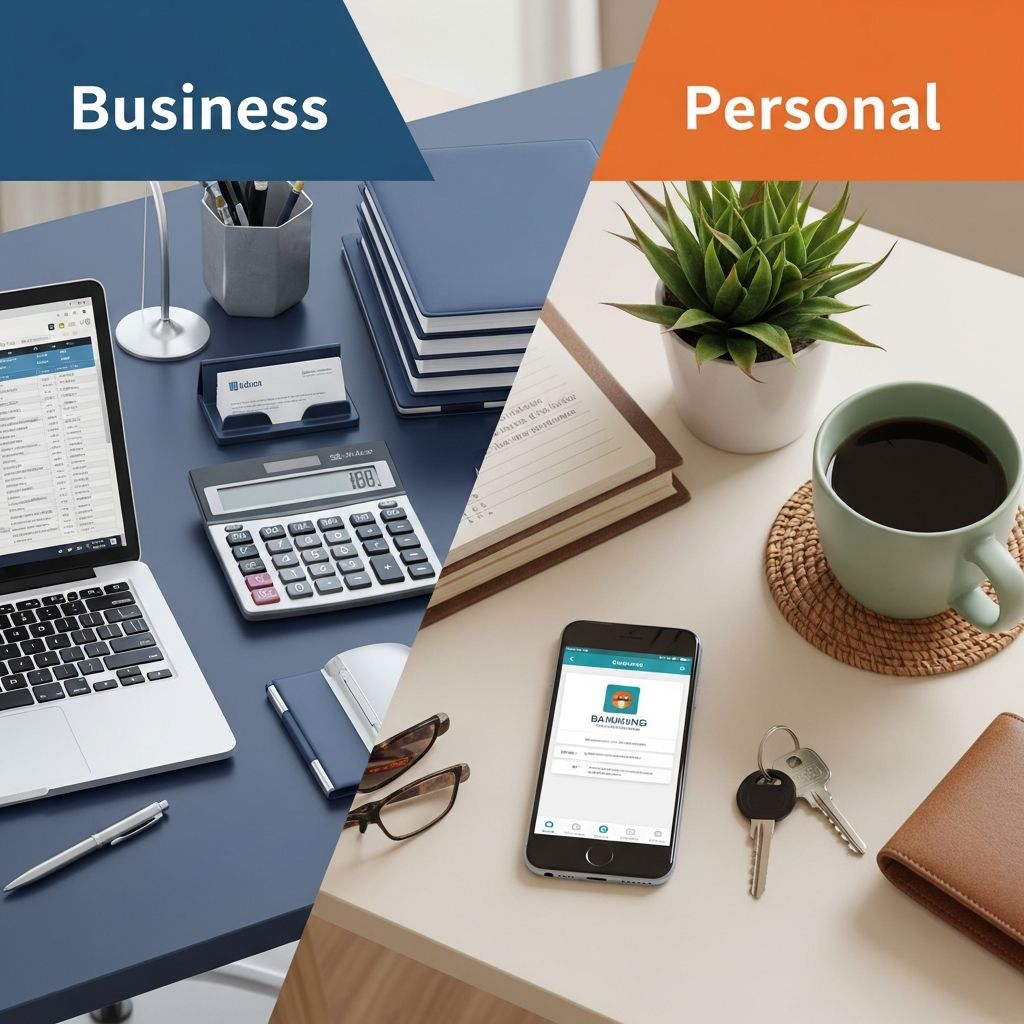
Business checking accounts are tailored for managing company revenues, expenses, and operations, while personal checking accounts suit everyday individual financial needs like bill payments and personal deposits. Understanding these distinctions helps entrepreneurs, freelancers, and side hustlers decide which account best fits their situation, ensuring compliance, efficiency, and growth.
Core Purposes and Everyday Uses
Personal checking accounts primarily handle individual income sources such as salaries, freelance gigs, or allowances, facilitating routine transactions like grocery purchases, utility bills, and ATM withdrawals. In contrast, business checking accounts focus on operational cash flow, including client payments, supplier invoices, and employee wages, providing a dedicated space for professional transactions.
Both account types support fundamental banking activities, including debit card usage, direct deposits, and online transfers via ACH systems. However, business versions extend to higher-volume needs, such as frequent vendor payments or bulk payroll processing, which personal accounts may restrict.
Feature Comparison: What Each Offers
Personal accounts emphasize simplicity with features like mobile check deposits, peer-to-peer transfers, and basic online bill pay, often at no extra cost. Business accounts build on these with enterprise-grade tools: integration with accounting platforms like QuickBooks, multi-user access for teams, and merchant services for credit card processing.
| Feature | Personal Checking | Business Checking |
|---|---|---|
| Debit Card & ATM Access | Standard limits | Higher daily limits |
| Transaction Types | ACH, wires, bills | Plus payroll, invoicing |
| Software Integration | Limited | Full (e.g., payroll apps) |
| Employee Access | No | Yes, with permissions |
| Merchant Services | No | Yes, for card payments |
This table highlights how business accounts accommodate scalability, essential for growing operations.
Transaction Limits and Cash Handling
Business accounts typically feature elevated daily withdrawal caps—often $5,000 at ATMs versus $2,000 for personal—and larger deposit thresholds to manage payroll or equipment buys. Personal accounts suffice for modest needs but may flag excessive activity as suspicious, potentially freezing funds. Cash-heavy businesses benefit from business accounts’ remote deposit capture and fraud safeguards.
- Higher ACH and wire transfer volumes without penalties.
- Specialized cash deposit options at branches.
- Custom alerts for large transactions.
Fee Structures and Cost Considerations
Many personal accounts waive monthly fees via low-balance minimums ($250 direct deposits) or are entirely free, appealing to individuals. Business accounts often impose $10–$15 monthly charges, waivable with $5,000+ balances, reflecting added services. Transaction fees apply to excesses in business plans, unlike fee-free personal tiers.
Evaluate total costs: business perks like free wires may offset fees for active users.
Tax and Legal Advantages of Separation
Maintaining distinct accounts simplifies IRS compliance; business transactions generate clear records for deductions, audits, and Schedule C filings. LLCs, corporations, and partnerships legally require separation to shield personal assets and validate expenses. Commingling funds risks piercing the corporate veil, exposing owners to liabilities.
Bank statements from business accounts directly support loan applications, showcasing cash flow without manual sorting.
Pros and Cons by Banking Provider Type
Choosing between traditional, online, or local institutions depends on needs.
| Provider Type | Advantages | Disadvantages |
|---|---|---|
| Current Bank | Relationship perks, easy transfers | May lack business tools |
| Online Banks | Low fees, digital focus | No branches, cash limits |
| Local Banks/CUs | Personal service, community ties | Weaker online features |
Hybrid approaches, like pairing online business with local personal, optimize coverage.
When to Stick with Personal Checking
Sole proprietors or hobbyists with under $10,000 annual revenue might use personal accounts initially, avoiding paperwork. However, as income grows, upgrade to prevent IRS scrutiny.
- Minimal transactions.
- No employees or card payments.
- Fee avoidance priority.
Transitioning to a Business Account
Opening requires EIN, business docs, and ID. Expect higher opening deposits ($100–$1,000). Shop for FDIC-insured options with $250,000 coverage matching personal limits.
- Gather formation papers (LLC docs, DBA).
- Compare 5–10 providers via fees/limits.
- Migrate funds gradually.
- Link accounting software immediately.
Advanced Tools for Business Success
Beyond basics, seek accounts with API integrations for e-commerce, automated reconciliations, and analytics dashboards tracking profit margins. Some offer loans or credit lines based on account activity.
Frequently Asked Questions
Can I use a personal account for my side hustle?
Possible short-term, but separation is recommended for taxes and professionalism.
Are business accounts FDIC-insured?
Yes, up to $250,000 per depositor, per bank.
What documents open a business account?
EIN, business license, ownership proof.
Do business accounts have overdraft protection?
Often yes, with business credit lines.
How do fees differ exactly?
Business: higher minimums; personal: easier waivers.
Final Thoughts on Choosing Wisely
Align your choice with transaction scale, growth plans, and compliance needs. Business accounts foster professionalism and scalability, while personal ones prioritize simplicity. Regularly review as your venture evolves.
References
- Business Checking vs. Personal Checking: What’s the Difference? — Experian. 2023. https://www.experian.com/blogs/ask-experian/business-checking-vs-personal-checking/
- Understanding Business vs. Personal Checking — Chase. 2024-01-15. https://www.chase.com/business/knowledge-center/manage/business-vs-personal-checks
- Business Checking Account vs. Personal Checking Account — Citi. 2024. https://www.citi.com/banking/personal-banking-guide/basic-finance/business-checking-vs-personal-checking
- Business vs Personal Checking Account: What’s the Difference? — SoFi. 2023-11-20. https://www.sofi.com/learn/content/business-vs-personal-checking-account/
- Which One Do You Need: Business Checking Account vs Personal — MyFSBOnline. 2024. https://www.myfsbonline.com/education/financial-wellness/business-checking-vs-personal
Similar Articles








Read full bio of medha deb