Business Partnership: Types, Pros, Cons & Formation Guide
Complete guide to business partnerships: structures, advantages, disadvantages, and how to form one.

What Is a Business Partnership?
A business partnership is a formal business structure where two or more people—known as partners—share company ownership, profits, and liability. In the context of business, a partnership represents the relationship between two or more individuals or entities who agree to work together in trade or business. Each partner contributes resources such as money, property, labor, or skills to the venture and shares in both the profits and losses of the business.
Unlike a corporation where the owner and business are separate legal entities, partnerships typically maintain less clear distinctions. Partners usually assume some or all of the financial and legal risk associated with their business operations. The specific terms governing how partners share profits, losses, and management responsibilities are typically outlined in a partnership agreement.
Partners can be individual people, corporations, or other types of business entities. Not every member in a partnership holds an equal role. General partners are actively involved in the business’s day-to-day operations and contribute labor or knowledge, while limited partners may be restricted to only contributing capital without direct involvement in management.
Understanding Partnership Agreements
A partnership agreement is a critical document that governs most partnerships and establishes the framework for how the business will operate. This written document typically covers several essential elements that partners must agree upon before formally establishing their business relationship.
Key components of a partnership agreement include:
- The stake each partner has in the business, including initial capital contributions and ongoing investment requirements
- Partner roles and responsibilities within the business, outlining daily duties, management authority, and decision-making processes
- Profit and loss sharing arrangements, detailing how profits and losses will be allocated among partners, which may not always be equal
- Terms for admission of new partners and procedures for partner withdrawal or death
- Dispute resolution mechanisms and procedures for dissolving the partnership
- Restrictions on partners’ ability to transfer their interests or compete with the business
While partnership agreements are not always legally required, having a formal written agreement helps prevent misunderstandings and provides clarity on expectations. In the absence of a written agreement, default partnership laws in your jurisdiction will typically apply, which may not reflect the partners’ true intentions.
Types of Business Partnerships
In for-profit business, there are several main categories of partnership structures recognized in common law jurisdictions like the United States and the United Kingdom. The type of partnership you choose significantly impacts liability exposure, management involvement, and taxation. Deciding which type of partnership is best for your business depends on several factors, including the partners’ goals, tolerance for liability, involvement in management, and the nature of the business or profession.
General Partnership (GP)
A general partnership is the most popular and simplest form of business partnership. In a GP, a minimum of two business owners share the business’s profits, losses, and liabilities. Each partner shares equally in the business’s work, liability, and profits, unless otherwise specified in a partnership agreement. It’s often the easiest and cheapest way for two or more people to start a business together and can sometimes form automatically through the actions of the partners without formal registration or filing formation documents with the state.
In a general partnership, all parties share the business risks and rewards equally, meaning that each partner is equally liable for any debts or legal issues with the business and entitled to an equal share of any profits generated. If there is no written agreement, the business’s profits and losses are distributed equally among the partners. General partners actively manage and exercise control over the business operations, and each partner can bind the entire partnership to contracts or agreements.
Limited Partnership (LP)
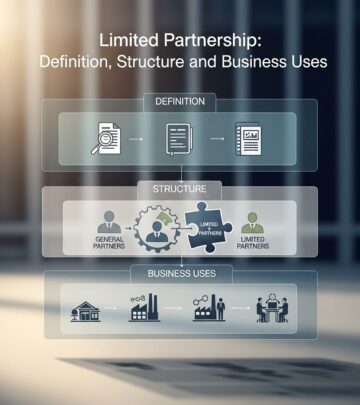
Limited partnerships represent a hybrid structure between general partnerships and limited liability partnerships. An LP has two distinct types of partners: at least one general partner with unlimited liability and one or more limited partners with limited liability. Limited liability in an LP means a partner’s personal assets are generally protected from business debts beyond their initial investment.
The general partner or partners take responsibility for the business, including full legal and financial responsibility for any debts or obligations. General partners manage the business and make decisions about its operations. Limited partners, sometimes called silent partners or sleeping partners, are not as actively involved in the business. They typically contribute capital but have limited control over day-to-day operations, as documented by the partnership agreement. This means that if the business accrues debts, limited partners can only lose the amount they invested, while the general partner would bear any costs in excess of that initial investment.
Limited partnerships are particularly attractive when you’re creating a business with one or more investors who don’t intend to be involved in day-to-day operations. The structure allows investors to provide capital while limiting their liability exposure and involvement in management decisions.
Limited Liability Partnership (LLP)
A limited liability partnership provides partners with limited liability for business debts and protection from the negligence or misconduct of other partners. This structure is often used by professional service firms such as law firms, accounting practices, and medical offices. In an LLP, partners are not personally liable for the malpractice or misconduct of other partners, which provides significant protection in professional environments where individual liability could be substantial.
LLPs offer a middle ground between general partnerships and corporations. While partners have limited liability protection similar to limited partners, they can still actively participate in management and decision-making without losing that protection. This makes LLPs particularly suitable for industries where one partner could be individually sued or accrue individual debts.
Limited Liability Limited Partnership (LLLP)
A limited liability limited partnership is an LP structure available in some states that provides limited liability protection to both general and limited partners. This structure combines the features of LPs and LLPs, offering enhanced protection for all partners involved. However, specific rules and requirements for forming and operating LLLPs can vary significantly by state or jurisdiction, so it’s essential to consult with a legal professional in your state to understand the specific laws that apply.
Joint Ventures
A joint venture is a business agreement between two or more people or entities who agree to combine their assets to accomplish a specific project. Every person involved is typically liable for the costs, profits, and losses of the venture. Even though a joint venture functions as a partnership, it’s quite flexible and can take on any form of legal structure such as a limited liability company, corporation, or other business entities. Joint ventures allow both small and large business owners to agree to participate in one or many projects with defined timelines and objectives.
Advantages of Business Partnerships
Business partnerships offer numerous benefits that make them an attractive business structure for entrepreneurs. Understanding these advantages can help you determine whether a partnership is the right choice for your venture.
One of the primary advantages is the ability to pool resources, skills, capital, and expertise to create a business. This combined strength makes it far easier to get a viable idea off the ground compared to going it alone as a sole proprietor. Partnerships allow entrepreneurs to leverage the unique strengths and capabilities of multiple individuals, creating a more robust and versatile business operation.
Partnerships typically involve simpler formation processes and lower startup costs compared to corporations. There are fewer administrative requirements and regulatory burdens, allowing partners to focus their energy and resources on growing the business rather than managing complex compliance issues. The paperwork and fees associated with starting a partnership are generally minimal.
Another significant advantage is pass-through taxation. Partnerships are not taxed as separate entities. Instead, business income passes through to the partners’ personal tax returns, and each partner pays individual income taxes on their share of profits. This avoids the double taxation that corporations face, where both the business and its owners are taxed on profits.
Partnerships also benefit from shared decision-making and management responsibility. Multiple partners can bring different perspectives and expertise to business decisions, potentially leading to better strategic choices. The distribution of workload among partners can also reduce the burden on any single individual.
Disadvantages of Business Partnerships
While partnerships offer significant advantages, they also come with notable drawbacks that entrepreneurs should carefully consider before choosing this business structure.
One of the most significant disadvantages is unlimited personal liability, particularly for general partners. In a general partnership, partners are personally liable for all business debts and obligations. If the business fails or faces legal judgments, personal assets such as homes, savings, and other property can be at risk. This personal liability extends to the actions of other partners as well, meaning you could be held responsible for decisions or mistakes made by your business partners.
Partnerships are also prone to disagreements and disputes among partners. Conflicting visions, management styles, or decisions about how to allocate profits can create tension and conflict. These disputes can potentially harm business operations and lead to costly legal proceedings. The partnership agreement should address dispute resolution mechanisms, but conflicts can still arise.
Another disadvantage is the lack of continuity. If a partner leaves, becomes incapacitated, or passes away, the partnership may be dissolved or significantly disrupted. This continuity issue can create uncertainty for customers, employees, and creditors. Succession planning becomes critical to maintaining business stability.
Partnerships can also face challenges in raising capital. While pooling resources among partners is an advantage, external investors may be hesitant to invest in partnerships due to liability concerns and the potential for management conflicts. Limited partners can be brought in to provide capital, but their involvement is restricted.
Additionally, the separation of personal and business finances may not be as clear as in corporations or LLCs, creating potential complications for accounting and taxation. Partners may struggle with clear financial management and could face personal liability for business obligations in ways that wouldn’t apply in more formal business structures.
Taxation of Business Partnerships
Understanding the tax implications of business partnerships is crucial for financial planning and compliance. Partnership taxation operates on a pass-through basis, meaning the partnership itself does not pay income taxes. Instead, the business’s profits are passed through to each partner’s personal tax return, where they pay individual income taxes on their share of the profits.
In limited partnerships, the general partner must also pay self-employment taxes on their share of the profits, even if they don’t actively withdraw money from the business. Limited partners, however, may have different self-employment tax obligations depending on their level of involvement in business operations.
Each partner receives a Schedule K-1 form from the partnership, which reports their share of income, losses, deductions, and credits. Partners must report this information on their individual tax returns. The partnership files an informational Form 1065 with the Internal Revenue Service, which reports the partnership’s income and expenses but doesn’t calculate tax liability.
How to Form a Business Partnership
Forming a business partnership involves several steps that should be carefully executed to ensure a solid foundation for your business relationship.
Step 1: Choose Your Partnership Structure Determine whether a general partnership, limited partnership, limited liability partnership, or another structure best suits your business needs, risk tolerance, and management preferences.
Step 2: Develop a Partnership Agreement Create a comprehensive written partnership agreement that clearly outlines each partner’s contributions, roles, responsibilities, profit and loss sharing arrangements, and procedures for handling disputes or dissolution. Having an attorney review this document is highly recommended.
Step 3: Comply with Registration Requirements Depending on your partnership type and state of operation, you may need to file formation documents with the state. General partnerships typically don’t require state filing, but limited partnerships and LLPs generally do. Research your state’s specific requirements.
Step 4: Obtain an EIN Apply for an Employer Identification Number from the Internal Revenue Service. This tax identification number is required for filing taxes and hiring employees, even if you don’t have employees initially.
Step 5: Secure Licenses and Permits Obtain any necessary business licenses, permits, or professional certifications required for your industry or locality.
Step 6: Set Up Business Banking and Accounting Open a separate business bank account and establish accounting systems to track income, expenses, and distributions to partners. Maintaining clear financial records is essential for tax compliance and dispute prevention.
Step 7: Notify Relevant Parties Inform creditors, suppliers, customers, and employees of the partnership structure as appropriate.
Frequently Asked Questions
What is the main difference between a partnership and a corporation?
The primary difference is that in a corporation, the owner and the business are considered separate legal entities. In a partnership, this distinction is less clear—partners usually take on some or all of the financial and legal risk of their business. Corporations also have double taxation (the business and owners are both taxed), while partnerships have pass-through taxation.
Can a partnership have just one partner?
No, by definition, a partnership requires at least two people or entities. A business with a single owner is considered a sole proprietorship, which has different legal and tax implications than a partnership.
What happens if a partner wants to leave the partnership?
The outcome depends on the partnership agreement and the type of partnership. The partner agreement should specify procedures for withdrawal, buyout arrangements, and the impact on the remaining partnership. Depending on circumstances, the partnership may continue with remaining partners, or it may be dissolved and reformed.
Are partnerships required to have a written agreement?
While some partnerships can form without written agreements, having a formal written partnership agreement is highly recommended. It prevents misunderstandings, clearly establishes each partner’s rights and obligations, and provides guidance for resolving disputes. Without a written agreement, state law will govern the partnership.
How are profits typically distributed in a partnership?
Profit distribution depends on the partnership agreement. In general partnerships without an agreement, profits are typically distributed equally among partners. However, partners can negotiate any profit-sharing arrangement they prefer, such as distributions based on capital contributions or role specialization.
What is the difference between a general partner and a limited partner?
General partners actively manage the business and have unlimited personal liability for partnership debts. Limited partners contribute capital but have limited involvement in management and their liability is restricted to their investment amount. This distinction is particularly important in limited partnership structures.
References
- What Is a Business Partnership? Types, Pros, Cons, Plus How to Form One — Shopify. 2025. https://www.shopify.com/blog/what-is-a-partnership
- Choose a Business Structure — U.S. Small Business Administration. https://www.sba.gov/business-guide/launch-your-business/choose-business-structure
- Partnership – Overview, Types of Partners, Types of Partnerships — Corporate Finance Institute. https://corporatefinanceinstitute.com/resources/management/partnership/
- Business Partnership Definition: Types, Advantages, How to Start One — Wise. https://wise.com/us/blog/business-partnership-definition
- Compare Types of Partnerships – LP, LLP, GP — Wolters Kluwer. https://www.wolterskluwer.com/en/expert-insights/compare-types-of-partnerships-lp-llp-gp
- Definition of Partnership: How They Work, Taxation and Types — Indeed. https://www.indeed.com/career-advice/career-development/definition-of-partnership
- Business Structures — Internal Revenue Service. https://www.irs.gov/businesses/small-businesses-self-employed/business-structures
Similar Articles








Read full bio of Sneha Tete