Overhead: Understanding Business Operating Costs
Learn how overhead expenses impact your business finances and profitability.

What Is Overhead?
In business and accounting, overhead refers to the ongoing expenses required to operate a company that cannot be directly traced to specific products or services. These are the costs that keep a business running day-to-day but don’t directly generate revenue. Unlike direct expenses such as raw materials or direct labor, overhead costs represent the indirect expenditures necessary to support all business operations.
Overhead expenses are essential to business survival, even though they don’t directly produce profits. For example, rent for a factory provides the physical space where workers manufacture products for sale. Without these supporting costs, a company cannot conduct its profit-making activities effectively. Overheads are considered a vital cost element alongside direct materials and direct labor in determining total business expenses.
Common overhead expenses include accounting fees, advertising, insurance, interest, legal fees, labor burden, rent, repairs, supplies, taxes, telephone bills, travel expenditures, and utilities. These costs appear on the income statement as all expenses except direct labor, direct materials, and direct expenses.
Understanding Overhead vs. Operating Expenses
A critical distinction exists between overhead and traditional operating expenses. Operating expenses refer to costs that can be conveniently traced or identified with particular revenue units. Direct labor and raw materials represent clear examples of operating expenses because they tie directly to product creation.
Overhead, conversely, cannot be immediately associated with specific products or services. These indirect costs support the entire organization rather than individual revenue streams. This fundamental difference affects how businesses account for and allocate these expenses across their financial statements and cost accounting systems.
Types of Overhead
Business overheads fall into two primary categories, each serving different functions within an organization:
Administrative Overheads
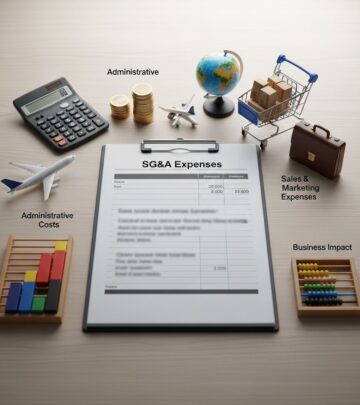
Administrative overheads encompass costs related to general business operations and support functions that aren’t directly tied to production. These expenses include utilities for office buildings, strategic planning costs, human resources functions, accounting services, and other supporting activities that enable the business to function properly.
Administrative overheads are treated as indirect costs because they support the entire organization rather than specific profit centers. Examples include:
- Executive and administrative staff salaries
- Office supplies and equipment
- Utilities for administrative offices
- Professional services such as legal and accounting
- Insurance and licensing fees
- Marketing and advertising expenses
Manufacturing Overheads
Manufacturing overheads represent all costs incurred within the physical environment where products or services are created. These are indirect costs that occur in the factory or production facility but cannot be directly attributed to specific products. The distinction between manufacturing and administrative overheads lies in their physical location and usage rather than their nature.
Key examples of manufacturing overheads include:
- Factory rent and utilities
- Depreciation of manufacturing equipment
- Maintenance and repairs of production machinery
- Quality control and inspection costs
- Supervisory salaries for production staff
- Indirect materials and supplies
Employee Salaries as Administrative Overhead
Employee salaries represent a significant portion of administrative overhead for most organizations. Salaries differ fundamentally from wages in their classification as overhead expenses. While wages are typically tied to hours worked and directly affect production costs, salaries are fixed payments agreed upon in employment contracts and remain constant regardless of business performance or sales levels.
Salaries for administrative and management personnel are classified as overheads because they must be paid continuously, independent of company profitability or output levels. This is particularly true for senior staff members with long-tenure contracts, where compensation is predetermined and remains stable over extended periods. The company incurs these salary costs to maintain management structure and administrative functions that support overall business operations.
Travel and Entertainment Costs
Business travel and entertainment expenses represent another category of administrative overhead. These costs include company-sponsored travel, meals, accommodations, and entertainment activities during business events or client interactions. Although some might argue these expenses enhance employee productivity and motivation, economists generally classify them as overhead because they don’t directly contribute to sales or profit generation.
Travel and entertainment costs typically occur periodically and may sometimes be unplanned. However, most companies budget for these expenses annually and consider them normal administrative overhead. These one-off payments remain within expected budget parameters and support business development and employee engagement initiatives.
Depreciation and Equipment Costs
Manufacturing overhead includes the depreciation of assets and equipment used in production. Depreciation represents the reduction in value of equipment and machinery as it ages and becomes obsolete. For instance, a manufacturing machine with a five-year useful lifespan will decrease in resale value annually. This depreciation is calculated and included in manufacturing overhead costs.
Accountants typically employ two primary methods for calculating depreciation:
- Straight-line method: Divides the asset’s total depreciable cost evenly across its useful life
- Declining balance method: Applies a higher depreciation rate in earlier years, with rates decreasing over time
Vehicles represent another significant depreciable asset, as they typically experience substantial value reduction immediately after purchase and throughout their operational life. These depreciation costs are incorporated into manufacturing overhead calculations.
Overhead on Financial Statements
Overhead expenses appear on various financial statements and require specific accounting treatment. Understanding their placement and role in financial reporting is crucial for accurate business analysis and decision-making.
Income Statement Treatment
On the income statement, overhead expenses appear as costs separate from direct labor and direct materials. These indirect costs are subtracted from revenue to determine gross profit and ultimately net income. Overhead expenses reduce profitability and must be carefully managed to maintain healthy profit margins.
Balance Sheet Considerations
The balance sheet presents a company’s financial position at a specific point in time, including assets, liabilities, and shareholder equity. Business overheads typically fall under current liabilities because they represent costs the company must pay on a short-term or immediate basis. While the balance sheet alone provides limited insight into overhead management, it becomes valuable when analyzed alongside the income statement and ratio analysis tools, offering a comprehensive view of the company’s financial health.
Fixed Costs and Indirect Costs
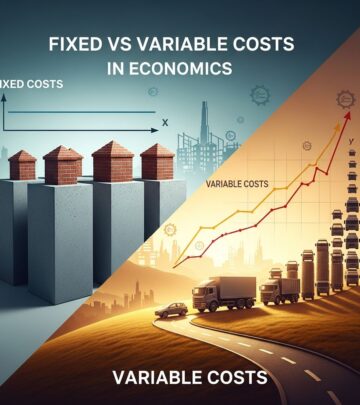
Overhead expenses are closely related to accounting concepts of fixed costs and indirect costs. Fixed costs remain constant regardless of production volume or sales levels, making overhead a subset of fixed costs in many business scenarios. Similarly, overhead represents indirect costs that cannot be traced to specific revenue units or products.
Understanding this relationship helps businesses with budgeting, break-even analysis, and profitability calculations. Many overhead costs are fixed, meaning they remain stable even when production fluctuates, creating challenges during slow business periods.
Business Shutdown Analysis
In economics, businesses use shutdown analysis to determine whether operations should continue during difficult periods. Revenue curves illustrate whether a company can sustain operations or should cease business activities. According to economic theory, if a business can cover variable operational costs but cannot cover overhead expenses in the short run, it should theoretically remain operational, as continuing operations is better than the fixed costs of closure.
However, if a business cannot even cover variable costs, it should shut down immediately. This principle applies differently depending on business size, cash flow position, and competitive dynamics. Most small competitive businesses use this shutdown rule as a basic operational guideline, though larger enterprises with stronger financial positions may maintain different thresholds.
Frequently Asked Questions
Q: How do you calculate overhead costs?
A: Calculate overhead by totaling all indirect business expenses that support operations but don’t directly produce revenue. Add administrative costs, manufacturing overhead, depreciation, utilities, rent, and other supporting expenses. Divide total overhead by production units or revenue to determine overhead rates for cost allocation and pricing purposes.
Q: What is the difference between overhead and direct costs?
A: Direct costs can be traced to specific products or services, such as raw materials and direct labor. Overhead costs cannot be directly attributed to particular products and instead support overall business operations. Direct costs vary with production volume, while overhead often remains fixed regardless of output levels.
Q: Why is reducing overhead important for profitability?
A: High overhead reduces net profit margins and increases the break-even point for generating profit. Controlling overhead expenses improves profitability, increases competitiveness, and provides financial stability during economic downturns. Efficient overhead management allows companies to maintain operations with fewer resources.
Q: How are overhead costs allocated to products?
A: Overhead allocation methods include direct labor hours, machine hours, production units, or estimated percentages of revenue. Businesses select allocation bases that fairly distribute overhead across products based on their actual consumption of overhead resources.
Q: Can overhead costs be reduced without affecting operations?
A: Some overhead can be reduced through efficiency improvements, technology adoption, and process optimization. However, certain overhead costs are necessary for business continuity. Strategic overhead reduction focuses on eliminating waste while maintaining essential support functions.
References
- Overhead (business) — Wikipedia. Accessed 2025-11-29. https://en.wikipedia.org/wiki/Overhead_(business)
- Generally Accepted Accounting Principles (GAAP) — Financial Accounting Standards Board. https://www.fasb.org/
- Cost Accounting Standards — U.S. Government Publishing Office. https://www.gpo.gov/
Similar Articles








Read full bio of medha deb