Business Credit Vs Personal Credit: 5 Key Steps
Discover how business and personal credit interact, why separation matters, and strategies to build strong profiles for your company's success.
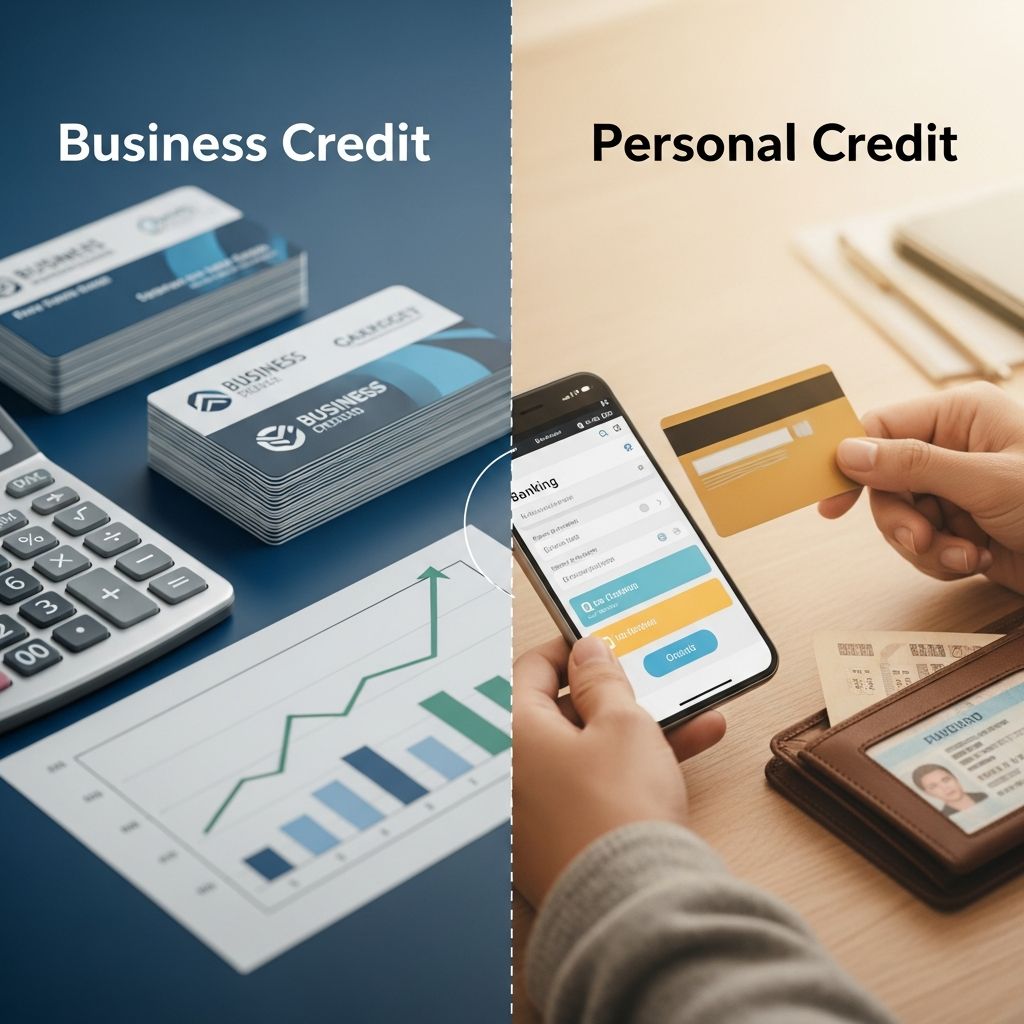
Business credit and personal credit serve distinct yet interconnected roles in the financial landscape of running a company. While personal credit reflects an individual’s financial habits, business credit evaluates a company’s ability to manage commercial obligations. For small business owners, grasping these differences is vital, as personal credit often influences early-stage business financing, but establishing a separate business profile can safeguard personal assets over time.
Defining the Core Differences
Personal credit is linked directly to an individual’s Social Security Number (SSN) and tracks consumer debts like mortgages, auto loans, and personal credit cards. In contrast, business credit is associated with the company’s Employer Identification Number (EIN), monitoring trade lines, business loans, and vendor accounts. This separation allows businesses to build their own financial reputation independent of the owner’s personal history.
Business credit reports are maintained by specialized bureaus such as Dun & Bradstreet, Experian Business, and Equifax Business, whereas personal credit is handled by consumer bureaus like Equifax, Experian, and TransUnion. Unlike personal credit, which benefits from strong legal protections under laws like the Fair Credit Reporting Act, business credit offers fewer consumer safeguards, emphasizing the need for diligent management.
| Aspect | Business Credit | Personal Credit |
|---|---|---|
| Identifier | EIN | SSN |
| Bureaus | Dun & Bradstreet, Experian Business | Equifax, Experian, TransUnion |
| Focus | Commercial debts, vendor payments | Consumer loans, credit cards |
| Protections | Limited | Strong (e.g., FCRA) |
| Credit Limits | Higher, revenue-based | Income-based |
How Personal Credit Influences Business Opportunities
For startups and small enterprises lacking a robust credit history, lenders frequently scrutinize the owner’s personal credit score to gauge risk. Scores like FICO Small Business Scoring Service incorporate personal credit data, directly affecting loan approvals, interest rates, and credit limits. A high personal score (e.g., above 700) can unlock better terms, while scores below 600 may result in denials or punitive rates.
Business credit cards often require personal guarantees, tying the owner’s credit to corporate spending. Delinquent payments on these cards can blemish personal reports if reported to consumer bureaus, creating a feedback loop. Vendors and suppliers may also check personal credit for new accounts, further intertwining the two.
- Loan Approvals: Strong personal credit boosts approval odds and terms for business loans.
- Credit Cards: Influences limits, rewards, and APRs on business cards.
- Personal Guarantees: Common requirement linking repayment to personal liability.
The Reverse Impact: Business Credit on Personal Finances
While personal credit predominantly affects business access, business delinquencies can rebound onto personal scores via personal guarantees. If a business defaults on a guaranteed loan, it appears on the owner’s personal report, potentially dropping scores and complicating future personal borrowing. However, most business activities do not directly report to personal bureaus unless guarantees are involved.
Established businesses with solid EIN-based profiles reduce reliance on personal credit, protecting owners from spillover risks. This independence is crucial during economic downturns, as business failures won’t automatically tarnish personal standing.
Strategies to Separate and Strengthen Business Credit
Building independent business credit starts with obtaining an EIN from the IRS, which is free and straightforward online. Register with business credit bureaus and ensure your business is listed accurately. Open trade lines with vendors that report payments, such as net-30 accounts from office suppliers, to establish a payment history.
Use business-only credit cards and loans, avoiding personal cards for company expenses. Monitor scores via services like Nav or Dun & Bradstreet, aiming for Paydex scores above 80, which signal on-time payments. Maintain low utilization ratios (under 30%) on business accounts to mirror best practices from personal credit management.
- Secure an EIN and DUNS number.
- Establish vendor trade lines that report to bureaus.
- Apply for business credit cards without personal guarantees if possible.
- Pay invoices early or on time consistently.
- Review business credit reports quarterly for errors.
Benefits of a Robust Business Credit Profile
A strong business credit score opens doors to favorable financing, higher limits, and vendor trust. Lenders offer lower rates—potentially saving thousands in interest—and larger amounts based on company performance rather than personal finances. Suppliers extend better terms, aiding cash flow by allowing deferred payments without personal credit checks.
Moreover, it shields personal assets; creditors pursue business collateral first, preserving homes and savings. For scaling companies, superior business credit facilitates partnerships, leases, and insurance premiums at reduced costs.
Common Pitfalls and How to Avoid Them
Mingling personal and business finances is a frequent error, leading to commingled reports and heightened risk. Always segregate accounts and use business cards exclusively. Ignoring business credit monitoring allows errors to fester, unlike personal credit where free annual reports are standard.
Over-relying on personal guarantees indefinitely stalls separation; transition to unguaranteed products as history builds. Finally, late payments, even minor, harm scores more severely in business contexts due to fewer protections.
Business Credit Cards: A Comparison Tool
Business credit cards differ from personal ones in rewards, limits, and reporting. They cater to operational spends like travel and ads, often with higher limits tied to revenue.
| Feature | Business Cards | Personal Cards |
|---|---|---|
| Eligibility | Revenue, business history, personal credit | Personal income, credit score |
| Liability | Personal guarantee common | Always personal |
| Reporting | Business + possible personal bureaus | Consumer bureaus only |
Frequently Asked Questions
Does opening a business credit card affect my personal score?
Yes, applications trigger personal credit inquiries, and guarantees mean activity may report back if payments lapse.
How long to build business credit from scratch?
Typically 6-12 months with consistent on-time payments to reporting vendors and lenders.
Can I use personal credit for business expenses?
Possible short-term, but it risks separation, limits rewards, and exposes personal assets—better to build business credit.
What is a good business credit score?
Paydex 80+ (Dun & Bradstreet), FICO SBSS 140+; varies by bureau and lender.
Do all business loans require personal guarantees?
No, mature businesses with strong profiles qualify for non-recourse options.
Expert Perspectives on Credit Management
Experts stress proactive separation: “Building business credit protects personal assets by isolating liabilities,” notes industry leaders. It enables better vendor relationships and funding access, fostering sustainable growth.
References
- Business Credit vs. Personal Credit — What’s the Difference? — OnDeck. 2023. https://www.ondeck.com/resources/business-credit-vs-personal-credit
- Business Credit Card vs. Personal: 9 Key Differences — Ramp. 2024. https://ramp.com/blog/business-credit-card-vs-personal
- Business Credit Vs. Personal Credit — BankIowa. 2023-10-15. https://www.bankiowa.com/blog/post/business-credit-vs-personal-credit
- Business vs. Personal Credit — Experian. 2024. https://www.experian.com/small-business/business-personal-credit
- Business Credit vs. Personal Credit: Key Differences & Why… — Nav. 2023. https://www.nav.com/blog/the-difference-between-personal-and-business-credit-reports-33445/
- Personal vs. Business Credit Score — Live Oak Bank. 2024. https://resources.liveoak.bank/blog/personal-vs.-business-credit-score
Similar Articles








Read full bio of Sneha Tete