Business Credit Essentials: 7 Steps To Build Strong Credit
Master the fundamentals of business credit to fuel your company's growth and secure better financing options.

Business credit serves as a critical foundation for small and medium enterprises seeking financial stability and expansion opportunities. Unlike personal credit, it evaluates a company’s ability to manage debts independently, influencing access to loans, cards, and vendor terms.
Defining Business Credit and Its Core Components
Business credit represents a profile that tracks a company’s payment history, debt management, and financial reliability. Lenders use this profile to assess risk when extending credit products such as term loans, lines of credit, or business credit cards. A strong profile signals to banks, suppliers, and partners that the business handles obligations responsibly, often leading to favorable terms like lower interest rates or higher limits.
Key elements include payment trends, credit utilization, public records, and trade references. Major bureaus like Dun & Bradstreet, Experian, and Equifax maintain these records, each employing unique scoring models. For instance, scores range from 0-100 on some scales, where higher values indicate lower risk.
- Payment History: Demonstrates on-time repayments, forming the largest factor in most models.
- Credit Utilization: Ratio of used credit to available limits; keeping it under 30% boosts scores.
- Length of Credit History: Longer accounts reflect stability.
- Public Records: Bankruptcies or liens negatively impact profiles.
- Trade Lines: Accounts with vendors reporting to bureaus.
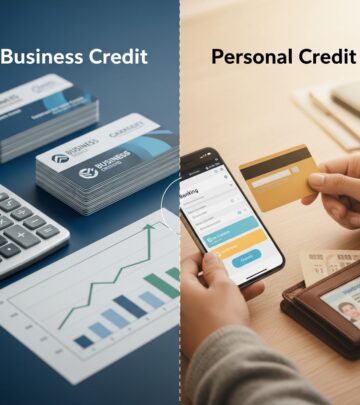
Business Credit Versus Personal Credit: Key Distinctions
While personal credit focuses on individual habits, business credit centers on company performance. Personal scores, like FICO, range 300-850, whereas business variants use different scales, such as Equifax’s 101-816 or D&U-N-S Paydex 0-100.
| Aspect | Business Credit | Personal Credit |
|---|---|---|
| Focus | Company finances and operations | Individual repayment history |
| Bureaus | Dun & Bradstreet, Experian Business, Equifax Business | Equifax, Experian, TransUnion |
| Scoring Range | Varies (e.g., 0-100, 101-992) | 300-850 (FICO/VantageScore) |
| Impact | Affects business loans, vendor terms | Influences personal loans, mortgages |
Early-stage businesses often rely on personal guarantees, blending the two, but separating them through incorporation protects personal assets.
Step-by-Step Guide to Establishing Business Credit
Building business credit requires deliberate actions to create a distinct financial identity. Start with formalizing your entity to signal separation from personal finances.
- Incorporate or Form an LLC: Register as a corporation, LLC, or similar to establish legal independence. This step unlocks business-specific credit reporting.
- Obtain an EIN: Secure a free Employer Identification Number from the IRS, functioning as your business’s Social Security number for tax and credit purposes.
- Open Business Bank Accounts: Use dedicated checking and savings accounts for all transactions to build a financial trail.
- Apply for D-U-N-S Number: Get this free identifier from Dun & Bradstreet to enable tracking by major bureaus.
- Establish Trade Lines: Work with vendors or suppliers who report payments to bureaus, such as net-30 accounts.
- Get a Business Credit Card: Select cards in the business’s name using EIN; use responsibly for expenses.
- Monitor and Maintain: Regularly check reports from all bureaus and pay bills early or on time.
These steps typically yield a report within 6-12 months of consistent activity. Lenders often require minimum scores around 75 for approval.
Understanding Business Credit Scores in Depth
Scores quantify creditworthiness through algorithms analyzing payment data, utilization, and inquiries. Dun & Bradstreet’s Paydex rewards early payments (80-100 for payments within terms), while Experian’s Intelliscore predicts delinquency risk (1-100 scale).
| Bureau | Score Name | Range | Key Focus |
|---|---|---|---|
| Dun & Bradstreet | Paydex | 0-100 | Payment promptness |
| Equifax | Business Credit Risk | 101-992 | Delinquency prediction |
| Experian | Intelliscore | 1-100 | Overall risk |
| FICO SBSS | Small Business Scoring Service | 0-300 | Loan default risk |
High scores (e.g., above 80) correlate with better rates; for example, businesses with strong profiles borrow more at lower costs.
Leveraging Business Lines of Credit for Growth
A business line of credit provides flexible, revolving funds up to a pre-approved limit, with interest only on drawn amounts. Ideal for cash flow gaps, inventory, or emergencies, it functions like a credit card but often with higher limits and lower rates.
- Draw as Needed: Access funds anytime up to the limit; repay to replenish.
- Interest Efficiency: No charges on unused portions, unlike term loans.
- Building Credit: Responsible use establishes trade lines and boosts scores.
Approval involves reviewing revenue, years in business, EIN, tax returns, and existing debts. Expect rigorous checks due to larger limits.
Strategic Advantages of Strong Business Credit
Solid credit unlocks multiple benefits, enhancing operational agility. Businesses with excellent profiles secure lower insurance premiums, extended vendor terms, and priority financing.
- Higher loan approvals and amounts.
- Reduced interest expenses.
- Improved supplier negotiations.
- Separate personal liability.
The 5 C’s framework—capacity, capital, character, collateral, conditions—guides lender evaluations, emphasizing comprehensive financial health.
Common Pitfalls and Recovery Tactics
Avoid high utilization (>30%), late payments, or excessive inquiries, which tank scores. Monitor reports quarterly; dispute errors promptly.
To recover: Pay down debts, add positive trade lines, and limit new applications. Scores rebound with 6-12 months of positive behavior.
Frequently Asked Questions
What is the fastest way to build business credit?
Incorporate, get an EIN/D-U-N-S, open business accounts, and secure reporting trade lines or a starter credit card with on-time payments.
Do all business credit cards report to bureaus?
Not all; choose those explicitly stating they report business activity to Dun & Bradstreet or Experian.
How long until business credit appears?
3-6 months for initial reporting, 6-12 for a robust score with multiple trade lines.
Can personal credit affect business financing?
Yes, especially for new businesses via personal guarantees, but strong business credit reduces reliance.
What’s the difference between a line of credit and a term loan?
Lines revolve for ongoing needs; term loans disburse a lump sum for repayment over a fixed period.
Advanced Tips for Sustaining Peak Credit Health
Beyond basics, diversify credit types (cards, lines, loans) and negotiate with vendors for reporting agreements. Use tools like Nav or Credit.net for monitoring. For scaling firms, aim for multiple bureau reports to broaden lender views.
Incorporate automation for payments to ensure timeliness. Review annually for optimization, especially before major funding requests.
References
- Business Line of Credit: What It Is & How It Works — Chase Bank. 2023. https://www.chase.com/personal/credit-cards/education/basics/business-line-of-credit-what-is-it
- What is Business Credit and How do I Build It? — Bank of America. 2024-01-15. https://business.bankofamerica.com/en/resources/what-is-business-credit-and-how-do-i-build-it
- How To Build Business Credit in 7 Simple Steps — Credit Karma. 2025-06-10. https://www.creditkarma.com/credit/i/build-manage-small-business-credit
- How To Build Business Credit — Bankrate. 2025-03-22. https://www.bankrate.com/loans/small-business/how-to-build-business-credit/
- 7 Steps on Building Business Credit — PeopleFund. 2024. https://peoplefund.org/7-steps-on-building-business-credit/
- Business Credit Scores Explained — Pathward. 2024-11-05. https://www.pathward.com/news/business-credit-scores-explained–all-you-need-to-know/
- Establish business credit — U.S. Small Business Administration. 2025. https://www.sba.gov/business-guide/plan-your-business/establish-business-credit
Similar Articles








Read full bio of Sneha Tete