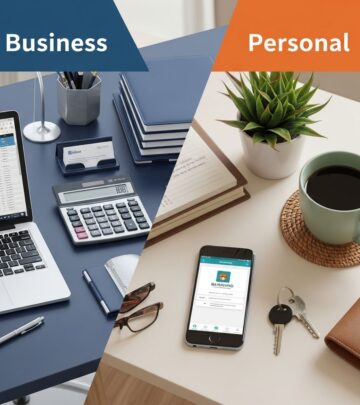
Business Checking Account: 10 Essential Features To Look For
Discover the essential guide to business checking accounts: benefits, features, top providers, and how to choose the right one for your company.

A
business checking account
is a specialized bank account designed for companies to manage daily financial transactions separately from personal finances. It supports deposits, payments, checks, and debit card use while offering tools like online banking and merchant services tailored for business operations.What is a Business Checking Account?
Unlike personal checking accounts, a business checking account handles higher transaction volumes and provides business-specific features. It acts as a financial hub for depositing customer payments, paying vendors, and tracking cash flow. Banks like BMO and U.S. Bank emphasize its role in organizing income, expenses, and providing access to advanced services such as payment processing and loans.
These accounts ensure professional separation of funds, which is crucial for sole proprietors, LLCs, and corporations. They often include unlimited transactions in premium versions, mobile apps for on-the-go management, and integrations with accounting software like QuickBooks.
Benefits of a Business Checking Account
Opening a business checking account delivers strategic advantages beyond basic banking. Here are the primary benefits, drawn from expert analyses:
- Separation of Personal and Business Finances: Keeps company transactions distinct, simplifying bookkeeping and avoiding commingled funds that complicate audits.
- Simplified Tax Reporting: Consolidates deductible expenses and income in one place, easing quarterly filings and IRS compliance. Clear records reduce audit stress.
- Enhanced Credibility: Signals professionalism to clients, vendors, and investors. A business-named account builds trust and opens partnership opportunities.
- Access to Business Banking Services: Unlocks merchant services, business credit cards, loans, and advanced online tools not available in personal accounts.
- Increased Spending Control: Features like transaction limits, employee cards with restrictions, and real-time monitoring prevent overspending and fraud.
- Better Cash Management: Tools for scheduling payments, receivables tracking, and cash flow forecasting ensure liquidity for operations.
- Eligibility for Loans and Credit: Establishes banking history, improving approval odds for lines of credit or financing from the same institution.
- Financial Protection: Includes fraud monitoring, overdraft safeguards, and liability shields for personal assets in lawsuits.
These benefits collectively streamline operations, as noted by Peoples Security Bank & Trust, making it a foundational step for business growth.
How Does a Business Checking Account Work?
A business checking account functions like a personal one but with enhanced capabilities. Deposit funds via cash, checks, ACH, or wire; withdraw via checks, debit cards, or transfers. Key differences include:
- Higher transaction limits (often unlimited in business tiers).
- Business debit cards with customizable employee access.
- Integrated payroll, invoicing, and bill pay.
- Online dashboards for analytics and reporting.
For example, deposit customer payments electronically, pay suppliers via ACH, and reconcile monthly statements effortlessly. Banks like Wells Fargo offer tiered options for startups to enterprises.
Essential Features to Look for in a Business Checking Account
Select an account with features matching your business size and needs. Essential ones include:
| Feature | Description | Business Benefit |
|---|---|---|
| Low/No Monthly Fees | Waived via minimum balance or activity. | Reduces overhead costs. |
| Minimum Balance Requirements | Low thresholds to avoid fees. | Maintains affordability. |
| Online Banking & Mobile App | 24/7 access to balances, transfers, bill pay. | Convenience for busy owners. |
| Overdraft Protection | Links to savings/credit line. | Prevents declined payments. |
| ATM Access & Reimbursements | Fee-free nationwide networks. | Cash flow flexibility. |
| Online Bill Payment | Schedule recurring payments. | Timely vendor relations. |
| Account Tools & Reporting | Custom reports, QuickBooks sync. | Insightful financial tracking. |
| Relationship Benefits | Discounted loans, advisors. | Growth support. |
| Rewards Programs | Cash back on debits. | Cost savings. |
| Fraud Protection | Real-time alerts, zero liability. | Security assurance. |
Ascend Bank highlights how these features enhance efficiency and security for all business sizes.
Types of Business Checking Accounts
Banks offer varied types to suit different needs:
- Basic/Small Business Checking: Low fees, limited transactions for startups.
- Business Advantage Checking: Unlimited transactions, cash deposits (e.g., Bank of America).
- Premium/Relationship Checking: Waived fees with balances, advanced tools (e.g., U.S. Bank).
- High-Volume Checking: For enterprises with heavy transactions (e.g., Wells Fargo).
Merchants Bank advises evaluating fees, limits, and tools like mobile deposits.
Business Checking Account Fees and How to Avoid Them
Common fees include monthly maintenance ($10-30), per-transaction (after limits), overdrafts ($35+), and wire transfers. Avoidance strategies:
- Maintain minimum balances (e.g., $1,500-$5,000).
- Meet transaction/activity thresholds.
- Opt for free cash deposits up to limits.
- Use digital payments to cut check fees.
Compare via bank sites; many waive for relationships.
Top Business Checking Accounts Comparison
| Bank | Monthly Fee | Transactions | Key Features |
|---|---|---|---|
| U.S. Bank | Waivable | Unlimited | Smart tools, support. |
| Bank of America | $16 (waivable) | 200 free | Profile linking, rewards. |
| Wells Fargo | Varies by tier | Unlimited options | 3 tiers for growth. |
How to Choose and Open a Business Checking Account
- Assess needs: transactions, fees tolerance, digital tools.
- Compare 3-5 banks using features above.
- Gather docs: EIN, business license, ID.
- Apply online/in-branch; fund minimum deposit.
- Set up integrations, cards, alerts.
Frequently Asked Questions (FAQs)
Do I need a business checking account if I’m a sole proprietor?
Yes, it separates finances, simplifies taxes, and boosts credibility, even for solos.
What documents are required to open one?
Typically EIN/SSN, business formation docs, ID, and address proof.
Can I avoid all fees?
Many accounts waive fees with balances or activity; shop for no-fee options.
Is online banking safe for business?
Yes, with fraud protection and multi-factor authentication standard.
How many can a business have?
Multiple for segments (e.g., payroll, operations); consult your bank.
References
- 8 Benefits of Opening a Business Checking Account — Peoples Security Bank & Trust. 2023. https://www.psbt.com/Learn/Resources/PSBT-Corner-News/Benefits-Of-Business-Checking-Accounts
- What is a Business Checking Account? Info and Benefits — BMO. 2024-01-15. https://www.bmo.com/en-us/main/business-banking/business-insights/what-is-business-checking-account/
- 10 Essential Features to Look for in a Business Checking Account — Ascend Bank. 2024. https://ascend.bank/news/10-essential-features-to-look-for-in-a-business-checking-account/
- Business Checking Account Pros and Cons — Academy Bank. 2023-05-20. https://www.academybank.com/article/business-checking-account-pros-and-cons
- Choosing the Right Accounts for Your Needs — Merchants Bank. 2024. https://merchantsbankal.bank/business-banking-the-right-accounts-for-your-needs/
- Business Checking Accounts | Business Advantage — Bank of America. 2025. https://business.bankofamerica.com/en/deposits/checking-accounts
- Open a Business Checking Account — U.S. Bank. 2025. https://www.usbank.com/business-banking/banking-products/business-bank-accounts/business-checking-account.html
Similar Articles








Read full bio of medha deb