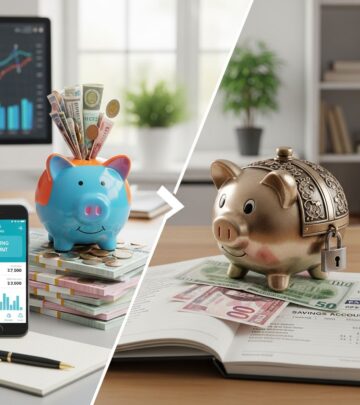
Building Wealth: Understanding Saving vs Investing
Master the fundamental strategies for growing your financial future

Financial security doesn’t happen by accident. It requires intentional choices about how you manage your money. Two of the most fundamental strategies available to you are saving and investing, yet many people struggle to understand the distinction between them or how to use both effectively. While these terms are often used interchangeably in casual conversation, they represent distinct approaches to money management with different purposes, risk levels, and outcomes. Understanding these differences is essential for developing a comprehensive financial strategy that aligns with your goals, timeline, and comfort level.
The Foundation: What Defines Saving?
Saving is the practice of setting money aside for future use, typically stored in a bank account or similar financial institution. The primary objective of saving is to accumulate funds for short-term needs or unexpected emergencies. When you save, you’re prioritizing accessibility and security over growth potential.
The defining characteristics of savings accounts include:
- Low risk exposure: Your funds are protected by deposit insurance, such as FDIC coverage up to $250,000 per depositor per institution
- Guaranteed interest earnings: You receive a predetermined interest rate, though returns are typically modest
- Immediate accessibility: You can withdraw your money quickly without penalties or restrictions
- Predictable outcomes: Your account balance won’t fluctuate based on market conditions
Savings accounts serve as the safety net of your financial portfolio. They’re ideal for building an emergency fund, saving for short-term goals like a vacation or car purchase, or accumulating funds for upcoming expenses. The peace of mind that comes with knowing your money is secure and easily available cannot be overstated.
The Growth Opportunity: What Defines Investing?
Investing involves allocating your money into various assets—such as stocks, bonds, mutual funds, real estate, or exchange-traded funds—with the expectation that your investment will appreciate over time. Unlike saving, investing is fundamentally about building wealth and achieving long-term financial objectives like retirement security or funding higher education.
The key characteristics of investing include:
- Higher risk tolerance: Investment values fluctuate with market conditions, and there’s potential to lose some or all of your initial investment
- Greater return potential: Historical data shows that markets tend to deliver higher returns than savings accounts over extended periods
- Limited immediate access: Withdrawing investments prematurely can trigger taxes, penalties, or losses
- Compounding growth: Investment earnings generate their own earnings, creating exponential growth over time
Investing requires a longer time horizon and the emotional capacity to weather market volatility. However, for those with extended timelines—typically 10 years or longer—the power of compounding and historical market returns make investing a compelling wealth-building tool.
Risk and Return: The Central Trade-Off
The most significant distinction between saving and investing centers on the risk-return relationship. Saving offers minimal risk but limited returns, while investing presents greater risk but substantially higher growth potential.
Consider a concrete comparison: If you set aside $100 monthly from 2000 to 2024, you would accumulate $28,800. Deposited in a savings account earning 1.5% interest, this would grow to approximately $34,000 by 2024. By contrast, investing that same $100 monthly into an investment fund averaging 6% annual returns would result in approximately $64,000. This illustration demonstrates how investment returns can nearly double savings outcomes over similar time periods.
However, this higher return potential comes with a critical caveat: market values fluctuate. Stock portfolios can decline during economic downturns, bond values shift with interest rate changes, and real estate markets experience cycles. This volatility means investors must be prepared for short-term losses en route to long-term gains.
Purpose and Timeline: Matching Strategy to Goals
Your financial objectives should drive your decision between saving and investing. Short-term goals requiring liquidity are best served through savings, while long-term aspirations benefit from investment growth.
| Financial Goal | Recommended Approach | Rationale |
|---|---|---|
| Emergency fund (3-6 months expenses) | Saving | Requires immediate accessibility without risk of loss |
| Down payment within 2 years | Saving | Short timeline makes market volatility unacceptable |
| Retirement (20+ years away) | Investing | Extended horizon allows recovery from market downturns |
| College funding for child born today | Investing | 18-year timeline enables compounding benefits |
| Holiday spending within 10 months | Saving | Near-term goal requires capital preservation |
| Building generational wealth | Investing | Decades-long horizon maximizes compound growth |
The Inflation Challenge: Why Saving Alone Falls Short
One critical disadvantage of relying exclusively on savings is inflation erosion. When inflation rates exceed your savings account interest rate, your purchasing power declines over time. For example, with 2% inflation and a 35% marginal tax rate, you would need a 3.08% return merely to break even and maintain current purchasing power.
In most low-interest-rate environments, savings account rates struggle to exceed inflation, meaning your money effectively buys less in the future than it does today. This makes saving an inadequate strategy for long-term financial goals, particularly retirement planning. Investing offers substantially better inflation protection over extended periods, as markets historically appreciate faster than inflation rates.
Building an Integrated Financial Strategy
The most effective approach isn’t choosing between saving and investing—it’s strategically employing both. Consider this framework:
Phase One: Establish Your Foundation
Begin by building a dedicated emergency fund in a high-yield savings account. This safety net should contain three to six months of essential expenses, providing psychological security and preventing the need to liquidate investments during financial emergencies. Only after establishing this foundation should you aggressively pursue investing strategies.
Phase Two: Define Your Time Horizon
Categorize your financial goals by timeline. Money needed within five years belongs in savings or conservative vehicles. Capital earmarked for ten years or longer can embrace investment growth strategies. This segmentation ensures you’re not forced to sell investments at inopportune times due to competing financial needs.
Phase Three: Implement Automatic Investing
One powerful advantage of investing is the ease of starting. You need not wait for large sums; consistent automatic contributions establish disciplined growth patterns. Setting up recurring transfers removes the emotional component of deciding when to invest, helping you maintain consistent participation in market gains while averaging purchase prices across market cycles.
Accessibility and Liquidity Considerations
Different life circumstances require different levels of capital accessibility. Savings accounts provide high liquidity, meaning you can access funds immediately without penalties. Most investment products offer reasonable liquidity—stocks, bonds, and ETFs convert to cash within business days—but you may not receive your exact invested amount, depending on market conditions at the withdrawal time.
Certificates of Deposit (CDs) represent a middle ground, offering savings-like safety with modestly higher returns, though with restricted access before maturity. Understanding these accessibility differences helps you avoid locking capital in investments when emergencies demand liquidity.
Cost Considerations and Expenses
Savings accounts typically involve no upfront costs or complex learning curves. Investment accounts may involve fund expense ratios, trading commissions, or advisory fees. Additionally, taxable investment accounts generate capital gains taxes on profitable sales, which can meaningfully impact net returns. Understanding these costs is essential for accurate return projections and comparing investment vehicles.
Frequently Asked Questions
Q: How much should I save versus invest?
A: Start by establishing three to six months of emergency reserves in savings, then allocate surplus income between savings goals and investments based on your timeline. Money needed within five years should be saved; capital for retirement and other 10+ year goals should be invested.
Q: Can I lose money in a savings account?
A: FDIC-insured savings accounts protect deposits up to $250,000 per depositor per institution, so you won’t lose your principal. However, inflation can erode purchasing power if interest rates lag inflation.
Q: What if I can’t tolerate market volatility?
A: If market fluctuations cause significant anxiety, consider a balanced approach using bonds, dividend-paying stocks, or target-date funds that gradually shift toward safer assets as you approach your goal date. You can also extend your timeline to increase risk tolerance.
Q: When is the best time to start investing?
A: The best time is immediately. The longer your investment horizon, the more compound growth works in your favor. Time in the market typically outweighs timing the market.
Q: Should I pay off debt before investing?
A: Generally, high-interest debt (credit cards) should be prioritized over investing. However, low-interest debt (mortgages) can be managed alongside long-term investing, as investment returns historically exceed mortgage interest rates.
Moving Forward with Confidence
Understanding the distinctions between saving and investing empowers you to construct a financial plan aligned with your unique circumstances. Neither strategy is superior; rather, they serve complementary roles within a comprehensive approach. Your emergency fund provides security and peace of mind, while your investment portfolio builds long-term wealth and achieves ambitious financial dreams.
The journey to financial security begins with honest assessment of your goals, risk tolerance, and timeline. Armed with this knowledge, you can confidently navigate the world of personal finance and build the prosperous future you envision.
References
- Saving vs. Investing — BlackRock. 2024. https://www.blackrock.com/ae/intermediaries/education/investment-education/saving-vs-investing
- Saving vs. Investing: What’s the Difference? — Citi. 2024. https://www.citi.com/banking/personal-banking-guide/savings/savings-vs-investing
- How Much Should I Save vs Invest? — SoundCU. 2024. https://www.soundcu.com/blog/how-much-should-i-save-vs-invest/
- Saving vs. Investing: What’s the difference? — TD Canada Trust. 2024. https://www.td.com/ca/en/personal-banking/personal-investing/learn/saving-vs-investing
- Saving Vs. Investing: Key Differences And When To Choose — Bankrate. 2024. https://www.bankrate.com/investing/saving-vs-investing/
- Saving vs Investing — Wells Fargo. 2024. https://www.wellsfargo.com/goals-investing/saving-vs-investing/
- What’s the Difference Between Saving and Investing? — Morgan Stanley. 2024. https://www.morganstanley.com/articles/saving-investing
Similar Articles








Read full bio of Sneha Tete