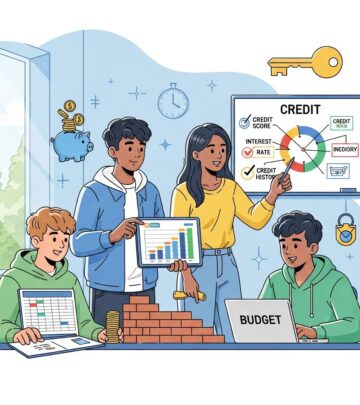
Building Credit Foundations for Your Children
Empower your kids with lifelong financial skills by starting their credit journey early and teaching responsible habits.

Starting the conversation about credit early can set your children up for financial success. By introducing concepts gradually and involving them in real-world practices, parents can help young people develop robust credit profiles that open doors to opportunities like loans, rentals, and jobs.
Why Early Financial Education Matters
Financial literacy forms the bedrock of adult independence. Children who grasp money management principles young are less likely to face debt pitfalls later. According to credit bureaus, a solid credit history influences major life milestones, from securing apartments to buying homes. Begin with simple ideas like earning and saving, progressing to complex topics like interest and scores as they mature.
Age-Tailored Lessons on Money Basics
Adapt teachings to developmental stages for maximum retention. Younger kids learn through play, while teens benefit from practical simulations.
For Young Children (Ages 5-10)
- Introduce coins and bills via shopping trips, explaining value differences.
- Use piggy banks to demonstrate saving rewards, like earning stickers for deposits.
- Play store games where they handle ‘transactions’ with play money.
These activities build ownership awareness, key to understanding borrowing later.
Middle Schoolers (Ages 11-14)
- Explain debit as immediate spending versus credit’s future repayment.
- Introduce prepaid cards to mimic real spending without risk.
- Discuss budgets using apps or notebooks to track allowances.
At this stage, relate credit scores to school grades: low scores mean poor ‘homework’ on repayments.
Teens (Ages 15-18)
- Review credit reports together, checking for errors via free annual pulls from bureaus.
- Simulate loans by lending for big purchases, adding modest interest.
- Encourage part-time jobs to fund personal goals, reinforcing self-reliance.
Hands-on experience cements lessons, preparing them for independence.
Practical Steps to Launch Their Credit History
Beyond education, active steps create tangible credit files. Most minors lack reports until activity begins.
| Method | Pros | Cons | Best For |
|---|---|---|---|
| Authorized User on Parent Card | Quick history build; no hard inquiry | Relies on parent’s habits | Teens 16+ |
| Secured Credit Card | Low risk with deposit; teaches control | Requires upfront funds | First-time users 18+ |
| Student Loans or Cosigned Accounts | Diverse history | Potential debt risk | College-bound |
Adding as an authorized user reports positive activity if parents pay on time and keep utilization under 30%.
Core Principles of Responsible Credit Use
Instill habits that boost scores: payment history (35%), amounts owed (30%), length of history (15%), new credit (10%), mix (10%).
- Pay On Time: Automate or set reminders; even one late payment lingers years.
- Low Utilization: Charge less than 30% of limit, pay down frequently.
- Limit Applications: Multiple inquiries signal risk.
- Monitor Reports: Freeze child files at bureaus to block fraud.
Interactive Activities to Reinforce Learning
Games make abstract ideas concrete.
Borrowing Card Game
Use playing cards as ‘money.’ Kids borrow from a central pile, matching pairs to ‘repay.’ Charge ‘interest’ in extra cards, showing costs of delay.
Budget Challenge
Allocate weekly points for prizes. Allow ‘credit’ borrowing from future weeks, deducting interest to illustrate debt cycles.
4 C’s of Credit Simulation
Role-play lenders evaluating ‘loans’ based on character (history), capacity (income), capital (savings), collateral (assets). Rank applicants to discuss lender decisions.
Navigating Risks and Protecting Their Future
While building credit, safeguard against pitfalls. Identity theft affects minors; request free reports from Experian, Equifax, TransUnion. Dispute errors promptly. Avoid cosigning unless necessary, as it ties your credit to theirs.
For college, secured cards build history safely. Post-18, transition to personal cards, reviewing statements monthly.
Long-Term Benefits of Proactive Guidance
Teens with credit histories rent easier, score better auto loans, and access lower rates. Early starters average 50+ points higher FICO by 21. Parental modeling—sharing your reports—amplifies impact.
Frequently Asked Questions
Can minors have credit reports?
Yes, if activity like authorized user status occurs, but freeze them until needed.
What’s the ideal first credit product?
Authorized user or secured card for low-risk entry.
How young to start teaching credit?
Age 5 with basics, ramping up by middle school.
Does being authorized user always help?
Only if primary account is managed well; some issuers exclude minors.
Should I cosign a teen’s card?
Prefer starter cards; cosigning risks your score.
Key Takeaways for Parents
- Start simple, scale with age.
- Combine talks with actions like authorized status.
- Use games for engagement.
- Monitor and protect reports.
- Model exemplary habits.
Consistent effort yields financially savvy adults ready for life’s demands.
References
- 5 Steps to Help Build Your Child’s Credit — Experian. 2024-04-29. https://www.experian.com/blogs/ask-experian/credit-education/how-to-build-your-childs-credit/
- 8 Lessons to Teach Kids about Credit for Grades K–12 — Banzai. n.d. https://banzai.org/wellness/resources/eight-lessons-to-teach-kids-about-credit-grades-k-twelve
- How to Teach Kids About Finances and Credit — Equifax. n.d. https://www.equifax.com/personal/education/personal-finance/articles/-/learn/teach-kids-finances/
- 6 Lessons to Teach Credit to Your Kids and Teens — Capital One. n.d. https://www.capitalone.com/learn-grow/money-management/teaching-kids-about-credit/
- Middle School Activity Packet: Credit Basics — Illinois Treasurer. n.d. https://illinoistreasurergovprod.blob.core.usgovcloudapi.net/twocms/media/doc/credit%20basics%20middle%20school%20activity%20packet.pdf
Similar Articles








Read full bio of medha deb