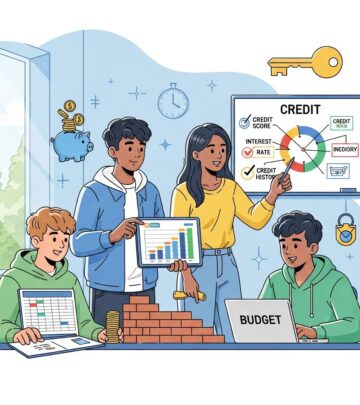
Building Credit For Your Kids Early: 4 Age-By-Age Strategies
Guide parents on starting credit education young to secure their child's financial independence and strong credit profile for life.

Establishing a solid credit foundation for children can significantly impact their future financial opportunities, from securing student loans to buying a first home. Parents play a pivotal role by introducing financial concepts gradually and leveraging tools like authorized user accounts when appropriate. This comprehensive guide outlines actionable strategies tailored to different age groups, ensuring kids grow into financially savvy adults.
Why Early Credit Building Matters
A strong credit history opens doors to favorable loan terms, lower insurance rates, and rental approvals. Children without credit files often face challenges at 18, facing high-interest options or denials. Starting education early fosters habits like timely payments and low debt usage, which form the backbone of credit scores. Financial institutions report that young adults with established credit profiles qualify for better products, reducing long-term costs.
Moreover, early intervention prevents common pitfalls such as identity theft, which can create unwanted credit reports in minors. Regularly monitoring and teaching basics equips kids to navigate these risks independently.
Age-Appropriate Financial Foundations
Financial literacy evolves with a child’s development. Tailor lessons to their comprehension level to make concepts stick without overwhelming them.
- Preschool Years: Begin with tangible items like coins and piggy banks to demystify money’s value. Involve them in small grocery decisions to show exchange principles.
- Elementary Age: Introduce debit cards via kid-friendly accounts. Differentiate saving from spending using simple charts or apps that gamify tracking.
- Middle School: Discuss credit scores’ role in life milestones. Use prepaid cards to simulate spending limits and consequences of overspending.
- High School: Demonstrate credit card mechanics through family examples. Simulate loans for desired items, teaching interest calculations and repayment plans.
These stages build progressive understanding, transitioning from play-based learning to real-world application.
Hands-On Money Management Training
Modeling is more effective than lecturing. Involve children in household finances to contextualize abstract ideas.
| Activity | Benefits | Tools Needed |
|---|---|---|
| Weekly Budget Reviews | Teaches income vs. expenses | Budget apps or spreadsheets |
| Allowance Earning System | Instills work ethic and saving | Chore charts |
| Spending Logs | Highlights patterns and waste | Notebooks or mobile trackers |
| Goal-Based Saving | Builds delayed gratification | Separate savings jars/accounts |
Family discussions around bills, taxes, and emergency funds normalize fiscal responsibility. Encourage part-time jobs or extra chores for big purchases, reinforcing self-reliance.
Leveraging Authorized User Status Safely
One of the earliest ways to create a credit file is adding children as authorized users on a parent’s well-managed credit card. This piggybacks on the primary account’s positive history, provided the issuer reports to bureaus like Experian, Equifax, and TransUnion. Benefits include instant credit age and payment history, but select cards with low utilization—ideally under 30%—to avoid negative impacts.
Require kids to reimburse charges monthly, turning it into a practical lesson. Note: Some issuers delay reporting until age 18, so confirm policies upfront. This method suits responsible families with excellent credit hygiene.
Secured Cards and Credit-Builder Options for Teens
For 18-year-olds or older teens, secured credit cards offer independence. Users deposit funds matching the limit, reducing issuer risk while building history through on-time payments. Credit-builder loans, another tool, hold payments in a savings account until completion, reporting positive activity without debt accumulation.
- Choose cards reporting to all three bureaus.
- Start with small limits to control spending.
- Graduate to unsecured cards after six months of success.
These build self-owned credit files, crucial for college applications or first apartments.
The Role of Cosigning in Young Adulthood
Post-18, thin credit files hinder approvals. Cosigning a car loan, student debt, or starter card shares liability but boosts approval odds. Success strengthens both parties’ scores; defaults harm them equally.
Assess readiness: stable income, budgeting skills, and commitment. Limit to one account initially. Alternatives like joint accounts exist but tie finances longer.
Protecting Against Identity Theft
Minors shouldn’t have credit reports unless fraudulently created. Check free via AnnualCreditReport.com or bureau sites. Dispute errors and place freezes promptly. Educate on phishing and secure data sharing to preempt issues.
Common Mistakes to Avoid
Pitfalls derail progress:
- Opening multiple cards hastily, spiking inquiries.
- Ignoring utilization ratios above 30%.
- Cosigning without repayment verification.
- Neglecting education amid tools.
Patience yields sustainable habits over quick fixes.
FAQs
Can kids under 18 build credit?
Direct accounts require 18, but authorized user status creates files via parent accounts.
Does authorized user affect my score?
No, if managed well; poor habits impact both.
What if my child has a credit report young?
Investigate fraud; freeze and dispute immediately.
How soon to start secured cards?
At 18, after proving responsibility.
Is cosigning risky?
Yes, full liability; choose wisely.
Long-Term Financial Independence
Consistent guidance transitions kids to autonomy. Regular check-ins, score monitoring via free tools, and celebrating milestones reinforce behaviors. By adulthood, they’ll wield credit confidently, avoiding debt traps and maximizing opportunities.
References
- 5 Steps to Help Build Your Child’s Credit — Experian. 2024-04-29. https://www.experian.com/blogs/ask-experian/credit-education/how-to-build-your-childs-credit/
- Stepping Stones: How To Build Credit For Your Adult Children — Vermont Federal. N/A. https://www.vermontfederal.org/blog/stepping-stones-building-credit-for-your-adult-kid
- Setting the Groundwork to Build Your Child’s Credit History — WSFS Bank. N/A. https://www.wsfsbank.com/resources/setting-the-groundwork-to-build-your-childs-credit-history/
- Ways to establish credit history for your child — Chase Bank. N/A. https://www.chase.com/personal/credit-cards/education/build-credit/how-to-establish-credit-history-for-your-child
- Why Help Your Teen Start Building Their Credit Now — Civista Bank. N/A. https://www.civista.bank/resource-center/why-help-your-teen-start-building-their-credit-now
Similar Articles








Read full bio of Sneha Tete