Building Credit For Kids: A Parent’s Roadmap
Guide parents on starting credit education early to secure their child's financial future with practical steps and strategies.

Establishing a solid credit foundation for children sets the stage for their future financial independence. Parents can introduce credit concepts gradually, leveraging tools like authorized user accounts and educational practices to foster responsible habits without waiting until adulthood.
Understanding Credit Basics for Young Minds
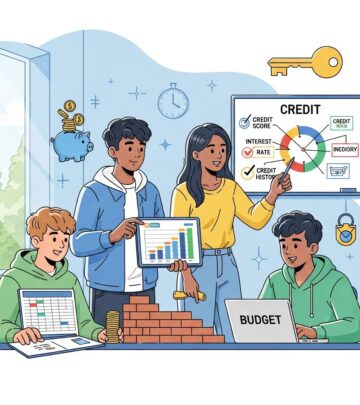
Credit scores influence major life milestones such as renting apartments, securing auto loans, or obtaining favorable mortgage rates. For minors, credit files typically do not exist unless fraud occurs, making proactive parental involvement essential. Begin by explaining that credit reflects borrowing reliability, determined by payment history, debt levels, and account age.
- Payment History (35% of score): Timely payments demonstrate dependability.
- Credit Utilization (30%): Keeping balances below 30% of limits shows control.
- Length of Credit History (15%): Older accounts boost scores.
- New Credit (10%): Avoid frequent applications.
- Credit Mix (10%): Variety in account types helps.
These factors, reported by bureaus like Experian, Equifax, and TransUnion, underscore the need for early guidance.
Age-Appropriate Financial Lessons from Toddler to Teen
Tailor teachings to developmental stages to build intuition progressively. Start with tangible money concepts and evolve to abstract credit principles.
Early Childhood: Coins and Savings
For preschoolers, use play to introduce value. Provide a piggy bank for coins earned from chores, illustrating saving’s rewards. Involve them in grocery shopping to grasp exchange basics.
Elementary Years: Debit and Budgeting
Introduce debit cards via kid-friendly accounts. Teach budgeting with allowances divided into spend, save, and give jars. Discuss debt as borrowed money with repayment obligations, contrasting it with immediate debit spending.
Middle School: Scores and Prepaid Options
Explain credit scores using simple analogies, like a report card for money management. Issue prepaid cards to simulate limits, tracking usage to highlight overspending risks.
High School: Real-World Simulations
Demonstrate credit card mechanics with family statements, anonymized for privacy. Offer micro-loans for desired items, charging modest interest to teach repayment discipline. Encourage part-time jobs for self-funding.
Leveraging Family Accounts Responsibly
Adding children as authorized users on parental credit cards creates credit history without independent applications. Select cards with strong payment records and low utilization to positively impact the child’s emerging file. Not all issuers report minors, so verify terms; some delay until age 18.
| Pros of Authorized User Status | Cons |
|---|---|
| Establishes credit file early | Risks if parent misses payments |
| No hard inquiry needed | Child may overspend without liability |
| Teaches via reimbursement | Limited control over account |
Require children to reimburse charges monthly, reinforcing accountability. Monitor via statements to guide usage.
Secured Cards and Credit-Builder Tools for Older Teens
Upon turning 18, secured credit cards provide entry-level credit. Deposits match limits, reducing issuer risk while reporting activity to bureaus. Credit-builder loans hold funds in savings during repayment, building history through verified payments.
- Choose issuers reporting to all three bureaus.
- Start with low limits to cap exposure.
- Automate payments for consistency.
Avoid multiple openings to prevent inquiry dings.
Joint Accounts and Cosigning: Higher Stakes Support
For significant purchases like vehicles or education, cosigning shares responsibility. Success bolsters both scores; defaults harm them equally. Reserve for trusted scenarios, discussing consequences upfront.
Joint accounts, like shared utilities post-graduation, add payment history if reported. Living at home temporarily aids focus on building habits.
Protecting Against Identity Risks
Check for unauthorized child credit files via annualcreditreport.com or bureau requests with birth certificate and SSN. Freeze files preventively using government ID and address proof. Documents needed: birth certificate, SSN card, parent’s ID, and residence proof.
Common Pitfalls and Best Practices
Steer clear of over-reliance on credit for luxuries or ignoring utilization. Model bill payments during family discussions, using apps for transparency.
- Do: Monitor progress quarterly.
- Don’t: Cosign without repayment plans.
- Do: Celebrate milestones like first on-time payments.
- Don’t: Open excessive accounts rapidly.
Long-Term Benefits of Early Credit Building
Strong teen credit eases apartment approvals, job screenings, and lower rates. It promotes independence, reducing future parental financial ties.
Frequently Asked Questions
Can children under 18 have credit scores?
Typically no, unless via authorized user or fraud. Check bureaus if concerned.
Does authorized user status always build credit?
Depends on issuer reporting policies. Confirm before adding.
What if my child has a credit file as a minor?
Investigate for identity theft, dispute errors, and freeze the file.
Should I cosign a student’s first car loan?
Only if confident in their repayment ability, as it risks your score.
How soon can teens get secured cards?
Usually at 18, with deposit.
References
- 5 Steps to Help Build Your Child’s Credit — Experian. 2024-04-29. https://www.experian.com/blogs/ask-experian/credit-education/how-to-build-your-childs-credit/
- Stepping Stones: How To Build Credit For Your Adult Children — Vermont Federal. N/A. https://www.vermontfederal.org/blog/stepping-stones-building-credit-for-your-adult-kid
- Setting the Groundwork to Build Your Child’s Credit History — WSFS Bank. N/A. https://www.wsfsbank.com/resources/setting-the-groundwork-to-build-your-childs-credit-history/
- Ways to establish credit history for your child — Chase. N/A. https://www.chase.com/personal/credit-cards/education/build-credit/how-to-establish-credit-history-for-your-child
- Why Help Your Teen Start Building Their Credit Now — Civista Bank. N/A. https://www.civista.bank/resource-center/why-help-your-teen-start-building-their-credit-now
Similar Articles








Read full bio of Sneha Tete