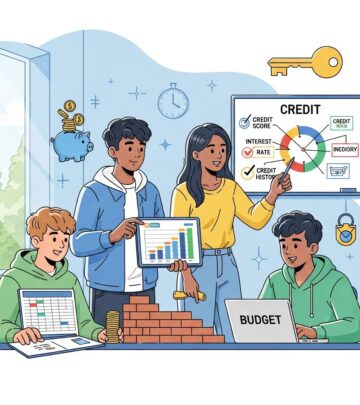
Building Your Child’s Financial Future Through Credit
A comprehensive guide to helping minors establish creditworthiness and develop lifelong financial skills.

One of the most valuable gifts you can give your child is a strong financial foundation. While traditional wisdom suggests waiting until adulthood to introduce credit concepts, the reality is that early exposure to responsible credit management can set your child up for decades of financial success. Understanding how to strategically build your child’s credit history during their formative years can help them qualify for better loans, lower interest rates, and favorable terms when they reach adulthood.
Understanding Credit Reports and Scores in Minors
A common misconception is that all minors lack credit profiles entirely. In reality, the situation is more nuanced. Typically, only individuals aged 18 and older have credit scores assigned to them by the major credit reporting agencies. However, minors can have credit reports under specific circumstances that every parent should understand.
Your child might have a credit report if their identity was stolen and fraudulently used to open accounts, if a credit agency made an error and created an unauthorized profile, or if you intentionally added them as an authorized user on your credit card or opened a joint account in their name. It’s crucial to monitor this possibility, as discovering unauthorized credit reports could indicate identity theft—a serious situation requiring immediate attention.
The Federal Trade Commission recommends that parents check their child’s credit report when the child turns 16, well before they venture into independent financial decision-making. This proactive approach allows you to identify and address any fraudulent activity before it becomes a larger problem.
The Foundation: Teaching Money Management Skills First
Before implementing any credit-building strategy, establish a solid foundation in basic money management. Young people who understand budgeting, income tracking, and spending habits are far better positioned to use credit responsibly than those who lack these fundamental skills.
Consider implementing age-appropriate financial education throughout your child’s life:
- Elementary years: Introduce how debit cards function, explain the conceptual difference between debt and credit, and engage in interactive personal finance games that reinforce foundational money skills
- Middle school years: Dive deeper into what credit scores represent and why they matter for financial decisions, discuss the factors that influence credit scoring, and provide practical experience with prepaid debit cards
- High school years: Cover income management, expense tracking, saving for specific goals, and basic tax concepts in a practical context
Beyond formal instruction, model good financial behavior yourself. Your child observes how you handle bills, make purchasing decisions, and discuss money. Demonstrating punctual bill payments and living within your means sends powerful messages about financial responsibility that no lecture can match.
Strategy One: Authorized User Accounts
The most accessible method for building your child’s credit before age 18 is adding them as an authorized user on one of your existing credit cards. This approach offers a lower barrier to entry compared to other credit-building methods, as there is no legal minimum age requirement for adding a child, though individual credit card issuers may have their own policies.
When you add your child as an authorized user, they receive a credit card bearing their name that connects to your account. They gain the ability to make purchases, but they hold no legal responsibility for repayment—you remain the account holder responsible for all charges. This arrangement creates what experts call “piggybacking,” where your child benefits from your established positive payment history.
How Authorized User Status Builds Credit
Many credit card issuers report authorized user account activity to the three major credit bureaus: Equifax, Experian, and TransUnion. When this reporting occurs, your child develops a credit file that reflects your account’s payment history, credit utilization ratio, and account age. This early credit history can provide a significant advantage when they apply for their own credit products at age 18.
However, not all card issuers follow this practice uniformly. Some issuers don’t report authorized user activity until the user reaches age 18, while others never report it at all. Before adding your child as an authorized user, contact your credit card company to understand their specific policies regarding authorized user reporting to credit bureaus.
Maximizing the Benefits While Minimizing Risk
The authorized user strategy works bidirectionally. Your good credit behavior—making on-time payments and keeping your credit utilization low—enhances your child’s emerging credit profile. Conversely, problematic behavior like late payments or high utilization can damage your child’s developing credit history.
To leverage this strategy effectively, only add your child as an authorized user if you’re confident in your ability to maintain consistent, on-time payments. You might further enhance the learning opportunity by requiring your child to reimburse you for any charges they make on the authorized card, creating real accountability and financial consequence even though they’re not legally responsible for the debt.
Strategy Two: Secured Credit Cards
Once your child reaches age 18, a secured credit card becomes an excellent credit-building tool if they haven’t already established significant credit history through authorized user accounts or other means. Secured cards operate on a straightforward principle: your child makes a cash deposit with the card issuer, and that deposit serves as collateral, typically determining their credit limit.
A child with a $500 deposit might receive a $500 credit limit, for example. As they use the card responsibly—making purchases and paying them off each month—they demonstrate creditworthiness. Many issuers will eventually graduate users from secured cards to traditional unsecured cards and return their deposits, acknowledging their proven responsible credit behavior.
Before pursuing a secured card, research the specific terms carefully. Compare annual fees, interest rates, and other charges across different issuers. More importantly, verify that your chosen secured card issuer reports account activity to all three major credit bureaus. Some secured card products exist primarily as fee generators and don’t report to credit bureaus, making them useless for credit-building purposes.
Strategy Three: Personal Loans for Credit Diversification
Another method available to individuals aged 18 and older involves taking out a small personal loan. While personal loans typically carry higher interest rates than other borrowing options, they serve a valuable purpose in credit building when used strategically and responsibly.
Personal loans add “credit mix” to your child’s credit profile—demonstrating they can manage different types of debt, not just revolving credit cards. Credit bureaus favor diverse credit portfolios, so introducing installment loan history can actually help scores improve over time. However, only pursue this strategy for loans your child actually needs or can justify, using only amounts they can confidently repay. Taking on debt purely for credit-building purposes is never advisable, as the interest costs quickly outweigh any benefits.
Beyond Age 18: Cosigning and Joint Applications
When your child reaches age 18, they may find obtaining credit challenging due to a thin credit file—especially if they didn’t have the advantage of authorized user accounts or secured cards during their minor years. At this stage, you may choose to cosign a loan or credit card application with them.
By cosigning, you agree to equal responsibility for the debt and assume full liability if your child fails to pay. This is a significant commitment: if your child misses payments or defaults, it will damage your credit score just as severely as theirs. However, if your child makes all payments on time, cosigning can accelerate their credit-building process while demonstrating your confidence in their financial responsibility.
Monitoring Your Child’s Credit Profile
Proactive monitoring is essential throughout this process. The method for checking your child’s credit report varies by age.
For children aged 13 and older, you can access free annual credit reports through AnnualCreditReport.com, the official site where federal regulations entitle all consumers to one free report yearly from each of the three major credit bureaus. This straightforward online process takes minimal time but provides crucial information about any established credit history.
For children under age 13, you’ll need to contact the credit bureaus directly by mail, providing identifying information and documentation to determine whether a credit file exists. While more cumbersome, this process is still worthwhile as part of your overall identity theft protection strategy.
Creating a Credit-Building Timeline
An effective approach involves establishing milestones throughout your child’s development:
| Age Range | Financial Education Focus | Credit-Building Action |
|---|---|---|
| 6-11 years | Allowance systems, basic budgeting, debit card fundamentals | Monitor for identity fraud; teach financial concepts |
| 12-14 years | Credit basics, savings goals, responsible spending | Consider adding as authorized user; check credit report by age 13 |
| 15-17 years | Credit scores, interest rates, borrowing decisions | Review credit file at age 16; prepare for independent credit use |
| 18+ years | Independent credit management, loan terms, financial planning | Apply for secured card or personal loan; consider cosigning arrangements |
Common Questions About Child Credit Building
At what age can I start building credit for my child?
You can begin the process immediately through authorized user accounts, as most issuers have no legal minimum age, though policies vary by company. Financial education and money management skills can start even earlier. Formal credit products like secured cards require age 18.
Will adding my child as an authorized user definitely establish their credit?
Not necessarily with every issuer. Some credit card companies don’t report authorized user activity to credit bureaus, or may only report once the user reaches age 18. Always verify your specific issuer’s policies before relying on this strategy.
What if I discover fraudulent accounts on my child’s credit report?
You have the legal right to dispute fraudulent information and can freeze your child’s credit to prevent further unauthorized accounts. Contact the relevant credit bureaus immediately to initiate dispute processes.
Should I add my child to a credit card if I sometimes miss payments?
No. Only add your child as an authorized user if you maintain consistent, on-time payment records. Late payments on the account will directly damage your child’s emerging credit profile.
The Long-Term Value of Early Credit Building
Building your child’s credit doesn’t happen overnight, but the long-term benefits justify the effort. When your child reaches adulthood with an established credit history and proven responsible credit behavior, they’ll qualify for better interest rates on mortgages, auto loans, and other major borrowing. Over a 30-year mortgage, the difference between a mediocre credit score and an excellent one can represent tens of thousands of dollars.
Beyond the financial mathematics, early credit building teaches your child responsibility, consequence, and the connection between their financial decisions and outcomes. These lessons compound throughout their lifetime, influencing not just their credit scores but their overall financial wellbeing and security.
Start the conversation about credit early, model responsible financial behavior consistently, and implement age-appropriate credit-building strategies. By the time your child reaches adulthood, they’ll possess both the credit history and the knowledge to make sound financial decisions for decades to come.
References
- 5 Steps to Help Build Your Child’s Credit — Experian. 2024. https://www.experian.com/blogs/ask-experian/credit-education/how-to-build-your-childs-credit/
- Ways to establish credit history for your child — Chase Bank. 2024. https://www.chase.com/personal/credit-cards/education/build-credit/how-to-establish-credit-history-for-your-child
- How Teenagers Can Build Credit Before Turning 18 — Discover. 2024. https://www.discover.com/credit-cards/card-smarts/how-to-build-credit-under-18/
- Starting young: How to build credit for kids — Union Bank & Trust. 2024. https://www.ubt.com/learning-center/blogs/starting-young-how-build-credit-kids
Similar Articles








Read full bio of medha deb