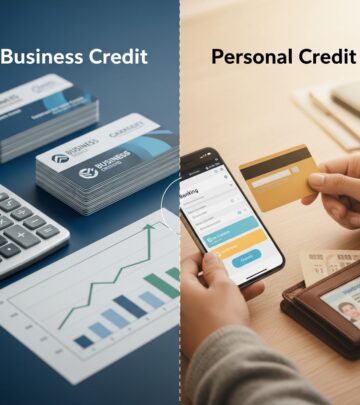
Building Business Credit: Your Complete Guide
Unlock funding opportunities and protect personal assets by establishing strong business credit from scratch with proven strategies.

Establishing a solid business credit profile is crucial for small business owners seeking favorable loan terms, higher credit limits, and supplier discounts. Unlike personal credit, business credit reflects your company’s financial reliability, enabling growth without risking personal assets. This guide outlines actionable steps to create and strengthen your business credit foundation.
Understanding the Importance of Business Credit
Business credit acts as a financial scorecard for your company, influencing everything from loan approvals to vendor negotiations. Lenders and suppliers review reports from agencies like Dun & Bradstreet, Equifax Business, and Experian Business to assess risk. A strong profile can lower interest rates and expand opportunities, while a weak one limits access to capital. For startups, building this credit early separates business operations from personal finances, safeguarding your home or savings from business debts.
Key benefits include:
- Improved cash flow through extended payment terms with suppliers.
- Access to higher credit lines without personal guarantees.
- Enhanced credibility with banks and investors.
- Protection of personal credit scores during business challenges.
Step 1: Legally Establish Your Business Entity
The first move is forming a distinct legal structure for your business, such as an LLC or corporation. This creates a separate identity from your personal finances, essential for credit bureaus to track your company’s activity independently. Register with your state’s secretary of state office to obtain official documentation. Sole proprietors can build credit but benefit more from incorporating to unlock advanced financing options.
Why it matters: Without a formal entity, credit activity often ties back to the owner’s personal score, blending risks.
Step 2: Obtain an Employer Identification Number (EIN)
Apply for a free EIN from the IRS website—it’s like a Social Security number for your business. This nine-digit identifier is required for tax filings, banking, and credit applications. Use it on all business documents to ensure consistency across agencies.
Pro tip: Even single-member LLCs need an EIN to open business accounts and apply for credit cards in the company’s name.
Step 3: Open a Dedicated Business Bank Account
Choose a bank offering business checking with low fees and online tools. Deposit initial capital and route all transactions through this account to demonstrate financial separation. Banks like Bank of America emphasize this step for building a verifiable transaction history.
This practice:
- Builds a paper trail for credit evaluators.
- Simplifies bookkeeping and tax preparation.
- Qualifies you for business-specific products.
Step 4: Secure a D-U-N-S Number
Register for a free D-U-N-S number from Dun & Bradstreet (D&B). This unique identifier links your business to credit files across major bureaus. It typically takes 30 days to activate, but expedited options exist. Consistency in business name, address, and phone (NAP) during registration prevents profile fragmentation.
D&B’s Paydex score, based on payment history, becomes your primary business credit metric.
Step 5: Start with Vendor and Trade Lines
Establish accounts with suppliers offering net-30 terms (pay within 30 days). Focus on those reporting to bureaus like D&B, such as office supply stores or fuel providers. Make small purchases and pay early to build positive history quickly.
| Vendor Type | Typical Terms | Reports To |
|---|---|---|
| Office Supplies | Net-30 | D&B, Experian |
| Home Improvement | Net-30/60 | Equifax Business |
| Fuel Cards | Net-30 | D&B |
| Telecom Services | Net-60 | Multiple Bureaus |
Aim for 3-5 trade lines initially to diversify your profile.
Step 6: Apply for a Business Credit Card
Once basics are set, apply for a starter business card, even secured ones if needed. Use for routine expenses like supplies, paying in full monthly. Keep utilization under 30%—calculate as (balance / limit) x 100. Cards from issuers like those at Middlefield Bank reward on-time payments while building scores.
Strategies for success:
- Start small to avoid denials.
- Automate payments.
- Request limit increases after 6 months of good use.
Step 7: Master Payment Habits and Utilization
Payment history drives 35-50% of scores. Pay vendors and cards early or on time every cycle. Low utilization signals responsibility—target under 30%, ideally 10%.
Additional tactics:
- Route all business spends through credit accounts.
- Monitor statements weekly.
- Negotiate better terms as history improves.
Step 8: Reduce Debt and Optimize Finances
Minimize unnecessary debt by cutting excess spending, consolidating loans, and managing inventory. Low debt-to-income ratios appeal to lenders. Renegotiate high-interest obligations and use cash flow forecasts to stay lean.
Monitoring Your Business Credit Progress
Regularly check reports from D&B, Experian, and Equifax via paid services or free trials. Dispute errors promptly—incorrect data can drag scores. Set reminders for payments and reviews.
Tools like banking apps and credit alerts keep you proactive.
Common Pitfalls to Avoid
Steer clear of:
- Inconsistent business details leading to multiple profiles.
- Missing payments, which harm scores for years.
- Mixing personal and business expenses.
- Overextending credit early.
- Ignoring personal credit, as it’s often checked for small businesses.
Advanced Strategies for Faster Growth
After 6-12 months, pursue fleet cards, lines of credit, or universal accounts. Diversify with retail credit from stores reporting payments. Lenders seek patterns: 3+ trade lines, 6+ months history, low utilization.
Business Credit Scores Explained
| Agency | Score Range | Key Factors |
|---|---|---|
| Dun & Bradstreet Paydex | 0-100 | Payment timeliness |
| Experian Intelliscore | 1-100 | Trade experience, utilization |
| Equifax Business | 0-192 | Payment history, debt |
A Paydex of 80+ indicates prompt payments.
Frequently Asked Questions (FAQs)
How long does it take to build business credit?
Basic profiles form in 3-6 months with consistent activity; strong scores take 1-2 years.
Do I need good personal credit?
For startups, yes, but established entities can qualify on business merits alone.
Can sole proprietors build business credit?
Yes, using EIN and dedicated accounts, though incorporation accelerates the process.
What if I’m denied credit?
Start with secured cards or vendors; build gradually.
How often should I check my business credit?
Quarterly, or monthly during active building.
Final Thoughts on Sustaining Business Credit
Maintain discipline in payments and monitoring to keep scores rising. As your profile strengthens, revisit financing options for expansion. This investment pays dividends in scalability and security.
References
- How to build business credit in 30 days — Mercury. 2023. https://mercury.com/blog/build-business-credit-in-30-days
- What is Business Credit and How do I Build It? — Bank of America. 2024. https://business.bankofamerica.com/en/resources/what-is-business-credit-and-how-do-i-build-it
- How to Build Business Credit: A Step-By-Step Guide — Ameris Bank. 2024. https://www.amerisbank.com/Personal/Learn/Financial-Articles-Advice/Running-A-Business/How-to-Build-Business-Credit-A-Step-By-Step-Guide
- How to Build Business Credit (And Why It Matters) — Middlefield Bank. 2023. https://www.middlefieldbank.bank/blog/post/how-to-build-business-credit-and-why-it-matters-
- How to Build Business Credit in 4 Steps (No SSN or PG) — YouTube (Credit Suite). 2023. https://www.youtube.com/watch?v=i8bFcovEz1s
- How to Establish and Build Business Credit — U.S. Chamber of Commerce. 2024. https://www.uschamber.com/co/run/finance/how-to-establish-and-build-business-credit
- Establish business credit — U.S. Small Business Administration (SBA). 2025-03-15. https://www.sba.gov/business-guide/plan-your-business/establish-business-credit
Similar Articles








Read full bio of medha deb