Personal Cash Flow Statement: Step-By-Step Template & Examples
Master your money movement with a simple personal cash flow statement to track income, expenses, and achieve financial stability.

A personal cash flow statement is a powerful financial tool that reveals the true movement of your money over a specific period, typically a month. Unlike a balance sheet, which snapshots your net worth at a point in time, or an income statement focused on profits, this statement zeroes in on actual cash entering and leaving your accounts. By documenting inflows like wages and side gigs alongside outflows such as bills and leisure spending, you gain clarity on whether you’re building wealth or eroding it.
Creating one helps identify spending leaks, prioritize savings, and align daily habits with long-term goals like debt reduction or retirement funding. Financial experts emphasize its role in proactive money management, especially amid economic uncertainties where tracking liquidity is crucial. This guide walks you through the process with fresh strategies, templates, and real-world applications to make it actionable.
Why Track Your Cash Flow Religiously
Understanding cash flow prevents the common trap of living paycheck to paycheck. It distinguishes between essential needs and discretionary wants, empowering informed decisions. For instance, positive net cash flow signals room for investments, while negative flow prompts cuts or income boosts.
Regular monitoring also supports goal-setting. Want a dream vacation or emergency fund? A cash flow statement quantifies feasibility. Studies from financial regulatory bodies highlight how cash flow analysis underpins healthy personal finances, mirroring corporate practices for sustainability. Moreover, it aids credit health by revealing patterns that influence borrowing capacity.
Gathering Essential Financial Documents
Before diving in, assemble key papers: recent pay stubs, bank and credit card statements, investment summaries, and bill receipts for the past 1-3 months. Digital tools like banking apps simplify this, exporting transactions into spreadsheets. Aim for post-tax figures to reflect spendable cash.
- Income proofs: Salary slips, freelance invoices, rental agreements.
- Expense records: Utility bills, loan statements, grocery receipts.
- Investment docs: Dividend reports, interest statements (exclude reinvested gains).
Review online portals for automated categorization, reducing manual errors. Track at least one full month for accuracy, averaging if seasonal variations apply.
Identifying and Quantifying Income Streams
Cash inflows encompass all money accessible for spending. Begin with primary salary after deductions, then layer in secondary sources. Total these for your monthly inflow baseline.
| Inflow Category | Examples | Estimated Monthly Amount |
|---|---|---|
| Primary Employment | Salary, bonuses | $4,500 |
| Side Income | Freelance, ridesharing | $800 |
| Passive Earnings | Rentals, dividends | $300 |
| Other | Refunds, gifts | $100 |
| Total Inflow | $5,700 |
Exclude illiquid assets like retirement accounts with automatic reinvestments. Use averages for irregular income, such as quarterly bonuses divided by three. Tools like Excel or apps (e.g., Mint-inspired trackers) automate summation.
Categorizing and Logging All Expenses
Outflows demand meticulous breakdown into fixed (predictable) and variable (fluctuating) types, plus one-offs. Scrutinize statements for hidden costs like fees or subscriptions.
Fixed Expenses: Recurring must-haves.
- Housing (rent/mortgage): $1,200
- Utilities: $250
- Debt payments (loans, minimum credit): $600
- Insurance: $150
Variable Expenses: Lifestyle-driven.
- Groceries: $400
- Transportation (gas, transit): $200
- Healthcare: $100
- Dining out/entertainment: $300
Infrequent/Savings: Annuals prorated monthly, plus deliberate allocations.
- Insurance premiums: $50 (annual/12)
- Gym/memberships: $50
- Savings contributions: $500
- Emergency fund: $200
| Category | Monthly Amount |
|---|---|
| Fixed | $2,200 |
| Variable | $1,000 |
| Savings/Infrequent | $800 |
| Total Outflow | $4,000 |
Be exhaustive—small drips like coffee runs accumulate. Categorize savings as outflows to enforce discipline.
Computing Net Cash Flow Precisely
Net cash flow = Total Inflow – Total Outflow. Using our example: $5,700 – $4,000 = +$1,700 (positive, healthy).
- Positive (>0): Surplus for investing, debt payoff, or fun.
- Zero: Balanced; tweak for buffers.
- Negative: Deficit; cut variables or boost income.
Monitor trends over 3-6 months. Government financial guides stress this metric for liquidity assessment.
Visualizing with Templates and Tools
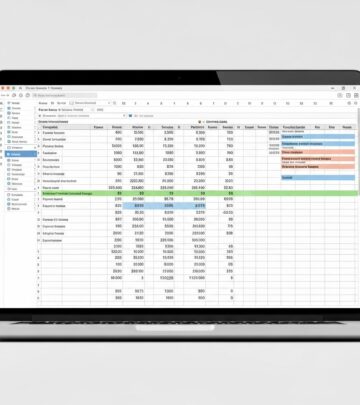
Excel shines for custom templates: columns for categories, rows for months. Formulas auto-calculate totals/net. Free apps like YNAB or PocketGuard offer mobile dashboards.
Sample Template Structure:
- Sheet 1: Monthly Tracker
- Sheet 2: Yearly Summary (average net flow)
- Sheet 3: Charts (pie for expenses, line for trends)
Integrate with bank APIs for real-time updates, saving hours weekly.
Leveraging Insights for Financial Wins
Positive flow? Allocate 50% to savings/investments, 30% debt, 20% rewards. Negative? Prioritize: trim dining (high ROI cut), negotiate bills, monetize hobbies.
Advanced: Adapt business-style sections—operating (daily spend), investing (assets), financing (loans). Build emergency funds covering 3-6 months’ outflows.
Common Hurdles and Fixes
Oversight of Irregulars: Prorate holidays, repairs.
Impulse Buys: Weekly reviews curb them.
Family Dynamics: Joint statements foster alignment.
Revisit quarterly; life changes demand updates.
Long-Term Cash Flow Mastery
Consistent tracking evolves into forecasting: project raises, inflation. Pair with net worth statements for holistic views. Aim for growing positive flow signaling wealth accumulation.
Frequently Asked Questions
What exactly is a personal cash flow statement?
It tracks monthly cash in minus cash out to show surplus or shortfall, guiding budgeting.
How often should I update it?
Monthly for precision, quarterly for trends.
Does it include savings?
Yes, as outflows to reflect committed funds.
What’s a good net cash flow target?
10-20% of inflow for savings/debt.
Can apps replace manual creation?
They assist but manual review ensures accuracy.
References
- Beginners’ Guide to Financial Statements — U.S. Securities and Exchange Commission. 2023-10-01. https://www.sec.gov/about/reports-publications/investorpubsbegfinstmtguide
- How to Read & Understand a Cash Flow Statement — Harvard Business School Online. 2024-05-15. https://online.hbs.edu/blog/post/how-to-read-a-cash-flow-statement
- Guide to Using a Personal Cash Flow Statement — SoFi. 2025-01-20. https://www.sofi.com/learn/content/personal-cash-flow-statement/
- How to Create a Personal Cash Flow Statement — Experian. 2024-11-10. https://www.experian.com/blogs/ask-experian/how-to-create-personal-cash-flow-statement/
- Personal Cash Flow Statement: A Guide — Scalable CFO. 2024-08-05. https://www.scalablecfo.io/post/personal-cash-flow-statement
- Guide to Using a Personal Cash Flow Statement — Satty & Partners. 2024-12-01. https://satty.com/blog/guide-to-using-a-personal-cash-flow-statement
Similar Articles








Read full bio of medha deb