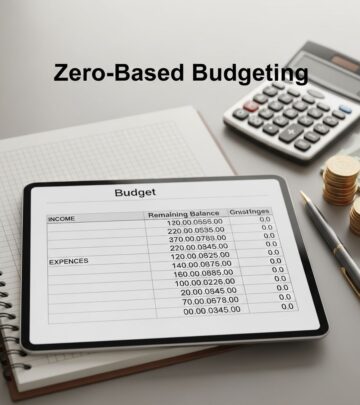
Budgeting: 5 Steps To Build A Personalized Zero-Based Plan
Discover why generic budgeting templates fail and learn to craft a personalized financial plan tailored to your unique lifestyle and goals.

Handling your money is a personal endeavor. You control what you spend on and how much you allocate to each category. Yet, many people chase generic budgeting templates promising simplicity and universal success. These one-size-fits-all plans often disappoint because they ignore individual circumstances like income levels, family size, location, and lifestyle goals. A truly effective budget must be customized to reflect your reality, incorporating tools like budget calculators and zero-based strategies for sustainable financial health.
Why One-Size-Fits-All Budgets Fall Short
Standard budgeting advice, such as the 50/30/20 rule—50% needs, 30% wants, 20% savings—sounds appealing but rarely fits everyone perfectly. For high-cost urban dwellers, housing alone might exceed 50% of income, leaving little room for other categories. Rural residents or families with multiple children face different pressures, like higher transportation or childcare costs. According to local benchmark data, monthly expenses vary widely by zip code, income, and household composition. Ignoring these factors leads to frustration, abandoned plans, and persistent debt.
Personalization starts with understanding your baseline. Tools that compare your spending to local averages reveal gaps early. For instance, if your area’s benchmark for housing is 30% of income but you’re at 45%, adjustments are needed. This insight prevents the common pitfall of forcing a rigid template onto mismatched realities.
Using a Budget Calculator to Benchmark Your Finances
A free budget calculator provides a reality check by showing how your spending stacks up against similar households in your area. Input your zip code, household size, income, and monthly expenses across categories like housing, food, transportation, childcare, medical, savings, taxes, and other needs. The tool calculates local benchmarks, highlighting differences.
Here’s how it typically breaks down:
| Category | Local Benchmark | Your Expenses | Difference |
|---|---|---|---|
| Housing | $2,000 | $2,500 | -$500 |
| Food | $600 | $700 | -$100 |
| Transportation | $800 | $650 | +$150 |
| Childcare | $1,200 | $1,500 | -$300 |
| Medical | $400 | $350 | +$50 |
| Savings | $500 | $300 | +$200 |
| Taxes | $1,500 | $1,500 | $0 |
| Total | $7,000 | $7,500 | -$500 |
This table illustrates a household overspending on essentials while undersaving. Such visualizations make imbalances obvious, prompting targeted cuts or income boosts.
Building a Zero-Based Budget: Give Every Dollar a Job
Zero-based budgeting ensures your income minus expenses equals zero. Track one month’s spending and income meticulously. List all inflows: salary, side gigs, investments. Then categorize outflows: fixed (rent, utilities), variable (groceries, entertainment), and irregular (gifts, repairs). Assign every dollar until nothing remains unallocated.
- Step 1: Calculate take-home pay after taxes.
- Step 2: Prioritize necessities: housing (25-35%), food (10-15%), transportation (10-15%).
- Step 3: Allocate to savings and debt (15-20% minimum).
- Step 4: Distribute remainder to wants and fun.
- Step 5: Review monthly, averaging irregular costs (e.g., annual vacations divided by 12).
This method adapts to fluctuations. December might boost gifts; summer prioritizes travel. Over time, it builds discipline without rigidity.
Key Budget Categories Explained
Housing
Housing dominates most budgets at 25-35% of income. Include rent/mortgage, utilities, insurance, maintenance. In high-cost areas, this can hit 40%+, squeezing other areas. Use benchmarks to negotiate leases or refinance.
Food
Aim for 10-15%: groceries and dining out. Track receipts to curb impulse buys. Meal planning saves 20-30% monthly.
Transportation
10-15% covers gas, insurance, public transit, repairs. Carpooling or biking reduces this in urban settings.
Childcare
For families, this varies wildly: daycare ($1,000+/month), nannies, or school fees. Public options lower costs; compare local averages via calculators.
Medical
Budget 5-10% for premiums, copays, prescriptions. HSAs stretch dollars further.
Savings and Investments
Target 10-20%. Local rates are often low; outperform peers with automated transfers. Retirement calculators project growth based on contributions and rates.
Taxes
Estimate federal, state, local via paystubs or tools. Adjust withholdings to avoid surprises.
Other (Debt, Entertainment, Miscellaneous)
Debt payoff first, then fun. Limit to 10-20%.
Budgeting for Your Future: Flexibility and Adaptation
A solid budget prepares for changes. Build an emergency fund (3-6 months expenses) and max retirement accounts. If eyeing a lower-paying dream job or costly move, simulate scenarios: trim dining out or subscriptions.
Life shifts demand reviews. Job loss? Slash non-essentials. Windfall? Accelerate debt or invest. Zero-based plans excel here, reallocating as needed.
Common Budgeting Pitfalls and How to Avoid Them
- Overspending on Variables: Use cash envelopes for groceries/entertainment.
- Ignoring Irregular Expenses: Fund sinking accounts (e.g., $100/month for holidays).
- No Tracking: Apps like Mint or spreadsheets enforce accountability.
- Unrealistic Goals: Start small; 5% savings builds momentum.
- One-Size-Fits-All Mindset: Customize using local data.
Tools and Resources for Effective Budgeting
Beyond calculators, leverage living wage estimators for baseline needs. Apps automate tracking; spreadsheets offer customization. Financial advisors refine complex scenarios.
Frequently Asked Questions (FAQs)
What is a zero-based budget?
A zero-based budget assigns every dollar of income to expenses, savings, or debt, leaving zero unallocated. It’s ideal for control and adapts monthly.
How much should I save each month?
Aim for 10-20% of income, exceeding local averages. Use savings calculators to project growth.
What’s the 50/30/20 rule?
50% needs, 30% wants, 20% savings/debt. Adjust for your situation; it’s not universal.
How do I handle variable expenses?
Average over 3-12 months and divide by 12 for steady budgeting.
Can budgeting help with debt payoff?
Yes, prioritize high-interest debt post-essentials, using avalanche or snowball methods.
Bottom Line: Make Budgeting Work for You
Budget calculators offer benchmarks, but success lies in personalization. Track, categorize, adapt. Pay bills, save first, then enjoy. Your finances thrive when the plan fits you—not vice versa.
References
- Free Budget Calculator — SmartAsset.com. 2023. https://smartasset.com/mortgage/budget-calculator
- Living Wage Calculator — MIT. Accessed 2026. https://livingwage.mit.edu
- Consumer Expenditure Survey — U.S. Bureau of Labor Statistics (official .gov). 2024-10-01. https://www.bls.gov/cex/
- Personal Consumption Expenditures — Federal Reserve Economic Data (FRED), St. Louis Fed (.gov). 2025-01-10. https://fred.stlouisfed.org/series/PCE
- Household Financial Stability — Consumer Financial Protection Bureau (CFPB .gov). 2024-06-15. https://www.consumerfinance.gov/data-research/research-reports/Household-Financial-Stability/
Similar Articles








Read full bio of Sneha Tete