Brown University: Profile, Rankings & College Data
Complete guide to Brown University: admissions, costs, rankings, and career outcomes.
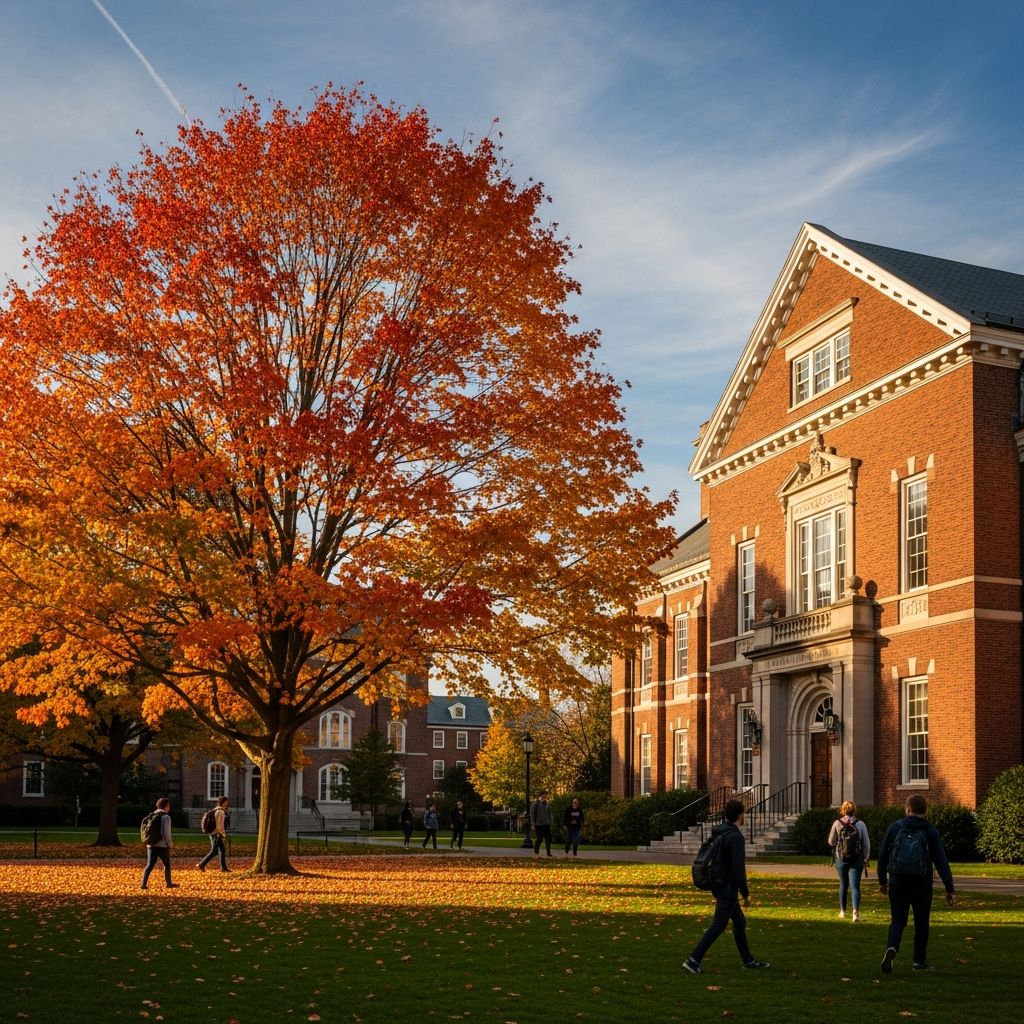
Brown University: Excellence in Education and Innovation
Brown University stands as one of America’s most prestigious institutions of higher learning, located in Providence, Rhode Island. As a member of the Ivy League and one of the nation’s top-ranked universities, Brown attracts thousands of ambitious students seeking a world-class education combined with access to exceptional resources and career opportunities. This comprehensive profile provides prospective students and their families with essential information about admissions, costs, academic quality, and post-graduate outcomes.
Overview and Notable Achievements
Brown University has cultivated a distinguished reputation across multiple dimensions of academic and professional excellence. The institution boasts impressive accolades including twelve Nobel Prize winners and seven National Humanities Medalists among its affiliated scholars and alumni. The university has produced the most Fulbright recipients of any university in the nation during multiple years, including 2016, 2017, 2018, and 2021. Additionally, Brown ranks seventh among all American colleges and universities for producing Rhodes Scholars, further demonstrating the caliber of its student body and faculty.
Beyond traditional academic honors, Brown has earned recognition as one of America’s most entrepreneurial universities. Forbes magazine ranked Brown seventh on its list of America’s Most Entrepreneurial Universities, analyzing the ratio of alumni and students who have identified themselves as founders and business owners on LinkedIn. This entrepreneurial spirit extends to technology and startups, with LinkedIn ranking Brown third among undergraduate universities for software developers at startups, behind only MIT and Princeton.
Admissions and Student Body
Brown maintains highly selective admissions standards reflective of its prestigious status. The university’s acceptance rate stands at approximately 5 percent, making admission highly competitive. This low acceptance rate ensures that the student body comprises exceptional individuals with demonstrated academic excellence, intellectual curiosity, and diverse talents.
The institution’s admissions policy reflects a commitment to access and affordability. Brown’s admissions process is need-blind for all domestic first-year applicants, with plans to extend this policy to international first-year applicants starting with the Class of 2029. The university reported a yield rate of 69 percent in 2021, indicating that the majority of admitted students choose to enroll. This high yield rate demonstrates the attractiveness of Brown’s academic programs and campus community.
For transfer students, Brown maintains specific policies regarding credit acceptance. The university accepts transfer applications, with a 5.8 percent acceptance rate among transfer applicants in the 2019-20 academic year. Each 1.0 Brown course credit is equivalent to 4 semester credits or 6 quarter units, with a maximum of 15 course credits transferable from other institutions.
Financial Information and Costs
Tuition and Required Fees
Brown University operates as a private institution with substantial costs aligned with other elite research universities. For the 2025-2026 academic year, tuition is set at $71,700. In addition to tuition, students must budget for required fees totaling $2,950 for first-year undergraduates and $2,850 for continuing students. Food and housing expenses for on-campus students add approximately $18,514 to annual costs, bringing the total comprehensive cost significantly higher.
Financial Aid and Affordability Initiatives
Recognizing that education costs represent a substantial barrier for many talented students, Brown has implemented significant financial aid initiatives. In 2017, Brown announced an ambitious $30 million campaign called the Brown Promise, which eliminated loans from all undergraduate financial aid awards beginning in the 2018-2019 academic year. This groundbreaking policy shift ensures that financial aid packages consist entirely of grants and scholarships rather than loans that burden students with post-graduation debt.
The university’s commitment to financial aid is demonstrated by historical data showing that in 2016-2017, Brown awarded need-based scholarships totaling $120.5 million. The average need-based award for the Class of 2020 reached $47,940, reflecting substantial institutional commitment to meeting demonstrated financial need.
The comprehensive approach to affordability, combined with the elimination of loans, positions Brown as a leader in making elite education accessible to talented students regardless of economic background. The university offers a net price calculator on its website to help families estimate their actual costs after financial aid considerations.
Academic Rankings and Recognition
Brown University consistently ranks among the nation’s top institutions across multiple authoritative ranking systems. U.S. News & World Report ranked Brown ninth among national universities in its 2023 edition. The same publication also recognized Brown as 18th for undergraduate teaching and 25th among Most Innovative Schools. Forbes magazine’s annual ranking of “America’s Top Colleges 2022” placed Brown 19th overall among 600 research universities, liberal arts colleges, and service academies.
In its ranking of best value schools—measuring education quality relative to cost—U.S. News & World Report ranked Brown 14th nationally. Washington Monthly’s 2024 rankings positioned Brown 30th among 438 national universities based on contribution to the public good, measured by social mobility, research, and promoting public service. These diverse rankings reflect Brown’s strengths across multiple dimensions including teaching quality, innovation, research productivity, and social impact.
Enrollment and Student Demographics
Brown University serves a diverse student population across undergraduate and graduate programs. The institution enrolled 3,289 undergraduate, graduate, and medical students at the start of the 2024-2025 academic year. The undergraduate population comprises approximately 6,600 degree-seeking students, while graduate and professional students add another 2,800 to the campus community.
The university maintains robust financial aid distribution across its student body. First-time, degree-seeking undergraduates received substantial aid support, with significant portions receiving Pell Grants and subsidized Stafford Loans as part of comprehensive financial aid packages.
Career Outcomes and Alumni Success
Brown University graduates achieve remarkable success in professional careers across diverse fields. Alumni include prominent figures such as Secretary of the Treasury Janet Yellen, CNN founder Ted Turner, and actor John Krasinski. Beyond household names, typical Brown graduates demonstrate strong earnings potential, with median earnings exceeding $93,000 in their early careers. This robust early-career earning capacity reflects the value of a Brown degree in the competitive job market and the caliber of opportunities available to graduates.
The university’s focus on entrepreneurship translates into career success for graduates launching new ventures. The combination of rigorous academic training, access to capital networks, and supportive mentorship creates an environment where Brown alumni frequently become founders and business leaders.
Campus Life and Student Experience
Beyond academics, Brown offers a vibrant campus community with distinctive social traditions. The university’s social calendar features prominent events including Spring Weekend, celebrated for its concert lineup and festive atmosphere, and the elegant Campus Dance that inaugurates commencement and Reunion Weekend. These traditions create memorable experiences that foster community bonds among students, faculty, and alumni.
Dining on campus reflects Brown’s attention to student experience. While students affectionately call the main dining hall “the Ratty”—short for Refectory—the food quality exceeds typical college dining fare, contributing to overall student satisfaction.
Research and Academic Distinction
Brown University maintains substantial research operations supporting faculty scholarship and graduate student training. The institution is a member of the Association of American Universities since 1933 and is classified among “R1: Doctoral Universities – Very High Research Activity” by the Carnegie Classification. In fiscal year 2017, Brown expended $212.3 million on research and ranked 103rd in the United States by total research and development expenditure according to the National Science Foundation.
The university’s School of Public Health achieved particular distinction, receiving the fourth most funding in NIH awards among schools of public health in the United States in 2021. This research distinction ensures that students benefit from close connections with active research programs and faculty engaged in cutting-edge scholarship.
Sustainability and Environmental Commitment
Brown University has demonstrated significant commitment to environmental sustainability and divestment from fossil fuels. In 2020, the university announced the sale of 90 percent of its fossil fuel investments as part of a broader divestment strategy from direct investments and managed funds focusing on fossil fuels. Building on this commitment, Brown adopted ambitious goals in 2021 to reduce quantifiable campus emissions by 75 percent by 2025 and achieve carbon neutrality by 2040. The university is a member of the Ivy Plus Sustainability Consortium, through which it shares best practices and sustainability solutions with peer institutions.
Graduation Rates and Student Persistence
Brown maintains high graduation rates reflecting strong student support systems and academic quality. The university tracks persistence and degree completion rates through multiple metrics, including six-year graduation rates for first-time, full-time bachelor’s degree-seeking undergraduates. These metrics demonstrate Brown’s effectiveness in supporting students toward successful degree completion within reasonable timeframes.
Why Choose Brown University?
Brown University represents an exceptional choice for students seeking an elite education combined with genuine accessibility through need-blind admissions and loan-free financial aid. The institution’s distinction in research, entrepreneurship, and career preparation creates an environment where ambitious students can thrive academically while developing networks and experiences that launch successful careers. The combination of rigorous academics, distinguished faculty, supportive financial aid, and vibrant campus community positions Brown as a leading destination for high-achieving students.
Frequently Asked Questions
Q: What is Brown University’s acceptance rate?
A: Brown University maintains an acceptance rate of approximately 5 percent, making it one of the most selective universities in the United States.
Q: Does Brown practice need-blind admissions?
A: Yes, Brown’s admissions policy is need-blind for all domestic first-year applicants and will be extended to international first-year applicants beginning with the Class of 2029.
Q: Are loans included in Brown’s financial aid packages?
A: No, Brown eliminated loans from all undergraduate financial aid awards starting in 2018-2019 through its Brown Promise initiative, meaning all aid consists of grants and scholarships.
Q: How much does tuition cost at Brown University?
A: Tuition for 2025-2026 is $71,700, with required fees of $2,950 for first-year undergraduates and $2,850 for continuing students, plus additional costs for housing and meals.
Q: What is the average early-career salary for Brown graduates?
A: Brown graduates earn median early-career salaries exceeding $93,000, reflecting strong job market outcomes and the value of a Brown degree.
Q: How does Brown rank among national universities?
A: U.S. News & World Report ranked Brown ninth among national universities in its 2023 edition, while Forbes ranked it 19th among America’s top colleges.
Q: Can transfer students attend Brown?
A: Yes, Brown accepts transfer applications with a 5.8 percent acceptance rate, and recognizes up to 15 course credits transferred from other institutions.
References
- Common Data Set 2024-2025 — Brown University Office of Institutional Research. 2024. https://oir.brown.edu/sites/default/files/2020-04/CDS_2024_2025.pdf
- Brown University — Wikipedia. 2025. https://en.wikipedia.org/wiki/Brown_University
- Brown University, RI – Complete Profile, Rankings and Data — Money. 2025. https://money.com/best-colleges/profile/brown-university/
- Brown’s newest students, by the numbers — Brown University News. September 6, 2024. https://www.brown.edu/news/2024-09-06/new-students
- 2025 Best Colleges in U.S. — Money. 2025. https://money.com/best-colleges/
Similar Articles








Read full bio of medha deb