Brokered CDs: 5 Key Advantages, Risks, And Smart Strategies
Unlock the advantages of brokered CDs: higher yields, liquidity options, and FDIC protection through brokerage platforms.
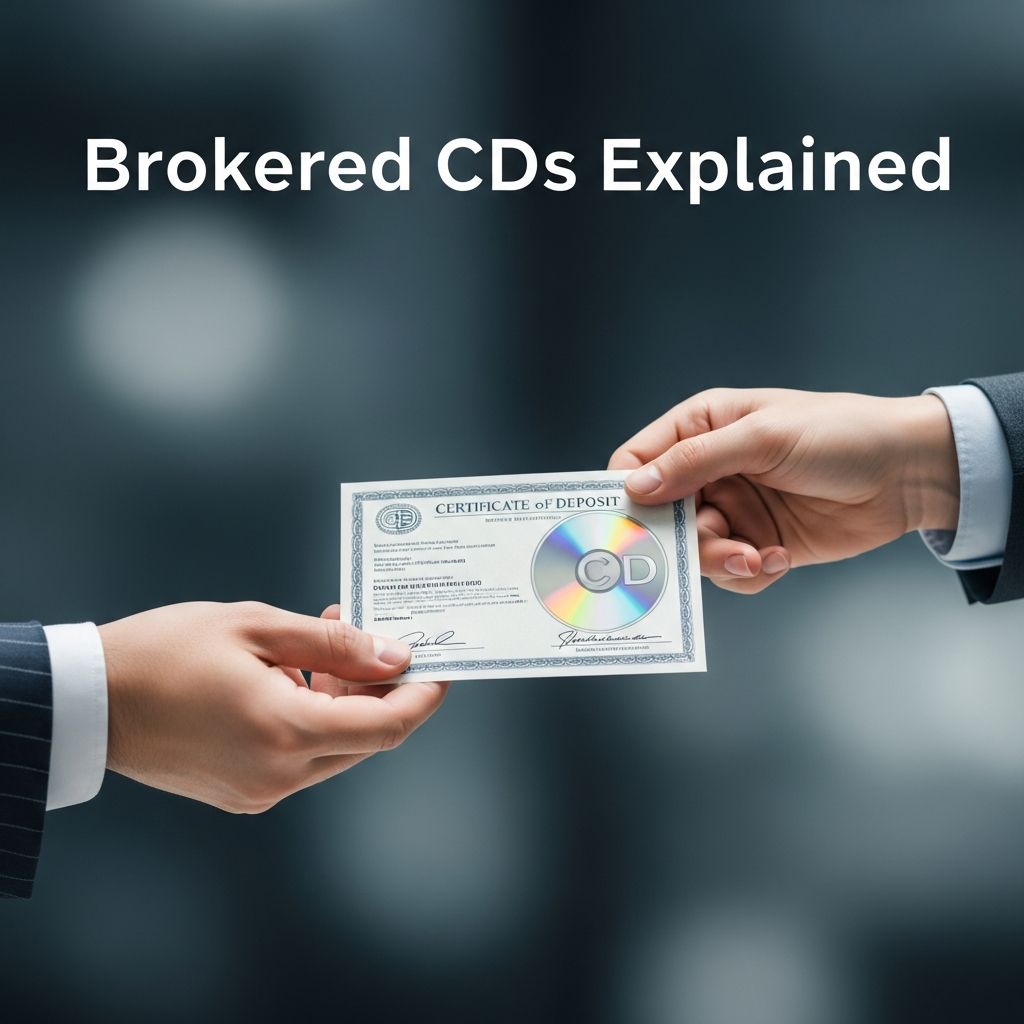
Brokered certificates of deposit (CDs) represent a flexible alternative to traditional bank CDs, enabling investors to access competitive rates and enhanced liquidity through brokerage platforms. These instruments maintain the core safety features of standard CDs while introducing unique market-driven opportunities.
Understanding the Fundamentals of Brokered CDs
At their essence, brokered CDs are time deposits issued by banks or credit unions but distributed through brokerage firms rather than directly from the financial institution. Investors purchase them within a brokerage account, where they earn a predetermined interest rate over a specified term, backed by FDIC insurance up to applicable limits per issuing bank.
The process begins with banks issuing large-denomination CDs to brokers, who then fraction them into smaller units suitable for individual investors. This setup allows brokerage clients to select from a broad inventory of offerings from numerous banks, often featuring terms from one month to 30 years and varied interest structures.
Upon purchase, the CD appears in the investor’s brokerage portfolio. Interest accrues and pays out according to the CD’s schedule—typically semiannually or at maturity—directly into the account. At term end, principal returns seamlessly, preserving the low-risk profile akin to direct bank deposits.
Key Distinctions from Traditional Bank CDs
While sharing FDIC protection and fixed yields, brokered CDs diverge significantly in accessibility and management. Traditional CDs demand direct interaction with a single bank, limiting options to that institution’s menu. Brokered versions centralize choices from hundreds of banks in one platform, streamlining rate comparisons.
| Feature | Brokered CDs | Bank CDs |
|---|---|---|
| Liquidity | Sellable on secondary market | Early withdrawal penalties apply |
| Rate Access | Multiple banks, competitive yields | Limited to one bank |
| Transferability | Portable between brokers | Not transferable |
| Minimum Investment | Often $1,000+ | Varies, sometimes lower |
| FDIC Expansion | Via multiple banks | Per bank limit only |
This table highlights how brokered CDs prioritize investor convenience and optionality.
Primary Advantages for Investors
- Competitive Yields: Exposure to a marketplace fosters higher annual percentage yields (APYs). Recent offerings show rates from 4.25% to 4.65% APY, often surpassing bank counterparts, especially for longer terms.
- Liquidity Options: Unlike bank CDs, these can be traded on a secondary market before maturity, avoiding penalties—though market prices may result in gains or losses.
- Insurance Maximization: FDIC covers up to $250,000 per depositor per bank. Diversifying across issuers via one brokerage can protect sums exceeding standard limits, e.g., $1 million across five banks.
- Diversification and Estate Features: Spread risk across institutions; many include survivor’s options allowing heirs full principal redemption at death, irrespective of market value.
- Portfolio Flexibility: Varied maturities (1 month to 20+ years), payment frequencies, and features like call protection or step-up rates tailor to specific goals.
Potential Drawbacks and Risks
Brokered CDs introduce market dynamics absent in bank versions. Secondary sales depend on buyer demand; rising interest rates can depress prices below principal, yielding losses if sold early. No guaranteed buyers exist, potentially trapping funds until maturity.
Brokerage fees may apply for purchases, especially secondary market buys, eroding yields. Interest rate risk persists: locking funds long-term amid falling rates means missing better opportunities. Callable CDs add uncertainty, as issuers may redeem early when rates drop.
Tax implications mirror bank CDs—interest is federally taxable annually, even if not withdrawn—necessitating IRS Form 1099-INT tracking. Finally, brokerage account requirements mean investors need an established platform, unlike direct bank access.
Effective Strategies for Brokered CD Investments
CD Laddering: Purchase CDs with staggered maturities (e.g., 3-month, 6-month, 1-year) to balance liquidity and yield while mitigating rate fluctuations. This generates steady income and reinvestment opportunities.
Diversification Ladder: Allocate across multiple banks to maximize FDIC coverage without multiple accounts. For $500,000, select five $100,000 CDs from distinct issuers.
Secondary Market Plays: Monitor for discounted new-issue CDs or those near maturity for principal recovery. Ideal for short-term holds in volatile rate environments.
Long-Term Locking: Secure extended terms (10-30 years) during rate peaks to hedge inflation, suitable for retirement horizons.
Current Market Insights and Rate Environment
As of recent data, brokered CD rates outperform many bank offerings, with competitive APYs on terms exceeding one year. Platforms like Fidelity and Vanguard list thousands of options, enabling precise matching to investor timelines. Monitor Federal Reserve actions, as rate cuts could prompt callable redemptions or secondary price shifts.
Frequently Asked Questions
Are brokered CDs FDIC-insured?
Yes, coverage applies up to $250,000 per depositor per issuing bank, independent of the brokerage.
Can I lose money on a brokered CD?
Held to maturity, you receive full principal plus interest. Early secondary sales may incur losses if rates have risen.
What are typical minimums for purchase?
Usually $1,000, though some brokers offer lower entry points for new issues.
Do brokered CDs have fees?
New issues often fee-free; secondary trades may incur commissions. Confirm with your broker.
How do taxes work?
Interest is taxable as ordinary income annually, reported via 1099-INT.
Is a Brokered CD Right for Your Portfolio?
Suitable for conservative investors seeking yields above savings accounts with liquidity edges over bank CDs. Ideal for retirement savers, ladder builders, or those maximizing insurance. Assess risk tolerance, rate outlook, and brokerage costs before committing. Consult a financial advisor for personalized fit.
References
- What is a brokered CD? – Fidelity Investments — Fidelity. 2023. https://www.fidelity.com/learning-center/trading-investing/brokered-cd
- Understanding Brokered CDs | E*TRADE — E*TRADE. 2023. https://us.etrade.com/knowledge/library/bonds-cds/understanding-brokered-cds
- Brokered CDs: Benefits, Disadvantages & Strategies – RetireGuide — RetireGuide. 2023. https://www.retireguide.com/retirement-planning/investing/certificate-of-deposit/brokered-cds/
- What Are Brokered CDs? | Bankrate — Bankrate. 2023. https://www.bankrate.com/banking/cds/what-are-brokered-cds/
- Bank CDs vs. Brokered CDs: What’s the Difference? – Charles Schwab — Charles Schwab. 2023. https://www.schwab.com/learn/story/explore-brokered-cds-vs-bank-cds
Similar Articles








Read full bio of Sneha Tete