Brokerage Checking Accounts: Smart Choice?
Discover if brokerage checking accounts can simplify your finances by blending everyday banking with seamless investing opportunities.

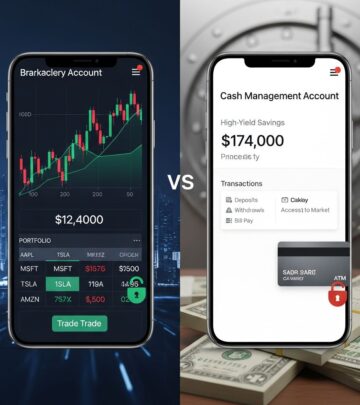
Brokerage checking accounts merge the convenience of daily banking with investment capabilities, allowing users to spend, save, and invest from one platform. These hybrid accounts, often called cash management accounts, provide debit cards, bill pay, and ATM access alongside opportunities to buy stocks or funds instantly.
Understanding the Hybrid Nature of Brokerage Checking
At their core, these accounts function like standard checking but are issued by brokerage firms rather than banks. Funds held in cash earn interest in some cases, and uninvested balances may sweep into partner banks for protection. Unlike retirement accounts such as IRAs, there are no withdrawal restrictions or contribution caps, offering full liquidity.
This setup appeals to those seeking streamlined finances. Active traders benefit from quick fund deployment without external transfers, while casual users enjoy potential perks like fee waivers. Brokerages like Fidelity or Schwab exemplify this by linking checking to broader investment tools.
Core Features That Set Them Apart
Brokerage checking accounts typically include:
- Debit card and check-writing privileges for routine transactions.
- ATM networks with reimbursements, often unlimited and global.
- Online bill pay and mobile apps for deposits and transfers.
- Direct securities purchases, bypassing settlement delays.
- Interest on balances, sometimes competitive with high-yield savings.
Many provide elevated FDIC coverage by distributing cash across multiple insured banks, exceeding the standard $250,000 limit per depositor. This multi-bank sweep ensures safety for larger balances without manual effort.
Advantages for Modern Money Managers
One primary draw is cost efficiency. Most brokerages eliminate monthly fees, minimum balances, and check costs, contrasting with traditional banks’ charges. ATM fee refunds add value for travelers or frequent withdrawers.
Seamless integration accelerates investing. Frequent traders execute buys instantly from checking balances, avoiding ACH transfer waits of days. This efficiency suits day traders or those timing markets.
For holistic oversight, consolidating accounts reduces fragmentation. Track spending, savings, and portfolios in one dashboard, aiding budgeting and goal progress. Some yield higher APYs than bank checking, nurturing idle cash.
Potential Drawbacks to Consider
Despite perks, limitations exist. Interest rates often lag top online savings or CDs, prioritizing liquidity over yield. No physical branches mean reliance on digital support, challenging for tech-averse users.
FDIC insurance applies only to swept cash, not investments, requiring vigilance on allocations. Tax reporting demands annual tracking of gains, unlike simple bank interest forms. Over-mingling spending and investing risks impulsive trades from daily funds.
| Feature | Brokerage Checking | Traditional Bank Checking |
|---|---|---|
| Fees | Typically none | Often monthly or overdraft |
| ATM Access | Reimbursed, wide network | Limited to bank ATMs |
| Investing | Direct from account | Separate transfers needed |
| Interest Rate | Variable, sometimes high | Usually low |
| Branches | Online only | Physical locations |
FDIC Protection Explained
Cash in brokerage checking sweeps to FDIC-insured partner banks, safeguarding up to millions via distribution. Verify your provider’s program; for instance, some cover $2.5 million or more. Investments remain SIPC-protected up to $500,000, distinct from FDIC.
This dual safety appeals to conservative users holding substantial cash, but confirm sweep mechanics and limits in account agreements.
Ideal Candidates for These Accounts
Consider brokerage checking if:
- You trade frequently and value speed.
- Fee avoidance is priority.
- Centralized financial views simplify life.
- Balances exceed standard FDIC caps.
Skip if preferring branches, maximizing yields on savings, or separating spending from investments for discipline. High-volume spenders might find bank rewards superior.
Comparing to Standard Brokerage and Bank Accounts
Standard brokerage accounts focus on investing without spending tools, lacking debit or checks. Bank checking excels in accessibility but isolates from markets. Brokerage checking bridges both, though yields trail specialized savings.
For retirement-focused users, pair with IRAs; brokerage checking handles non-retirement liquidity without tax perks.
Steps to Get Started
- Research brokerages: Compare fees, APYs, ATM policies, and sweep coverage.
- Check eligibility: Most require U.S. residency and ID.
- Open online: Link external accounts for funding.
- Transfer funds: Settle in cash or invest portions.
- Monitor: Use apps for balances and performance.
Frequently Asked Questions
Are brokerage checking accounts FDIC insured?
Yes, uninvested cash sweeps to FDIC banks, often with expanded coverage.
Do they earn interest?
Many do, with rates varying by provider; check current APYs.
Can I use them for daily bills?
Absolutely, with debit, checks, and bill pay like banks.
What’s the difference from a cash management account?
Often synonymous, both blend checking and investing.
Are there minimum deposits?
Rarely; most have none.
Tax Implications and Reporting
Gains from investments trigger capital gains taxes, reported via 1099 forms. Harvest losses to offset income, a brokerage advantage. Interest on cash is ordinary income. Consult advisors for strategies.
Real-World Scenarios
A tech professional with $50,000 idle cash benefits from sweeps and quick trades. A retiree needing branch access might stick to banks. Young investors consolidating post-grad finances find unity ideal.
In volatile markets, instant access hedges opportunities, but discipline prevents dipping into emergency funds for speculations.
Future Trends in Hybrid Banking
Rising fintech competition boosts yields and features. Expect AI-driven insights and crypto integrations, enhancing appeal. Regulatory shifts may standardize protections.
References
- Should You Use a Brokerage Checking Account? — Experian. 2023. https://www.experian.com/blogs/ask-experian/should-you-use-brokerage-checking-account/
- What Are Brokerage Checking Accounts? — SoFi. 2024-01-15. https://www.sofi.com/learn/content/what-are-brokerage-checking-accounts/
- The Pros and Cons of Brokerage Checking Accounts — Bankrate. 2025-02-10. https://www.bankrate.com/banking/checking/pros-cons-of-brokerage-checking-accounts/
- What is a Brokerage Account? — Fidelity Investments. 2024. https://www.fidelity.com/learning-center/smart-money/what-is-a-brokerage-account
- What is a Brokerage Account — Charles Schwab. 2024. https://www.schwab.com/brokerage/what-is-a-brokerage-account
- Brokerage Accounts — FINRA.org. 2023-11-01. https://www.finra.org/investors/investing/investment-accounts/brokerage-accounts
Similar Articles








Read full bio of Sneha Tete