Breaking Down Mortgage Payments
Discover the essential components of your monthly mortgage payment and how they impact your homeownership journey.
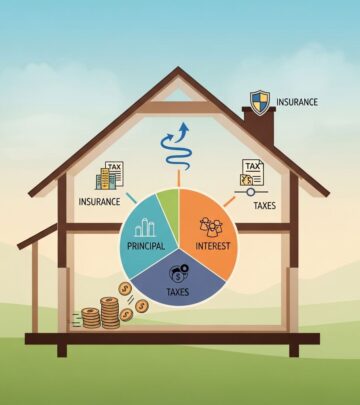
Your monthly mortgage payment is more than just a single line item on your budget—it’s a combination of several critical elements that together ensure you maintain homeownership. Known collectively as PITI (Principal, Interest, Taxes, and Insurance), these components work in harmony to cover the cost of your loan and protect your property. Understanding each part empowers you to make informed financial decisions, anticipate changes, and potentially save thousands over the life of your loan.
The Core of Your Payment: Principal and Interest
At the heart of every mortgage lies the
principal
andinterest
, often bundled together as the core repayment of your borrowed funds. The principal represents the original amount you borrowed to purchase your home, minus any down payment. For example, on a $400,000 home with a 20% down payment, your principal would be $320,000. Each monthly payment chips away at this balance, gradually building your equity in the property.Interest, on the other hand, is the lender’s fee for providing the loan. Calculated as a percentage of the remaining principal, it decreases over time as your balance shrinks. In the early years of a typical 30-year fixed-rate mortgage, a larger portion of your payment goes toward interest—sometimes over 70%—while principal reduction is minimal. This structure, called amortization, shifts over time, with principal payments growing larger toward the end.
| Year | % to Interest | % to Principal |
|---|---|---|
| 1 | 80% | 20% |
| 15 | 50% | 50% |
| 30 | 10% | 90% |
To visualize this, consider an amortization schedule: for a $300,000 loan at 4% interest over 30 years, your first payment might allocate $1,000 to interest and $300 to principal, but by year 20, it flips to $300 interest and $1,000 principal. Tools from lenders or online calculators can generate these schedules for your specific loan.
Property Taxes: The Local Government’s Share
**Property taxes** fund essential community services like schools, roads, and emergency services. They are assessed annually based on your home’s appraised value and local millage rates, which vary widely by location—urban areas might charge 2-3% of value, while rural spots are lower. Your lender typically collects one-twelfth of the estimated annual tax bill monthly into an escrow account, paying the full amount when due.
These taxes aren’t static; reassessments can increase them if your home’s value rises due to market appreciation or improvements. For instance, a $250,000 home at a 1.5% tax rate yields $3,750 annually, or $312.50 monthly. Homeowners should monitor local tax authority websites for rates and appeal high assessments if warranted.
- Check your county assessor’s office for current valuation.
- Budget for potential 5-10% annual increases in growing markets.
- Some states offer homestead exemptions reducing taxes for primary residences.
Homeowners Insurance: Safeguarding Your Investment
No mortgage exists without
homeowners insurance
, a policy protecting against perils like fire, theft, storms, and liability. Lenders require it to shield their collateral—your home. Premiums depend on coverage amount, location (e.g., hurricane-prone areas pay more), home age, and credit-based factors. A standard policy might cost $1,000-$2,000 yearly, or $83-$167 monthly via escrow.Key coverages include dwelling (rebuild cost), personal property, and loss of use. Shop annually for quotes, as bundling with auto insurance can save 10-25%. Flood insurance, often separate, is mandatory in high-risk zones via the National Flood Insurance Program.
Mortgage Insurance: Protection for the Lender
If your down payment is under 20%, expect
private mortgage insurance (PMI)
or similar (e.g., FHA’s MIP). This protects the lender against default, costing 0.5-1% of the loan annually. For a $240,000 loan (80% of $300,000 home), PMI might add $100-$200 monthly. It automatically cancels once you reach 22% equity, or request removal at 20% via appraisal.Alternatives like lender-paid PMI trade higher rates for no upfront fees, but compare total costs. VA loans avoid PMI but have funding fees; USDA loans include guarantee fees.
Beyond PITI: Additional Costs to Consider
While PITI forms the base, extras can arise:
- HOA Fees: In condos or planned communities, monthly dues cover amenities and maintenance—$200-$600 common.
- Special Assessments: One-time charges for community repairs.
- Escrow Adjustments: Annual reconciliations may raise/lower payments if taxes or insurance change.
Calculate your true affordability by adding these to PITI. Use the 28/36 rule: housing costs ≤28% of gross income, total debt ≤36%.
How Payments Evolve Over Time
Mortgage payments aren’t set in stone. Fixed-rate loans keep principal and interest steady, but escrow fluctuates. Adjustable-rate mortgages (ARMs) start lower but adjust periodically, risking hikes. Refinancing can lower rates—e.g., dropping from 6% to 4% on $300,000 saves $300+ monthly.
Extra principal payments accelerate payoff: $100 extra monthly on a 30-year loan shaves years and saves tens of thousands in interest. Biweekly payments mimic 13 annual checks, cutting time significantly.
| Strategy | Time Saved | Interest Saved |
|---|---|---|
| $0 Extra | 30 years | $215,000 |
| $100/mo Extra | 4 years | $50,000 |
| Biweekly | 8 years | $70,000 |
Reading Your Mortgage Statement
Monthly statements detail allocations: look for PI (principal + interest), escrow breakdown, and remaining balance. Online portals show payoff quotes and equity trackers. If discrepancies appear, contact your servicer promptly—errors in escrow are common.
Strategies for Lowering Your Payment
Proactive steps include:
- Improve Credit: Higher scores unlock better rates, saving 0.5% = $100s monthly.
- Shop Lenders: Compare APRs, not just rates.
- Escrow Waivers: If allowed, pay taxes/insurance directly (requires 20%+ equity).
- Refinance: When rates drop 1%+, act fast.
- Appeal Taxes:
Challenge unfair assessments annually.
Frequently Asked Questions (FAQs)
What does PITI stand for in mortgages?
PITI means Principal, Interest, Taxes, and Insurance—the standard components of most mortgage payments.
Can I avoid escrow accounts?
Yes, with sufficient equity (often 20%), but you’ll manage taxes and insurance yourself.
How much of my first payment goes to principal?
Typically 20-30%; it increases over time due to amortization.
What’s the difference between PMI and homeowners insurance?
PMI protects the lender; homeowners insurance protects your home and belongings.
Do condo owners pay extra?
Yes, HOA fees are additional, often outside the mortgage payment.
Planning for Long-Term Success
Mastering your mortgage payment means tracking changes, building equity aggressively, and staying informed on rates. Use free online tools for projections, consult HUD-approved counselors for personalized advice, and review annually. This knowledge turns a complex obligation into a wealth-building tool, paving the way for financial freedom through homeownership.
References
- Components of a Mortgage Payment — Central Bank. 2023. https://www.centralbank.net/learning-center/components-of-mortgage-payment/
- The Components of a Mortgage Payment — Wells Fargo. 2024-03-15. https://www.wellsfargo.com/mortgage/learn/components-of-a-mortgage-payment/
- Understanding the 4 Components of Your Mortgage Payment — The Southern Bank. 2024. https://thesouthern.bank/blog/understanding-the-4-components-of-your-mortgage-payment/
- On a mortgage, what’s the difference between my principal and interest payment and my total monthly payment? — Consumer Financial Protection Bureau (CFPB). 2025-01-10. https://www.consumerfinance.gov/ask-cfpb/on-a-mortgage-whats-the-difference-between-my-principal-and-interest-payment-and-my-total-monthly-payment-en-1941/
- The 7 Parts of a Mortgage Payment — Freddie Mac. 2021-09-17. https://myhome.freddiemac.com/blog/homeownership/20210917-7-parts-mortgage-payment
- 5 Key Components of Your Mortgage Payment Explained — AGCU. 2024. https://agcu.org/5-key-components-of-your-mortgage-payment-explained/
- How to Understand Your Mortgage Payment — Commerce Bank. 2024-05-20. https://www.commercebank.com/personal/ideas-and-tips/2024/how-to-understand-your-mortgage-payment
Similar Articles








Read full bio of Sneha Tete