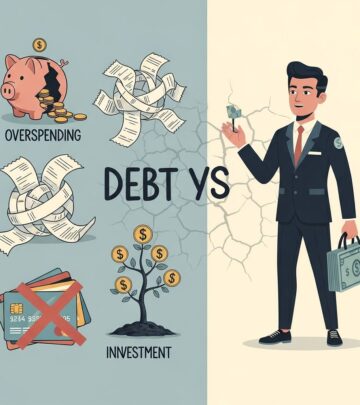
Breaking Bad Money Habits for Financial Freedom
Discover common financial pitfalls and proven strategies to overcome them, paving the way for lasting wealth and security.

Many people unknowingly engage in behaviors that undermine their financial health, leading to stress, debt, and missed opportunities for growth. Recognizing these patterns is the first step toward positive change. This article examines prevalent financial missteps and provides clear, actionable strategies to reverse them, drawing from established financial principles to help you secure a prosperous future.
Recognizing the Traps: Everyday Financial Mistakes Holding You Back
Financial pitfalls often stem from emotional decisions or lack of planning.
Overspending on nonessentials
tops the list, where impulse buys accumulate into significant losses. According to financial analyses, such habits involve unnecessary purchases driven by stress or fleeting desires, eroding long-term stability.Another widespread issue is
letting debt pile up
. U.S. households average over $100,000 in debt, including credit cards, loans, and more. Minimum payments prolong interest accrual, trapping individuals in cycles of repayment.Neglecting savings goals exacerbates these problems. Without direction, money slips away on wants rather than needs, leaving no buffer for the unexpected.
The Perils of Living Paycheck to Paycheck
Waiting until month’s end to save means dipping into leftovers—if any exist. This reactive approach often results in zero savings, as expenses consume income first. Prioritizing bills and debt over personal savings keeps wealth-building at bay.
- Funds vanish on daily indulgences like dining out or subscriptions.
- No allocation for retirement or goals like homeownership.
- Increased vulnerability to job loss or inflation.
Addressing this requires flipping the script: treat savings as a non-negotiable bill paid first.
Why No Emergency Fund Spells Disaster
An
emergency fund
acts as a safety net for unforeseen events like medical bills or repairs. Surveys show 57% of Americans feel uneasy about their reserves, with many having none. Without it, high-interest debt becomes the default solution, damaging credit and finances.Experts recommend 3-6 months of living expenses in a liquid account. Start small: automate $50 weekly transfers to build momentum.
| Emergency Scenario | Potential Cost | Without Fund Impact |
|---|---|---|
| Car Repair | $1,500-$5,000 | Credit card debt at 20%+ interest |
| Medical Emergency | $2,000+ | Skipped bills, credit score drop |
| Job Loss | 3 months expenses | Drained savings, financial panic |
The Debt Spiral: Credit Cards and Cash Advances
**Maxing credit cards** signals danger, spiking utilization ratios and hurting scores. Over-limit transactions trigger fees and rate hikes. Similarly,
relying on cash advances
like payday loans or BNPL creates debt loops with fees averaging $30 per overdraft.23% of people deepen credit card debt monthly, averaging $5,800 owed. Break free by:
- Paying more than minimums.
- Transferring balances to 0% APR cards.
- Avoiding new advances entirely.
Lifestyle Inflation and Impulse Triggers
**Lifestyle creep** occurs when raises fuel bigger spends rather than savings. Saying yes to every social outing adds up, as does chasing sales for unneeded items. Emotional buying—stress shopping or boredom buys—bypasses rational checks.
To counter:
- Implement a 24-48 hour purchase pause.
- Use cash/debit over credit for tangible spending feel.
- Track triggers via journaling.
Optimizing Savings: Beyond Basic Accounts
Sticking with low-yield savings (0.01% APY) forfeits growth, while high-yield options offer 5%+ . Not shopping rates means leaving money on the table. Out-of-network ATMs add $4.66 fees per use.
Switch to online banks for better returns. Automate transfers post-paycheck to enforce discipline.
Building a Bulletproof Budget Framework
A solid budget aligns income with priorities. Common errors include ignoring it or mismanaging inflows/outflows. Use the 50/30/20 rule: 50% needs, 30% wants, 20% savings/debt.
Tools like apps track in real-time, revealing leaks. Review monthly, adjusting for life changes.
Long-Term Vision: Saving for Milestones
Skipping future savings risks delayed retirement or unaffordable goals. Compound interest amplifies early habits: $200/month at 7% grows to $500,000+ over 40 years.
Automate IRA/401(k) contributions. Set specific targets: down payment in 5 years requires $X monthly.
Practical Action Plan: 30-Day Habit Reset
- Audit Spending: Log every expense for a week.
- Cut One Vice: Cancel unused subscriptions.
- Fund First: Transfer 10% income to savings Day 1.
- Debt Snowball: Pay smallest balance aggressively.
- Review Credit: Check reports weekly.
- High-Yield Shift: Open better account.
- Goal Set: Define 1-year financial target.
Consistency yields results; track progress visually.
Psychological Shifts for Lasting Change
Money habits root in mindset. Combat “paying yourself last” by viewing savings as essential. Build accountability via partners or apps. Celebrate non-spending wins to rewire rewards.
FAQs: Your Financial Habit Questions Answered
What is the #1 bad money habit to break?
Overspending on nonessentials, as it directly erodes savings potential.
How much should my emergency fund cover?
3-6 months of essential expenses, tailored to job stability.
Are cash advances ever okay?
Rarely; they fuel debt cycles with high fees—exhaust alternatives first.
How do I stop impulse buying?
Pause 48 hours, use cash, and question necessity vs. desire.
What’s lifestyle creep and how to avoid it?
Increasing spends with income; bank raises, maintain prior budget.
References
- Understanding Bad Money Habits to Build a Better Financial Future — Pathfinder Wealth Consulting. 2023. https://www.pathfinderwc.com/understanding-bad-money-habits-to-build-a-better-financial-future/
- 9 Bad Money Habits That You Should Break Right Now — Bankrate. 2023-10-01. https://www.bankrate.com/personal-finance/bad-money-habits-to-break/
- 7 Bad Money Habits and How to Break Them — Experian. 2023. https://www.experian.com/blogs/ask-experian/bad-money-habits-and-how-to-break-them/
- Bad Money Habits You Need to Break — We Florida Financial. 2023. https://wefloridafinancial.com/blog/bad-money-habits-you-need-to-break
- 10 Bad Money Habits That Were Keeping Me Broke — YouTube (Personal Finance Channel). 2023. https://www.youtube.com/watch?v=_vecpj_CRLw
Similar Articles








Read full bio of Sneha Tete