Break-Even Analysis: Definition, Formula & Example
Master break-even analysis to determine when your business becomes profitable and sustainable.
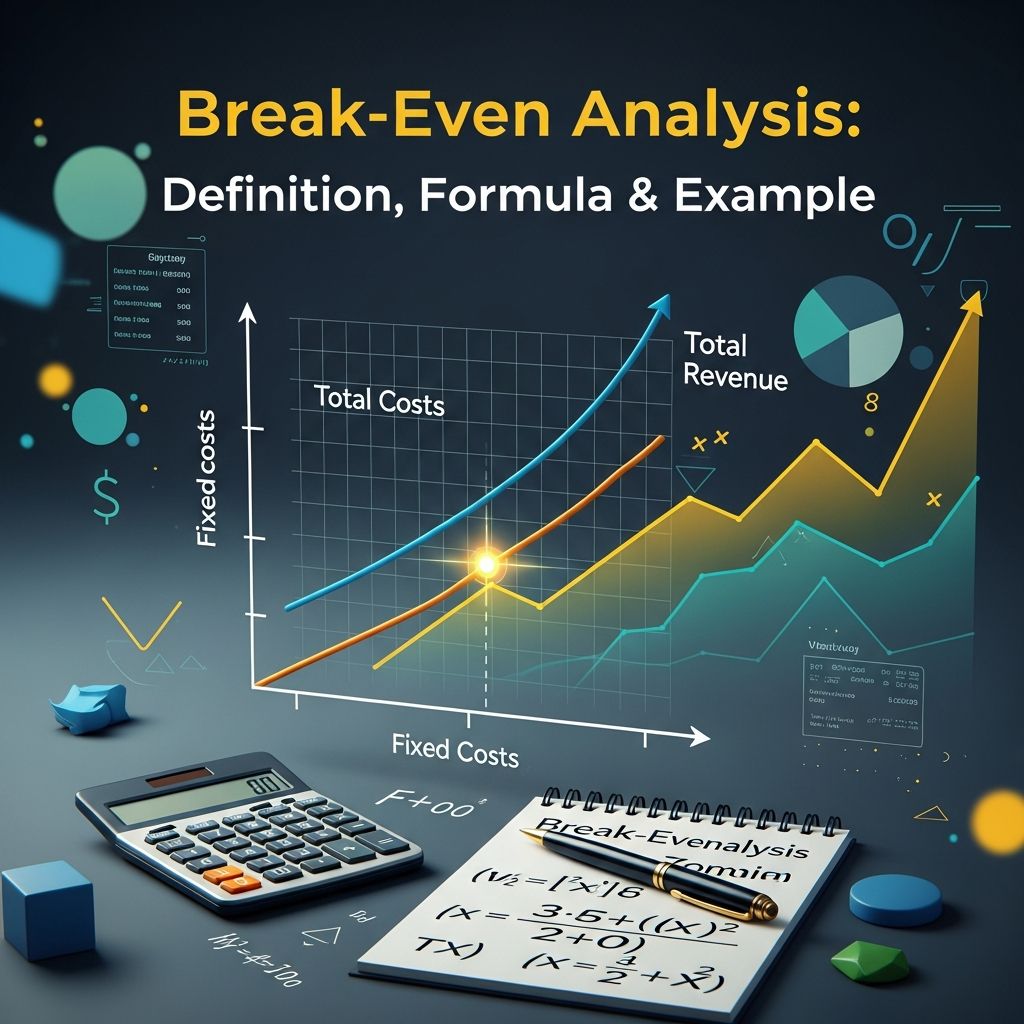
Break-even analysis is a fundamental financial tool that helps business owners and managers understand when their operations will become profitable. It calculates the point at which total revenue equals total costs, meaning there is neither profit nor loss. This critical metric serves as a foundation for strategic business planning, pricing decisions, and financial forecasting. By understanding your break-even point, you can make informed decisions about production levels, pricing strategies, and operational efficiency.
What Is Break-Even Analysis?
Break-even analysis is the process of determining the number of units or volume of sales required to cover all expenses and begin generating profit. At the break-even point, your business neither makes money nor loses money—it simply covers its costs. This analysis is essential for startups and established businesses alike, as it provides a clear target for generating revenue and helps managers understand the relationship between costs, volume, and profit.
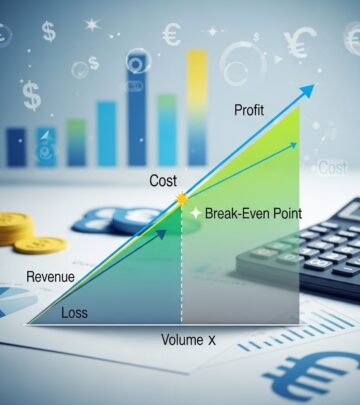
The break-even point represents a critical threshold in business operations. Below this point, the business operates at a loss because revenues don’t cover all costs. Above this point, the business operates profitably because revenue exceeds all expenses. Understanding this relationship is crucial for business survival and growth.
Understanding the Break-Even Point
The break-even point is the exact moment when a business’s total revenues equal its total costs. At this juncture, the business has neither earned a profit nor incurred a loss. This point is typically expressed in two ways: as a number of units sold or as a dollar amount of sales revenue.
The significance of the break-even point extends beyond mere calculation. It serves as a baseline for understanding business viability, helps identify the minimum sales performance required to sustain operations, and provides insight into how changes in costs or pricing affect profitability. For investors and lenders, the break-even point is often used to assess the risk associated with a business venture.
Components of Break-Even Analysis
To perform a break-even analysis, you must understand and identify two primary types of costs:
Fixed Costs
Fixed costs are expenses that remain constant regardless of the number of units produced or sold. These costs do not fluctuate with production volume and must be paid whether the business produces one unit or one thousand units. Fixed costs include rent or lease payments, salaries of permanent staff, insurance premiums, depreciation on equipment, and property taxes. These costs are incurred before any revenue is generated and continue even if sales are zero.
Variable Costs
Variable costs are expenses that change in direct proportion to the number of units produced or sold. These costs increase as production volume increases and decrease when production declines. Variable costs include raw materials, direct labor for production, packaging, shipping, and commission on sales. They are typically expressed as a cost per unit and multiply the number of units produced.
Break-Even Analysis Formula
The break-even point can be calculated using a straightforward mathematical formula. The most common formula calculates the break-even point in terms of units:
Break-Even Point (Units) = Fixed Costs ÷ (Price Per Unit – Variable Cost Per Unit)
Alternatively, to find the break-even point in terms of sales revenue dollars:
Break-Even Point (Sales) = Fixed Costs ÷ Contribution Margin Ratio
The contribution margin is the difference between the selling price per unit and the variable cost per unit. This represents the amount from each sale that contributes to covering fixed costs and eventually generating profit. The contribution margin ratio is the contribution margin divided by the selling price, expressed as a percentage.
Step-by-Step Calculation Example
Let’s consider a practical example of break-even analysis for a hypothetical mobile application business:
Assume the following parameters:
– Fixed Costs: $75,000 annually (including salaries, servers, and infrastructure)- Selling Price: $5 per unit (monthly subscription)- Variable Cost: $0.25 per unit (transaction fees and payment processing)
Using the break-even formula:
Break-Even Point = $75,000 ÷ ($5 – $0.25) = $75,000 ÷ $4.75 = 15,790 units
This means the business needs to sell approximately 15,790 subscriptions to break even and cover all its costs. Any sales beyond this point will generate profit.
The Importance of Break-Even Analysis
Break-even analysis serves several critical functions in business management and strategic planning:
Financial Planning and Budgeting
Break-even analysis helps businesses set realistic revenue targets and establish budgets based on actual cost structures. It provides a concrete goal for sales teams and helps management allocate resources effectively.
Pricing Strategy
By understanding the break-even point at different price points, businesses can make informed decisions about pricing. For instance, if lowering the price from $5 to $3 per month (but customers commit to one year) would reduce the units needed to break even, this insight might justify a promotional pricing strategy.
Risk Assessment
A lower break-even point indicates lower business risk because fewer sales are needed to cover costs. A higher break-even point suggests greater risk and requires stronger market demand to achieve profitability.
Scenario Planning
Break-even analysis enables managers to explore “what-if” scenarios. For example: What happens if fixed costs increase? What if variable costs decrease due to improved efficiency? These scenarios help businesses prepare for different market conditions and operational changes.
Scenario Analysis: Impact of Changes
The power of break-even analysis lies in its ability to show how changes in key variables affect the break-even point:
Price Changes
If the app price increases to $12 per month, the break-even point becomes: $75,000 ÷ ($12 – $0.25) = 6,383 units. A higher price significantly reduces the units needed to break even, demonstrating the leverage that pricing has on profitability.
Cost Management
If variable costs increase to $1.25 per unit (due to additional features or services), the break-even point becomes: $75,000 ÷ ($5 – $1.25) = 20,175 units. This shows how cost inflation directly impacts break-even requirements and profitability.
Fixed Cost Adjustments
If fixed costs increase to $100,000 due to hiring additional staff, the break-even point becomes: $100,000 ÷ ($5 – $0.25) = 21,052 units. Fixed cost increases have a direct proportional impact on break-even requirements.
Break-Even Analysis vs. Profit Margin Analysis
While related, break-even analysis and profit margin analysis serve different purposes. Break-even analysis determines the point where revenue covers costs with zero profit or loss. Profit margin analysis examines what percentage of revenue remains as profit after covering costs. Both are essential for comprehensive financial analysis.
Limitations of Break-Even Analysis
While break-even analysis is a valuable tool, it has certain limitations:
– Assumes linear relationships between costs and volume- Doesn’t account for changes in market demand or competitive dynamics- May oversimplify complex business models with multiple product lines- Doesn’t consider cash flow timing or working capital requirements- Assumes stable pricing and costs throughout the period
Practical Applications in Different Industries
Break-even analysis applies across various business types. Manufacturing businesses use it to determine production volumes needed for profitability. Retail businesses calculate break-even points for store locations and product lines. Service-based businesses use it to determine billable hours or client numbers required for sustainability. Subscription-based businesses rely heavily on break-even analysis to plan customer acquisition and retention strategies.
Using Break-Even Analysis for Business Growth
Understanding your break-even point empowers strategic decision-making. If your current sales volume significantly exceeds your break-even point, you have flexibility to invest in growth initiatives. If sales are close to break-even, focus should be on operational efficiency and cost reduction. Break-even analysis also helps identify which products or services are most profitable and deserve priority in marketing and sales efforts.
Frequently Asked Questions (FAQs)
What is the break-even point?
The break-even point is the sales volume at which total revenue equals total costs, resulting in neither profit nor loss. It’s expressed either as a number of units or as a dollar amount in sales.
How do I calculate the break-even point?
Use the formula: Break-Even Point (Units) = Fixed Costs ÷ (Price Per Unit – Variable Cost Per Unit). Divide total fixed costs by the contribution margin per unit to get the number of units needed to break even.
Why is break-even analysis important for startups?
For startups, break-even analysis provides a concrete goal for achieving profitability and helps determine if the business model is viable. It guides pricing decisions, identifies required sales volumes, and helps attract investors by demonstrating financial understanding.
Can break-even analysis be used for pricing decisions?
Yes, break-even analysis is valuable for pricing strategy. By calculating break-even points at different price levels, businesses can understand how pricing changes affect required sales volumes and profitability potential.
How do fixed and variable costs affect the break-even point?
Higher fixed costs increase the break-even point, requiring more sales to cover expenses. Higher variable costs per unit also increase the break-even point by reducing the contribution margin from each sale.
What happens if sales exceed the break-even point?
When sales exceed the break-even point, every additional sale contributes to profit. The business transitions from covering costs to generating income, and the margin between sales and break-even represents the profit cushion.
Is break-even analysis applicable to service-based businesses?
Absolutely. Service-based businesses use break-even analysis to determine billable hours, number of clients, or project volume needed for profitability. The principles remain the same: identify fixed costs, variable costs per service unit, and apply the formula.
How often should I recalculate my break-even point?
Recalculate your break-even point when significant changes occur, such as price adjustments, major cost increases or decreases, changes in production efficiency, or market shifts. Annual reviews are standard practice for most businesses.
References
- Break-Even Analysis Explained — EPM (Educational Project Management). 2021-02-15. https://www.youtube.com/watch?v=vUT8lZLZpKg
- Financial Accounting Standards and Cost Accounting Principles — Financial Accounting Standards Board (FASB). https://www.fasb.org
- Management Accounting: Principles and Practice — Institute of Management Accountants (IMA). https://www.imanet.org
Similar Articles








Read full bio of Sneha Tete