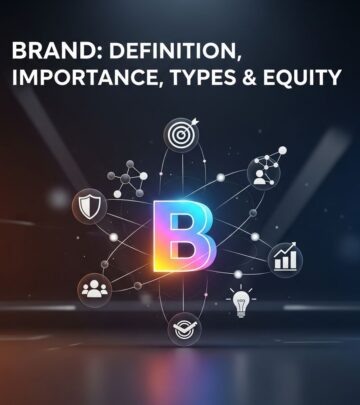
Brand Equity: Definition, Examples, and Importance
Understanding how brand strength creates financial and strategic value for companies.

What is Brand Equity?
Brand equity represents the value a company gains from having a recognizable and trusted brand name compared to generic alternatives. It encompasses both the financial and non-financial value that a strong brand brings to an organization. When consumers think favorably of a brand, they’re more likely to choose it over competitors, even when paying a premium price. Brand equity is fundamentally about the strength, esteem, and goodwill that a brand has accumulated over time through consistent quality, marketing efforts, and positive customer experiences.
The concept of brand equity has become increasingly important in modern business because it directly impacts profitability, customer loyalty, and market competitiveness. A company with high brand equity can command higher prices, attract more customers, and expand into new markets more successfully than competitors with lower brand recognition. This accumulated value represents one of a company’s most valuable intangible assets.
Understanding Brand Equity Components
Brand equity is multifaceted and composed of several interconnected elements that work together to create overall brand value. These components include brand awareness, perceived quality, brand associations, and customer loyalty. Each element contributes differently to the overall strength of a brand in the marketplace.
Brand Awareness
Brand awareness refers to how familiar consumers are with a brand name and its associated products or services. Strong brand awareness means that consumers immediately recognize and recall a brand when making purchasing decisions. This recognition can significantly influence consumer behavior, as people tend to choose brands they know and recognize over unfamiliar alternatives. Building brand awareness requires consistent marketing communications, advertising campaigns, and positive word-of-mouth recommendations over extended periods.
Perceived Quality
Perceived quality is the customer’s subjective assessment of a product or service’s quality. This perception is often influenced by factors such as packaging, pricing, customer service, and brand reputation. Brands that consistently deliver high-quality products and services build strong perceptions of quality, which translates into customer willingness to pay premium prices. Even if competitors offer similar products at lower prices, consumers may choose the brand they perceive as higher quality.
Brand Associations
Brand associations encompass all the thoughts, feelings, and attributes that consumers connect with a brand. These associations can be related to brand personality, values, celebrity endorsements, or specific product characteristics. Strong positive associations create emotional connections with consumers, making the brand more memorable and desirable. Companies carefully cultivate these associations through marketing strategies and brand positioning.
Customer Loyalty
Customer loyalty represents the likelihood that consumers will continue purchasing from a brand over time. Loyal customers make repeat purchases, resist switching to competitors even when offered incentives, and often become brand advocates who recommend the brand to others. High customer loyalty generates predictable revenue streams and reduces marketing costs since acquiring new customers is generally more expensive than retaining existing ones.
How Brand Equity is Measured
Measuring brand equity is complex because it involves both quantitative financial metrics and qualitative consumer perceptions. Various methodologies have been developed by marketing professionals and brand consultants to assess brand value and strength. Understanding these different approaches helps companies evaluate their brand’s position in the marketplace.
Financial Valuation Methods
Brand Finance utilizes the Royalty Relief methodology, which calculates what a company would theoretically pay to license its own brand if it didn’t own it outright. This approach estimates future revenue attributable to the brand and applies a royalty rate, providing a concrete financial value. Interbrand, another prominent brand valuation agency, analyzes financial statements, market dynamics, and separates earnings from tangible assets versus those attributable solely to brand strength. This methodology forecasts future earnings and discounts them based on brand strength and associated risk factors.
Consumer Perception Metrics
The Brand Asset Valuator, developed by Young & Rubicam, surveys consumers across four key dimensions: differentiation, relevance, esteem, and knowledge. Differentiation measures how distinctively a brand stands out from competitors. Relevance assesses how appropriate and connected a brand is to specific consumer needs. Esteem evaluates consumer respect and attraction to the brand. Knowledge measures consumer awareness and understanding of brand identity and values.
Aaker’s Brand Equity Framework
Professor David Aaker developed a comprehensive framework identifying ten attributes of brand strength: brand awareness, perceived quality, brand associations, brand loyalty, perceived value, brand personality, organizational associations, differentiation, leadership or popularity, and market price. This holistic approach recognizes that brand equity emerges from multiple interconnected factors rather than a single metric. Companies using Aaker’s framework assess each attribute individually to identify strengths and weaknesses in their overall brand equity.
Market-Based Approaches
The Brand Equity Index, derived by marketing executive Bill Moran, combines three factors: Effective Market Share, Relative Price, and Durability. Effective Market Share represents weighted market share across segments. Relative Price indicates price positioning relative to competitors. Durability measures customer retention rates, reflecting the percentage of customers who will repurchase in subsequent periods. This multiplicative approach captures how competitive strength, pricing power, and loyalty combine to create overall brand equity.
Why Brand Equity Matters
Brand equity is critically important for long-term business success and profitability. Companies with strong brand equity enjoy numerous competitive advantages that translate into tangible business benefits. Understanding why brand equity matters helps organizations prioritize brand-building investments and strategic initiatives.
Premium Pricing Power
Strong brand equity allows companies to command premium prices compared to generic alternatives. Consumers demonstrate willingness to pay more for brands they trust and perceive as higher quality. This pricing power directly increases profit margins and enables companies to maintain profitability even when facing competition from lower-cost rivals. The price premium reflects the accumulated value of brand reputation and customer trust.
Customer Loyalty and Retention
Brands with high equity inspire loyalty that reduces customer churn and increases lifetime customer value. Loyal customers make repeat purchases, are less price-sensitive, and require less marketing investment to maintain. They also provide valuable word-of-mouth marketing, recommending the brand to friends, family, and colleagues, thereby reducing customer acquisition costs and expanding market reach organically.
Market Expansion Opportunities
Strong brand equity enables companies to successfully launch new products or enter new market segments. Consumers’ positive associations with an established brand transfer to new offerings, facilitating market acceptance and reducing the risk of new product introductions. This brand extension strategy allows companies to leverage existing equity to accelerate growth and market penetration in adjacent categories.
Resilience During Challenges
Brands with substantial equity demonstrate greater resilience during economic downturns, competitive pressures, or operational challenges. Consumer loyalty and brand trust help sustain demand even when competitors aggressively compete on price or new market entrants emerge. This stability provides companies with competitive cushions and flexibility in responding to market changes.
Real-World Examples of Strong Brand Equity
Several global brands exemplify exceptional brand equity built through decades of consistent quality, innovation, and customer focus. These examples demonstrate how brand equity translates into tangible business advantages and market leadership.
Technology and Consumer Electronics
Apple represents one of the most powerful examples of brand equity in the technology industry. The brand commands premium prices significantly above competitors with comparable technical specifications. Consumers eagerly anticipate new product launches, often purchasing before thoroughly comparing alternatives. This loyalty stems from Apple’s consistent emphasis on design excellence, user experience, and ecosystem integration built over multiple decades.
Luxury and Fashion
Louis Vuitton and other luxury brands maintain extraordinary brand equity by emphasizing heritage, exclusivity, and craftsmanship. These brands can command prices several times higher than functionally similar products because consumers perceive unique value in brand heritage, design innovation, and status association. The brands’ careful control over distribution and marketing maintains exclusivity that reinforces perceived value.
Automotive
Mercedes-Benz, BMW, and Toyota represent strong brand equity in automotive markets. These brands maintain loyal customer bases willing to pay premium prices and return for repeat purchases. Their brand associations with quality, reliability, performance, or luxury create differentiation that transcends functional product characteristics. Customers often express emotional attachment to these brands, identifying them as extensions of personal identity.
Building and Maintaining Brand Equity
Creating strong brand equity requires sustained commitment to quality, consistent messaging, and customer-centric strategies. Companies must make long-term investments in brand building while protecting brand reputation through careful management of customer interactions and market communications.
Consistent Quality Delivery
The foundation of brand equity is consistent delivery of promised quality. Every customer interaction—from initial purchase through post-sale support—should reinforce positive brand associations. Inconsistent quality erodes brand equity rapidly, as negative experiences spread through social networks and online reviews.
Strategic Positioning
Clear brand positioning that differentiates from competitors helps consumers understand and remember brand identity. Effective positioning articulates unique value propositions that resonate with target audiences and create meaningful brand associations that endure over time.
Customer Experience Excellence
Modern consumers evaluate brands based on end-to-end experiences spanning product quality, customer service, and brand interactions. Companies that excel across all touchpoints build stronger emotional connections and loyalty compared to those that focus narrowly on product attributes.
Challenges in Building Brand Equity
Creating brand equity requires significant time and investment with results that may not materialize immediately. Companies face numerous challenges when building brand value in competitive markets with fragmented consumer attention. Understanding these challenges helps organizations develop realistic timelines and strategies for brand building.
One primary challenge involves the increasing difficulty of capturing consumer attention in saturated media environments. Consumers encounter thousands of brand messages daily, making it harder for new brands to establish awareness and differentiation. Additionally, rapid technological change and evolving consumer preferences require brands to continuously innovate and adapt messaging to remain relevant.
Social media and online reviews have created new vulnerabilities for brand equity. Single negative incidents can spread rapidly, damaging reputations built over decades. Brands must actively monitor social conversations and respond quickly to address concerns before they escalate into larger reputation crises.
Frequently Asked Questions
Q: Can brand equity be negative?
A: Yes, brand equity can be negative when consumer associations with a brand are predominantly negative. Poor product quality, corporate scandals, or negative publicity can create negative brand equity that actually reduces demand below what unbranded alternatives would achieve. Companies must work diligently to rehabilitate tarnished brand reputations.
Q: How long does it take to build brand equity?
A: Building substantial brand equity typically requires several years of consistent investment, quality delivery, and positive customer experiences. While initial brand awareness can develop relatively quickly through advertising, deep emotional connections and strong loyalty take longer to establish. The timeline varies significantly depending on industry, competitive dynamics, and marketing investment levels.
Q: Can small companies build strong brand equity?
A: Absolutely. Small companies can build strong brand equity by focusing intensively on specific customer segments, delivering exceptional quality, and cultivating personal relationships with customers. Many successful small brands achieve strong equity through word-of-mouth, community involvement, and targeted marketing that creates deep connections with loyal customer bases.
Q: How does brand equity differ from brand value?
A: Brand equity refers to the overall strength and worth of a brand in non-financial terms, including consumer perception, loyalty, and associations. Brand value, by contrast, quantifies this equity in financial terms, representing the actual monetary worth of the brand as an asset. Brand value is the financial expression of brand equity.
Q: What role does digital marketing play in brand equity?
A: Digital marketing significantly impacts brand equity by enabling direct consumer engagement, facilitating personalized communication, and providing platforms for building community. Social media, content marketing, and online customer experiences now represent critical touchpoints for developing brand associations and loyalty, making digital strategy essential for modern brand building.
References
- Brand Equity – Universal Marketing Dictionary — Marketing-Dictionary.org. 2024. https://marketing-dictionary.org/b/brand-equity/
- Definition of Brand Equity — How Brands Are Built. 2024. https://howbrandsarebuilt.com/definition-of-brand-equity/
- What is Brand Equity? Complete Digital Marketing Guide — Arfadia. 2024. https://www.arfadia.com/glossary/EN/brand-equity
Similar Articles








Read full bio of medha deb