Boost Your Savings With the Bucket Method
Use the savings bucket method to organize goals, automate deposits, and stay motivated while your money grows faster.

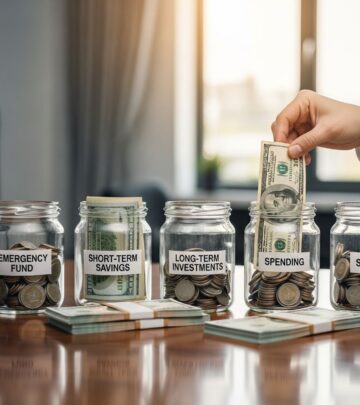
Dividing your money into clearly labeled savings “buckets” is a practical way to see exactly what you are saving for and how close you are to each goal. Instead of one big, vague savings account, you give every dollar a job, which can make saving easier, more organized, and more motivating.
This approach, commonly called the bucket method of saving, takes the old envelope budgeting system and updates it for the digital banking era. You still separate money by purpose, but now you earn interest and can automate transfers while tracking all your goals in one place.
Below you will learn what savings buckets are, how bucketing works step by step, how to choose accounts, and how to keep your plan on track over time.
What Does It Mean to Put Savings Accounts in Buckets?
The bucket method is a savings strategy where you divide your money into separate categories, or buckets, each tied to a specific goal or purpose. Instead of treating savings as one general pile, you create individual targets such as an emergency fund, travel fund, home repairs, or debt payoff support.
From Envelope Method to Digital Buckets
The idea is similar to the classic cash envelope system many people used before online banking. In the envelope method, you would:
- Label each envelope with a specific purpose (rent, groceries, emergencies, holidays, etc.).
- Place the budgeted amount of cash into each envelope every pay period.
- Spend only from the relevant envelope for that category.
With the bucket method, you are essentially doing the same thing, but with digital envelopes inside savings accounts instead of physical cash. This gives you the organization of envelopes plus the advantages of:
- Earning interest on your savings.
- Automating transfers and deposits.
- Viewing all goals and balances in a single dashboard if your bank supports buckets or sub-accounts.
How Digital Savings Buckets Work
Many modern banks and fintech institutions allow you to create multiple named buckets within one high-yield savings account. For example, some banks let you set up as many as 30 individual buckets for different goals while still keeping everything under one account number.
Within this structure, you can:
- Name each bucket (e.g., “Emergency Fund,” “Vacation 2026,” “Car Maintenance”).
- Assign a target amount and goal date to each bucket.
- Choose how to distribute deposits across your buckets.
- Use digital tools such as round-ups or recurring transfers to boost your savings automatically.
The core benefit is clarity: it becomes much easier to track progress, avoid raiding funds for the wrong purpose, and stay motivated because you can literally see each goal growing in real time.
How Bucketing Works: Step-by-Step Guide
Setting up a bucketed savings system does not require complex spreadsheets or multiple bank relationships, unless you prefer them. The method can be as simple or as detailed as your situation requires. Below is a step-by-step roadmap to help you build your own bucket structure.
Step 1: Identify Your Buckets
Start by listing all the savings goals that matter to you. It is usually helpful to distinguish between short-term, medium-term, and long-term goals.
| Time Frame | Typical Goals |
|---|---|
| Short term (0–2 years) | Emergency fund, minor home repairs, car maintenance, holidays, small trips |
| Medium term (2–5 years) | Large vacation, wedding, major home project, new car down payment |
| Long term (5+ years) | House down payment, education savings, early retirement cushion |
Common starter buckets include:
- Emergency fund (often 3–6 months of essential expenses).
- Irregular bills such as annual insurance premiums or car registration.
- Home and car upkeep for predictable but non-monthly costs.
- Fun goals like travel, hobbies, or gifts.
Step 2: Determine Your Goals and Amounts
Once you have a list of buckets, decide what you want each one to accomplish and how much money it needs.
- Set a specific purpose for every bucket so you know exactly what it is for.
- Estimate the target amount (for example, $1,000 for a small emergency fund, $3,000 for travel, or a full six months of expenses for a robust safety net).
- Assign a timeline to each goal to help prioritize. Goals needed in the next 1–3 years are usually placed in low-risk, high-liquidity savings buckets.
If you are just starting, it is perfectly fine to begin with very small contributions—such as $5 or $10 per bucket per month. The key is consistency; even small deposits accumulate over time when you keep adding to them and earn interest along the way.
Step 3: Allocate Your Income Across Buckets
Next, decide how much of each paycheck will go into savings and how that savings will be divided among your buckets.
A simple order of operations is:
- Cover essential bills (housing, utilities, food, transportation, minimum debt payments).
- Decide on a total savings rate, such as 10–20% of your income, adjusted based on your situation.
- Split that savings amount across your buckets according to urgency and importance.
Two common allocation methods are:
- Percentage method: For example, 40% of savings into the emergency bucket, 30% into long-term goals, and 30% into short-term lifestyle goals.
- Fixed-dollar method: A set dollar amount per month per bucket (e.g., $150 to emergencies, $75 to car maintenance, $50 to holidays).
Your allocations can change over time as buckets fill up. Some people treat their savings like “overflow” channels: once an urgent bucket (like basic emergencies) is full, they redirect that same money into the next bucket in line, similar to how some retirement bucket strategies refill near-term reserves from longer-term pools.
Step 4: Choose Appropriate Accounts for Each Bucket
While you can keep all buckets in a single savings account with sub-buckets, you still need to choose the type of account that fits your goals and time horizon.
For most savings buckets, people often consider:
- High-yield savings accounts for short-term and emergency buckets that need easy access and low risk.
- Money market accounts for slightly larger balances that still require liquidity.
- Certificates of deposit (CDs) for goals with a fixed time horizon where you can lock in a rate.
Access and safety are crucial for short-term buckets: funds needed within the next 1–3 years are typically kept in conservative, liquid accounts such as savings, CDs, or very short-term fixed-income instruments. Longer-term goals may be invested differently, but for pure savings buckets, avoiding large swings in value is usually more important than chasing high returns.
Step 5: Automate Your Savings
Automation is the part that makes the bucket system powerful and sustainable. By setting up recurring transfers or automatic allocations, you remove willpower from the equation and ensure steady progress.
- Schedule automatic transfers from your checking account to your savings buckets on payday.
- If your bank offers it, use tools like round-ups that round card transactions to the nearest dollar and transfer the difference into savings.
- Set up recurring internal transfers to distribute a single incoming deposit across multiple buckets.
Some banks allow you to link automatic rules directly to each bucket—for example, sending a fixed percentage of every deposit to specific goals or turning on boosters that help your buckets grow in the background. Once these rules are in place, your savings plan keeps running even when you are busy.
Step 6: Monitor, Rebalance, and Adjust
Your finances and priorities will change over time, so your buckets should evolve with them.
- Review balances regularly to see if you are on track toward each target.
- Re-evaluate your goals at least once a year to confirm they still fit your life circumstances.
- Shift allocations when certain buckets are fully funded or when a new priority appears (for example, a new child, move, or job change).
If a specific expense comes up, you can withdraw from the matching bucket instead of dipping into unrelated funds. This keeps your other goals intact and gives you a more realistic picture of what you have available for discretionary spending.
Benefits of the Savings Bucket Method
Organizing your savings into buckets offers several practical and psychological advantages compared with keeping everything in one undifferentiated account.
Clear Goals and Visual Motivation
Each bucket has a clear label and target amount, which gives every dollar a visible job. This helps you connect day-to-day decisions to concrete outcomes, like a future trip or a safety buffer. Research on goal-setting shows that specific, measurable goals tend to increase motivation and follow-through compared with vague intentions.
Easier Tracking and Better Awareness
With separate buckets, you always know how much is set aside for specific purposes. For example, you might see:
- $5,000 in your emergency bucket.
- $1,200 in your car maintenance bucket.
- $2,500 in your vacation bucket.
This clarity reduces guesswork. Instead of asking, “Can I afford this?” you can look at the relevant bucket and decide based on an accurate balance.
Reduced Temptation to Overspend
Keeping all your savings in one lump sum can make it tempting to dip into money that was meant for other goals. Bucketing acts as a gentle barrier by mentally and visually separating funds.
- If a purchase does not align with a bucket, it is easier to recognize it as outside your plan.
- Dedicated buckets for fun and discretionary spending let you enjoy purchases without guilt, because they are already budgeted.
- Emergency and long-term buckets are less likely to be raided for impulse buys when you see their specific purpose.
Better Preparedness for Irregular Expenses
Many budgets fail not because of monthly bills, but due to irregular costs like car repairs, home maintenance, or annual insurance premiums. By having buckets for these predictable-but-not-monthly expenses, you smooth out the impact and reduce reliance on debt.
Financial planning frameworks for retirement use a similar idea: dividing assets into time-based buckets so there is always cash available for near-term needs while longer-term funds can continue to grow. The same principle, applied to household savings, helps shield you from surprises.
Alignment With Your Values
Ultimately, the bucket method is not just about discipline; it is about aligning your money with what matters most. When you see meaningful goals—like security, travel, learning, or family experiences—growing bucket by bucket, saving becomes a way to build the life you want, rather than just cutting back.
Sample Bucket Setup
Here is an example of how someone might structure their savings buckets once basic bills are covered:
| Bucket Name | Purpose | Target Amount | Time Frame |
|---|---|---|---|
| Emergency Fund | Cushion for job loss or major unexpected bills | $9,000 (3–6 months expenses) | Ongoing until target reached |
| Car Maintenance | Repairs, tires, annual service | $1,200 | Within 12 months |
| Home Repairs | Roof, appliances, small projects | $2,000 | 2–3 years |
| Vacation | Annual trip and weekend getaways | $2,500 | Every 12–18 months |
| Future Goals | House down payment or advanced education | $20,000+ | 5+ years |
Each month, a portion of income would be automatically routed into these buckets according to the saver’s priorities. Over time, as goals are achieved, the person can redirect contributions to new or evolving goals.
Frequently Asked Questions (FAQs)
Q: How many savings buckets should I have?
A: There is no fixed number. Many people find 4–8 buckets manageable, covering essentials like emergencies, irregular expenses, big purchases, and fun. Some banks allow far more, but too many buckets can become confusing, so focus on the goals that truly matter most.
Q: Do I need multiple bank accounts to use the bucket method?
A: Not necessarily. Some banks let you create multiple labeled buckets within a single savings account, which is often the simplest option. If your bank does not offer this, you can use separate accounts or track buckets with your own naming system and budgeting tools.
Q: Which bucket should I fund first?
A: Many financial planners suggest prioritizing an emergency fund to cover several months of essential expenses, because that protects you from small setbacks turning into major crises. After that, you can focus on high-interest debt payoff and then build other buckets based on your goals.
Q: Can I change my bucket goals later?
A: Yes. Bucketing is meant to be flexible. You can rename buckets, change target amounts, adjust timelines, or redirect contributions whenever your priorities change—for example, after a move, a new job, or a major life event.
Q: What if I have a tight budget and can only save a little?
A: You can still benefit from the bucket method by starting small and building the habit. Even $5 or $10 per bucket per month is progress, especially when automated. As your income grows or expenses decrease, you can increase contributions and refine your buckets over time.
References
- What are Ally Bank’s Savings Buckets and Boosters? — Ally Bank. 2022-07-20. https://www.ally.com/stories/save/what-are-ally-banks-savings-buckets-and-boosters/
- Boost Your Retirement Portfolio With the “Three Bucket” Strategy — National Council on Aging. 2023-08-01. https://www.ncoa.org/article/boost-your-retirement-portfolio-with-the-three-bucket-strategy/
- How to Use the ‘Bucket Strategy’ to Optimize Your Retirement Savings — Government Executive. 2024-06-11. https://www.govexec.com/pay-benefits/2024/06/how-use-bucket-strategy-optimize-your-retirement-savings/397633/
- How Savings Buckets Can Help Make Your Life Easier — National Debt Relief. 2023-02-15. https://www.nationaldebtrelief.com/blog/financial-wellness/saving-and-investing/how-savings-buckets-can-help-make-your-life-easier/
- Mastering Financial Planning with the Bucketing Approach — Carson Wealth. 2022-10-05. https://www.carsonwealth.com/insights/blog/mastering-financial-planning-with-the-bucketing-approach/
- The Barefoot Investor ‘Buckets’ and ‘Accounts’ Explained — PocketSmith. 2023-06-30. https://www.pocketsmith.com/blog/the-barefoot-investor-buckets-and-accounts-explained/
Similar Articles








Read full bio of Sneha Tete