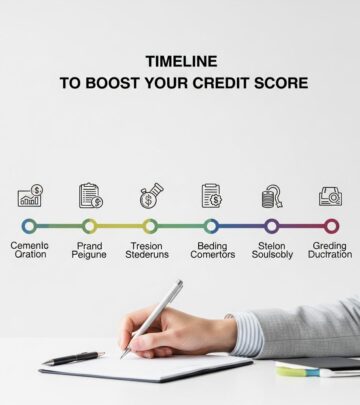
Boost Your Credit Score: 5 Fast, Proven Steps
Discover proven strategies to elevate your credit score and unlock better financial opportunities with practical, actionable advice.

Your credit score serves as a critical benchmark for financial institutions evaluating your reliability as a borrower. A higher score opens doors to favorable interest rates on loans, mortgages, and credit cards, while a lower one can lead to rejections or higher costs. Understanding the components and taking deliberate actions can transform your financial profile over time.
Understanding the Foundations of Credit Scores
Credit scores, such as FICO or VantageScore, range typically from 300 to 850, with scores above 700 considered strong by most lenders. These scores are calculated using data from your credit reports maintained by major bureaus: Equifax, Experian, and TransUnion. Key factors include payment history (35% of FICO score), amounts owed (30%), length of credit history (15%), new credit (10%), and credit mix (10%).
Payment history reflects whether you pay bills on time, as even one late payment can drop your score significantly. Amounts owed focus on credit utilization—the ratio of balances to limits—which ideally stays under 30%. Longer credit histories demonstrate experience, while excessive new inquiries signal risk. A diverse mix of revolving (credit cards) and installment (loans) credit shows versatility.
Step-by-Step Plan to Elevate Your Score
Improving your credit requires a structured approach. Begin by assessing your current standing and then implement changes systematically.
1. Obtain and Scrutinize Your Credit Reports
Start with free annual credit reports from AnnualCreditReport.com, authorized by federal law. Review for inaccuracies like erroneous late payments, duplicate accounts, or fraudulent activity. Disputing errors can yield quick improvements, as bureaus must investigate within 30 days.
- Check personal details for mismatches.
- Verify account statuses and balances.
- Look for unrecognized inquiries or collections.
File disputes online, by mail, or phone with supporting documents. Track progress via confirmation numbers.
2. Prioritize Timely Payments Across All Accounts
Payment history dominates scoring models. Set up autopay for at least minimums and calendar alerts for due dates. Even utility or rent payments can contribute if reported—services like Experian Boost add these to your file instantly.
If behind, contact creditors for hardship plans. Consistency rebuilds trust; after 6-12 months of on-time payments, scores often rise noticeably.
3. Lower Your Credit Utilization Ratio
Aim for under 30% utilization overall and per card. For example, with $10,000 limits and $2,000 balances, you’re at 20%—optimal. Pay down high-balance cards first or request limit increases without hard inquiries.
| Utilization Level | Impact on Score | Action Recommended |
|---|---|---|
| Below 10% | Excellent | Maintain |
| 10-30% | Good | Monitor |
| Above 30% | Poor | Pay down aggressively |
Consolidate debt via balance transfers or personal loans to streamline payments.
4. Manage New Credit Wisely
Limit applications to avoid hard inquiries, which ding scores temporarily. Space them 6 months apart. Become an authorized user on a trusted family member’s card with low utilization and long history for instant benefits.
Keep old accounts open to preserve history length, even if unused (no-fee only).
5. Build Credit if Starting Thin
For limited history, opt for secured cards: deposit equals limit, building habits without risk. Use for gas or groceries, pay in full monthly. Graduate to unsecured after 6-12 months.
Credit-builder loans report payments positively while funds accrue in savings.
Advanced Tactics for Faster Gains
Beyond basics, diversify credit types responsibly—add an installment loan if mostly revolving. Avoid closing paid-off cards prematurely.
Monitor scores weekly via free tools from banks or apps. Track trends to adjust strategies.
Overcoming Common Hurdles
High Debt Load: Debt snowball (smallest first for momentum) or avalanche (highest interest first for savings). Nonprofit counseling aids budgets.
Collections or Charge-Offs: Negotiate pay-for-delete (rare) or settle, then goodwill letters post-payment.
Bankruptcy: Impacts fade after 7-10 years; focus on positives meanwhile.
Tools and Resources for Success
- Free Monitoring: Credit Karma, bank apps for Equifax/TransUnion alerts.
- Counseling: NFCC.org for accredited agencies.
- Apps: Mint or YNAB for budgeting tied to payments.
How Long Until Results?
Quick wins: disputes (30 days), utilization drops (1-2 months). Full rebuild: 3-6 months for habits, 1+ years for major jumps. Patience yields compounding benefits.
Frequently Asked Questions
What is a good credit score?
670-739 (good), 740-799 (very good), 800+ (exceptional) per FICO. Varies by model.
Does paying rent build credit?
Yes, via services like Experian Boost or self-reporting platforms.
Can I improve score in 30 days?
Possible via disputes, utilization cuts, or Boost—up to 100 points reported.
Should I close unused cards?
No, if no fee—shortens history, raises utilization.
How often check credit reports?
Weekly scores, annual full reports, or post-changes.
Long-Term Financial Wellness
Sustain gains with budgets allocating 50% needs, 30% wants, 20% savings/debt. Emergency funds prevent reliance on credit. Annual reviews keep you proactive.
Strong credit reduces lifetime interest by thousands, aiding homeownership, business startups, insurance rates. Commit today for tomorrow’s security.
References
- The Beginner’s Guide to a Good Credit Score — Space Coast Credit Union. 2023. https://www.sccu.com/articles/personal-finance/the-beginners-guide-to-a-good-credit-score
- Improving Your Credit Score: A Step-By-Step Guide — City National Bank. 2024. https://cnb1901.com/blog-improving-your-credit-score
- How to improve your credit score — Intuit Credit Karma. 2025. https://www.creditkarma.com/credit/i/quick-tips-build-credit
- Five Tips for Improving Your Credit Score — First Southwest Bank. 2024. https://www.fswb.bank/about/five-tips-for-improving-your-credit-score
- How to Improve Your Credit Score Fast — Experian. 2025-01-15. https://www.experian.com/blogs/ask-experian/credit-education/improving-credit/improve-credit-score/
- 5 Tips for Improving Your Credit Score — Federal Reserve Board. 2022. https://www.federalreserve.gov/pubs/creditscore/creditscoretips_2.pdf
- How to Build Your Credit Score — TD Bank. 2024. https://www.td.com/us/en/personal-banking/finance/building-good-credit-score
Similar Articles








Read full bio of Sneha Tete