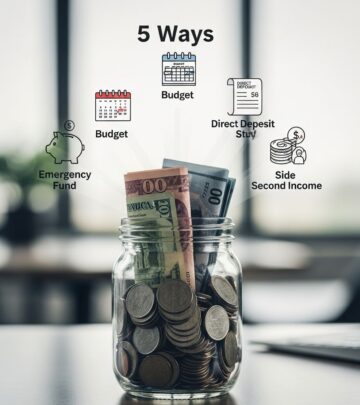
Boost Emergency Fund by $1000 in One Year
Discover practical banking strategies to grow your emergency savings by $1000 over 12 months with high-yield accounts and smart habits.
Switching to a high-yield savings account represents a powerful yet simple banking strategy that can help accumulate an extra $1000 in your emergency fund within 12 months, combining interest earnings with consistent saving habits.
Why Your Emergency Fund Needs a High-Yield Upgrade
An emergency fund acts as a financial buffer for unexpected events like medical bills, car repairs, or job loss. Traditional savings accounts often yield negligible interest, allowing inflation to erode purchasing power over time. In contrast, high-yield savings accounts (HYSAs) in 2026 offer competitive annual percentage yields (APYs), typically ranging from 4% to 5% or higher, depending on market conditions and institutions.
Placing funds in an HYSA ensures liquidity—meaning quick access without penalties—while FDIC insurance protects deposits up to $250,000 per depositor per bank. This setup prioritizes safety, accessibility, and growth, making it ideal for emergency reserves.
Setting Achievable Savings Targets
Begin by calculating your essential monthly expenses, such as housing, food, utilities, and transportation. Financial experts recommend aiming for 3-6 months’ worth of these costs as your ultimate goal, but start smaller to build momentum.
- Starter Target: $1,000 – Covers common surprises like appliance breakdowns or minor health costs.
- Intermediate Goal: 1-3 months’ expenses – Provides broader protection.
- Full Coverage: 3-6 months – Shields against prolonged disruptions.
Break the $1,000 target into monthly chunks: saving $83 per month over 12 months, augmented by interest, reaches or exceeds the goal effortlessly.
Choosing the Optimal Account for Growth
Select accounts based on yield, fees, and access speed. Compare options using the table below:
| Account Type | Average APY (2026) | Liquidity | FDIC Insured | Best For |
|---|---|---|---|---|
| High-Yield Savings | 4.5-5.25% | Daily access | Yes | Core emergency funds |
| Money Market | 4-5% | Check writing | Yes | Larger balances |
| Cash Management | 4-4.75% | Debit card | Yes (up to limits) | Frequent needs |
Open your HYSA at a separate bank from your checking account to create intentional delays in transfers, deterring impulsive withdrawals.
Automate Your Path to $1000
Automation eliminates decision fatigue and ensures steady progress. Link your payroll to transfer a fixed amount bi-weekly.
- Set transfers for $40-50 per paycheck to hit $1,000 annually without strain.
- Adjust as income grows or expenses drop.
- Review quarterly to increase contributions.
For example, with a 5% APY on a growing balance starting at $0 and adding $83 monthly, compound interest alone adds over $30 by year-end, pushing total growth past $1,000.
Unlock Hidden Savings Opportunities
Redirect everyday cash flows to accelerate accumulation:
- Cash-Back Rewards: Route credit card rebates and app earnings (e.g., from grocery purchases) directly to savings – potentially $200-300 yearly.
- Windfalls: Allocate 50% of tax refunds, bonuses, or gifts – a $1,200 refund contributes $600 instantly.
- Spare Change: Apps that round up purchases can yield $100+ over 12 months painlessly.
Cut Expenses Without Sacrificing Lifestyle
Review spending for low-hanging fruit:
- Reduce dining out from 3x to 2x weekly: saves $500/year.
- Cancel unused subscriptions: $200-400/year.
- Shop sales and use coupons for groceries: $300/year.
These tweaks free $80-100 monthly for transfers, compounding with interest for substantial gains.
Debt Management to Free Up Funds
High-interest debt competes with savings. Prioritize paying off credit cards (average 20%+ APR) before aggressive saving. Consolidate if rates exceed 15%, redirecting interest savings to your fund.
Once debts under control, the money flows to HYSA, where 5% APY outperforms debt costs long-term.
Protecting and Growing Your Fund Long-Term
Maintain liquidity by avoiding locked investments like CDs for core funds. Diversify slightly with TIPS for inflation protection on portions beyond $1,000.
- Monitor rates quarterly; switch banks if yields drop.
- Replenish after use immediately.
- Scale up as income rises.
Common Pitfalls and How to Avoid Them
Steer clear of:
- Using the fund for non-emergencies.
- Keeping cash in low-yield checking (earns 0.01%).
- Ignoring inflation – HYSAs outpace it.
Frequently Asked Questions
What if I can’t save $83 monthly?
Start with $25-50; consistency trumps amount. Micro-savings add up.
Are HYSAs safe?
Yes, FDIC-insured up to $250,000. Choose reputable online banks.
How much interest will $1,000 earn?
At 5% APY, about $50/year, compounding monthly.
Can I invest my emergency fund?
Keep 100% liquid; invest excess in low-risk options post-$1,000.
What counts as an emergency?
Job loss, repairs, health issues – not vacations or gadgets.
References
- How to Build and Manage Your Emergency Fund in 2026 — UseOrigin. 2026. https://useorigin.com/resources/blog/how-to-build-and-manage-your-emergency-fund-in-2026
- 40 Smart Ways to Build an Emergency Fund — Due.com. 2026. https://due.com/40-smart-ways-to-build-an-emergency-fund/
- The 2026 Emergency Fund Blueprint — Swift Debt Relief. 2026. https://swiftdebtrelief.com/the-2026-emergency-fund-blueprint-how-to-build-your-safety-net-from-zero/
- How to start building an emergency fund — Bank of America Better Money Habits. 2026. https://bettermoneyhabits.bankofamerica.com/en/saving-budgeting/emergency-fund-tips
- 10 Ways to Build an Emergency Fund on a Tight Budget — Sunflower Bank. 2026. https://www.sunflowerbank.com/about-us/resource-articles/10-ways-to-build-an-emergency-fund-on-a-tight-budget/
- Comprehensive Guide to Building an Emergency Fund — Vanguard. 2026. https://investor.vanguard.com/investor-resources-education/emergency-fund
- Yes, You Need An Emergency Fund — HerMoney. 2026. https://hermoney.com/invest/financial-planning/yes-you-need-an-emergency-fund-heres-how-to-start-in-2022-even-if-youre-still-feeling-behind/
Similar Articles








Read full bio of Sneha Tete