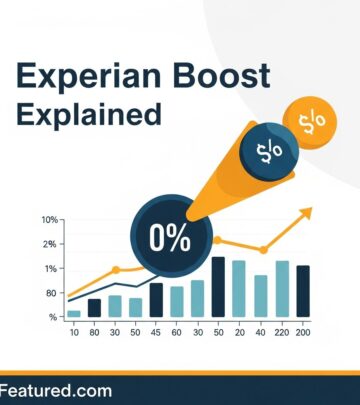
Boost Your Credit with Insurance Payments
Discover how adding insurance payments to Experian Boost can improve your credit score and potentially lower your premiums.

Enhancing your credit profile doesn’t have to be complicated. One effective strategy involves linking your insurance payments to services like Experian Boost, which can positively influence your
credit score
by recognizing on-time payments for utilities and other bills. This approach not only builds your financial standing but also ties into how insurers evaluate risk through credit-based insurance scores.Understanding Experian Boost and Its Benefits
Experian Boost is a free tool that allows consumers to add positive payment history from eligible bills directly to their Experian credit report. By including recurring payments such as those for insurance, users can see an immediate uplift in their FICO Score 8, which is widely used by lenders. This service scans bank accounts for qualifying transactions and verifies them to ensure accuracy.
The primary advantage is accessibility. Unlike traditional credit-building methods that require new credit accounts, Boost leverages existing responsible behaviors. Research indicates that people with strong credit histories tend to file fewer insurance claims, making this a dual-purpose tool for credit improvement and insurance savings.
- Instant score increase upon verification
- No cost to enroll or use
- Opt-in only for positive payments
- Available via mobile app or online
How Insurance Payments Fit into Credit Building
Insurance premiums, whether for auto, home, or life coverage, represent consistent monthly obligations. When added to Experian Boost, these payments contribute to your credit profile if paid on time. Insurers pull credit-based insurance scores—distinct from standard FICO or VantageScore—which predict claim likelihood based on credit behaviors like payment history and debt levels.
Drivers with poor credit often pay up to twice as much for car insurance compared to those with excellent credit, highlighting the financial incentive to improve scores. By boosting your score through insurance inclusion, you may qualify for lower premiums over time.
| Credit Tier | Average Annual Premium Increase |
|---|---|
| Excellent | Baseline |
| Good | +10-15% |
| Fair | +30-50% |
| Poor | +100% or more |
Data shows a single credit tier drop can raise premiums by 17% or $355 yearly.
Step-by-Step Guide to Adding Insurance to Boost
Getting started is straightforward. First, create a free Experian account and download the app. Connect your bank account securely, then select insurance providers from the list of supported billers. Boost identifies eligible payments automatically, but manual entry is available for some.
- Sign up at Experian.com or via app
- Link checking account
- Review and approve detected payments
- Watch your score update in real-time
Not all insurers participate, but major ones like those for auto and renters often do. Confirm eligibility by checking Experian’s updated list, as partnerships expand.
The Difference Between Credit Scores and Insurance Scores
A common misconception is that insurers use your everyday credit score. Instead, they rely on
credit-based insurance scores
(CBIS), tailored models from FICO or similar analytics. These emphasize factors predictive of insurance risk: payment history (35%), outstanding debt, credit age, new credit, and mix.Personal details like income, gender, or occupation are excluded. Studies by the Federal Trade Commission confirm CBIS effectively forecast claims, with higher scores correlating to fewer incidents. In states like California, Hawaii, and Massachusetts, credit is prohibited for rate-setting, but most others allow it.
Real-World Impact on Insurance Premiums
Improving your credit via Boost can lead to tangible savings. For instance, insurers like Nationwide and GEICO note that better CBIS, combined with clean driving records, unlocks discounts. The National Association of Insurance Commissioners (NAIC) supports this, citing strong correlations between credit behaviors and claim frequency.
Consumers unaware of this link—only 41% know credit affects rates—miss opportunities. Post-bankruptcy, waiting a year or focusing on on-time payments can yield better offers. Protected events like identity theft or job loss cannot justify rate hikes; insurers must explain and allow appeals.
Strategies to Maximize Credit and Insurance Savings
Beyond Boost, adopt habits that elevate both scores. Prioritize on-time payments, reduce credit utilization below 30%, and avoid new inquiries. For insurance, shop annually, bundle policies, and maintain safe driving.
- Pay bills early to build history
- Dispute errors on credit reports
- Request insurance score details from providers
- Compare quotes from multiple carriers
Over time, these actions compound, potentially saving hundreds annually on premiums while strengthening credit for loans and mortgages.
Potential Limitations and State Variations
Boost affects only Experian reports, so impacts on Equifax or TransUnion scores vary. Insurance score pulls are soft inquiries, not harming credit. Regulations differ: Texas protects against premium penalties for life events, while D.C. weighs CBIS alongside other factors. Always verify local rules.
Frequently Asked Questions
Does adding insurance to Experian Boost guarantee lower premiums?
No, but it improves your credit-based insurance score, a key rating factor for most insurers.
Which insurance types qualify for Boost?
Auto, renters, and some homeowners premiums from participating providers.
Can bad credit prevent insurance coverage?
Rarely; it may limit options or raise rates, but alternatives exist.
How quickly does Boost reflect changes?
Instantly for verified payments, with ongoing updates.
Is Experian Boost safe?
Yes, using bank-level encryption and read-only access.
Long-Term Financial Wellness Tips
Integrate Boost into a broader plan: track spending, build emergency funds, and review reports quarterly. Tools like this empower consumers, bridging credit building with everyday expenses like insurance. As scores rise, doors open to better rates across financial products.
References
- Does my credit score impact my insurance options? — TruStage. 2023. https://www.trustage.com/learn/money-management/credit-score-insurance-options
- Does your credit score affect your car insurance rate? — Allstate. 2024-03-15. https://www.allstate.com/resources/car-insurance/does-credit-score-affect-car-insurance
- How an Insurance Company Can Use Your Credit Score to Determine Your Premium — DC Department of Insurance. 2023-05-10. https://disb.dc.gov/page/how-insurance-company-can-use-your-credit-score-determine-your-premium
- Drivers With Poor Credit Pay Twice as Much for Car Insurance — The Zebra. 2024. https://www.thezebra.com/resources/research/credit-impact-car-insurance-by-state/
- How your credit score can affect your insurance rates — Texas Department of Insurance. 2023-11-20. https://www.tdi.texas.gov/tips/credit-score.html
- Credit-Based Insurance Scores Aren’t the Same as a Credit Score — NAIC. 2024-01-12. https://content.naic.org/article/consumer-insight-credit-based-insurance-scores-arent-same-credit-score-understand-how-credit-and-other-factors
Similar Articles








Read full bio of medha deb