Boost Credit: Fair to Good in 2026
Discover proven strategies to elevate your credit score from fair to good, unlocking better rates and opportunities in 2026.
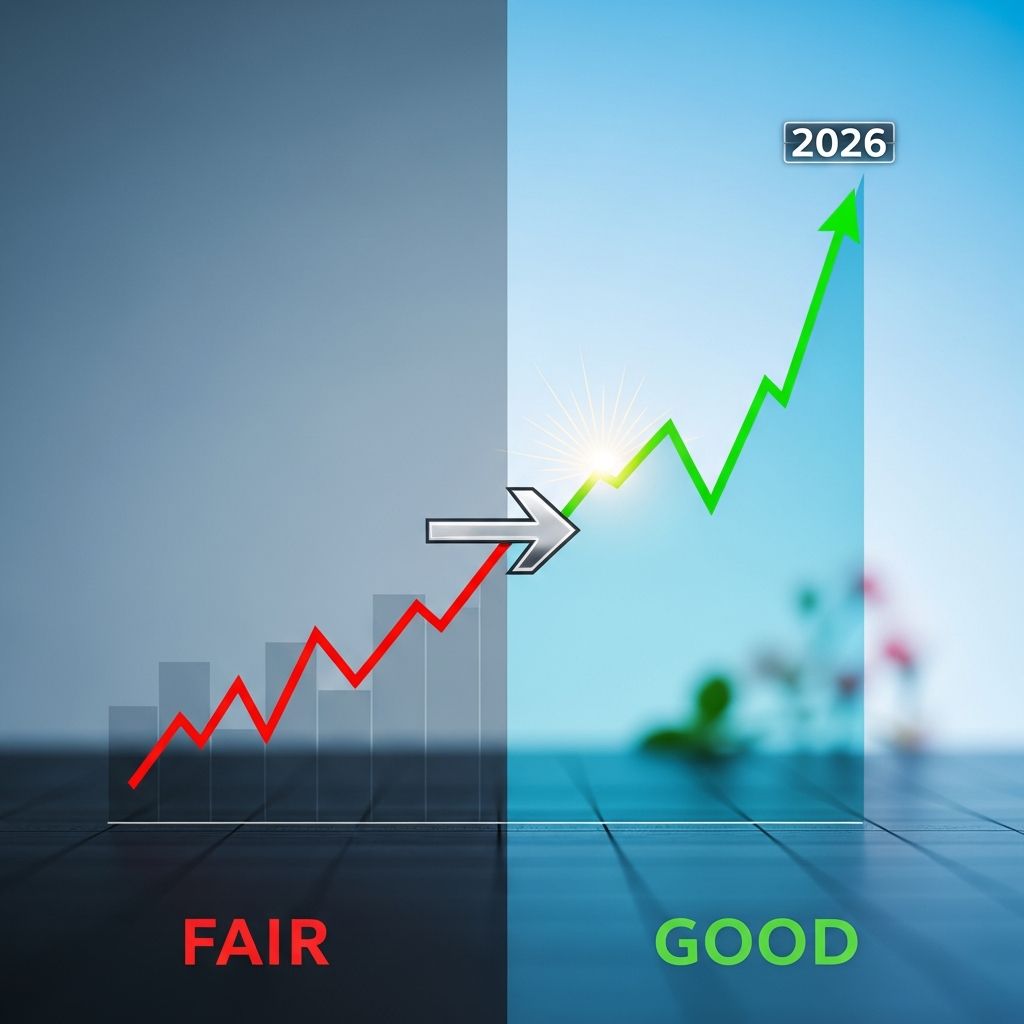
A fair credit score, typically ranging from 580 to 669, limits access to favorable loan terms, lower interest rates, and premium rewards cards. Transitioning to good credit (670-739) opens doors to better financial products and savings. This guide outlines practical, evidence-based steps to achieve that jump, drawing on core credit scoring principles like those in FICO and VantageScore models.
Understanding Your Credit Score Journey
Credit scores reflect your financial reliability through factors such as payment history (35%), credit utilization (30%), length of credit history (15%), new credit (10%), and credit mix (10%). Fair scores often stem from past late payments or high debt levels, but consistent actions can shift them upward within months.
Why aim for good credit? Lenders view 670+ scores as low-risk, offering average savings of 1-2% on interest for mortgages or auto loans. For example, on a $20,000 car loan, that’s hundreds saved annually. Track progress using free weekly reports from AnnualCreditReport.com or services reporting to all three bureaus: Experian, TransUnion, and Equifax.
Master Timely Payments: The Foundation of Score Growth
Payment history dominates scoring models. Even one 30-day late payment can drop a score by 60-110 points, lingering for seven years, though impact fades over time.
- Automate everything: Enroll in autopay for minimums on cards, loans, and utilities to eliminate forgetfulness. Ensure sufficient funds to avoid overdrafts, which add negative marks.
- Use tech aids: Apps like bank alerts, Google Calendar, or budgeting tools (e.g., Mint) notify due dates. Pay early if possible for buffer against processing delays.
- Prioritize high-impact debts: Focus on revolving credit like cards first, as delinquencies here hurt more than installment loans.
Pro tip: If behind, contact creditors for goodwill adjustments after consistent on-time payments. Data shows 80% of such requests succeed for one-off lates.
Optimize Credit Utilization for Rapid Gains
Utilization compares balances to limits; exceed 30% and scores suffer, even with on-time payments. Ideal is under 10% for top scores.
| Limit | 30% Max | 10% Ideal |
|---|---|---|
| $5,000 | $1,500 | $500 |
| $10,000 | $3,000 | $1,000 |
| $20,000 | $6,000 | $2,000 |
Strategies include:
- Pay twice monthly: Reduce reported balances by clearing before statement closing dates.
- Request limit increases: Responsible users qualify; this lowers ratio without new debt. Space requests 6+ months apart.
- Debt snowball: Tackle smallest balances first for motivational wins, then roll payments to larger ones.
Paying to zero monthly prevents interest (average 20%+ APR) and keeps utilization optimal.
Build a Stronger Credit Profile Strategically
Average account age and mix matter. Closing old cards shortens history and spikes utilization.
- Keep old accounts open: Use for small recurring charges like subscriptions, paid off promptly.
- Diversify responsibly: Mix installment (loans) and revolving (cards) shows versatility. Avoid over-reliance on one type.
- Limit new applications: Hard inquiries drop scores 5-10 points each, lasting two years. Rate-shop within 14-45 days for mortgages/autos, treated as one.
Leverage Credit-Building Tools for Beginners
For thin files or recovery, specialized products help. Credit-builder loans hold payments in savings, reporting positives without risk.
- Choose lenders reporting to all bureaus; terms 6-24 months build history fast.
- Secured cards require deposits as limits, transitioning to unsecured after good behavior.
- Report rent/utilities via services like Experian Boost, adding positive history instantly for 10-40 point bumps.
Medical debt under $500 now ignored in newer models; dispute inaccuracies via free annual reports.
Monitor and Dispute for Accuracy
Errors affect 1 in 5 reports. Review weekly via VantageScore free tools or bureaus.
- Dispute online: 70% resolved in 30 days favoring consumers.
- Fraud alerts: Freeze reports free to block unauthorized inquiries.
Track via apps showing FICO/VantageScore differences; lenders vary models.
Realistic Timeline and Expectations
Improvements: 20-50 points in 1-3 months with perfect payments/utilization under 10%. Full fair-to-good: 3-12 months.
- Month 1: Automate payments, pay down to <30%.
- Month 3: Utilization <10%, first disputes cleared.
- Month 6+: History lengthens, new positives dominate.
Avoid myths: Closing cards hurts; authorized users risk if primary mismanages.
Advanced Tactics for 2026
With evolving models, utilize rent reporting expansions and buy-now-pay-later if reported positively. Pre-qualify loans to soft-check only. For homebuyers, optimize 6-12 months ahead alongside DTI.
Frequently Asked Questions
How long does it take to go from fair to good credit?
Typically 3-12 months with consistent habits; faster if errors corrected.
Does paying off cards in full monthly help?
Yes, keeps utilization low and avoids interest.
Should I close unused cards?
No, preserves history and limits.
Can I improve credit without new accounts?
Absolutely; focus on payments and utilization first.
What’s the impact of one late payment?
60-110 point drop initially, lessens over time.
Long-Term Habits for Sustained Good Credit
Beyond basics, budget via 50/30/20 rule (needs/wants/savings). Build emergency fund covering 3-6 months expenses to avoid debt spirals. Consult non-profits like NFCC for counseling if overwhelmed.
Maintain via annual reviews, limit cards to 3-5, negotiate rates yearly. Good credit begets better offers, compounding gains.
References
- 5 Ways to Boost Your Credit Score in 2026 — Middlefield Bank. 2026. https://www.middlefieldbank.bank/blog/post/5-ways-to-boost-your-credit-score-in-2026
- 26 Tips to Improve Credit in 2026 — Experian. 2026. https://www.experian.com/blogs/ask-experian/ways-to-improve-credit/
- 5 ways to improve your credit score — Bank of America Better Money Habits. 2026. https://bettermoneyhabits.bankofamerica.com/en/credit/how-to-improve-your-credit-score
- How to Improve Your Credit Score in 2026 — American Bank. 2026. https://www.americanbankusa.com/education-center/how-to-improve-your-credit-score-in-2026/
- BEST & WORST Ways to Increase Your Credit Score (2026) — YouTube. 2026. https://www.youtube.com/watch?v=46lDI0UHm0Y
- How to Improve Your Credit Score in 2026 — Elevate Credit Union. 2026. https://elevatecu.com/blog/how-to-improve-your-credit-score-in-2026
- Your 2026 Credit Score Playbook: What Really Moves the Needle — My Financial Goals. 2026. https://www.myfinancialgoals.org/blog/your-2026-credit-score-playbook-what-really-moves-the-needle
Similar Articles








Read full bio of Sneha Tete