Boom and Bust Cycles: Causes, History, and Economic Impact
Understand economic boom and bust cycles: their causes, historical examples, and impact on markets.
Understanding the Boom and Bust Cycle
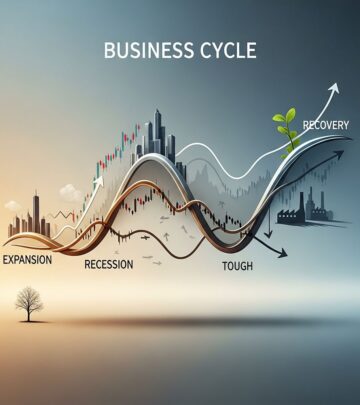
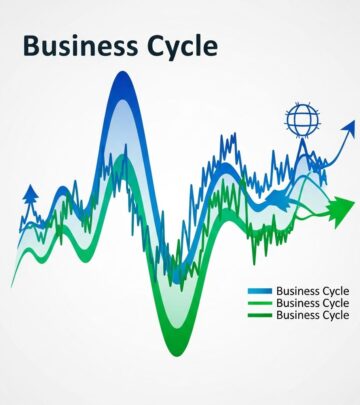
The boom and bust cycle is a fundamental concept in macroeconomics that describes the alternating periods of economic expansion and contraction that all modern economies experience. This cyclical pattern, also known as a business cycle, represents the natural rhythm of capitalist economies where periods of rapid growth and prosperity are inevitably followed by downturns and recessions. Understanding these cycles is essential for traders, investors, policymakers, and businesses seeking to make informed decisions about their financial futures.
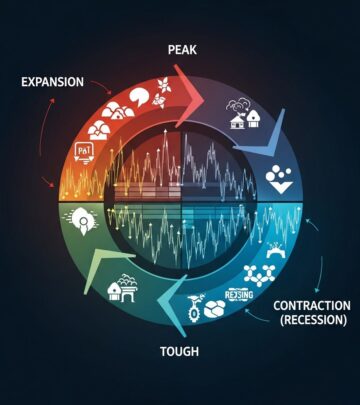
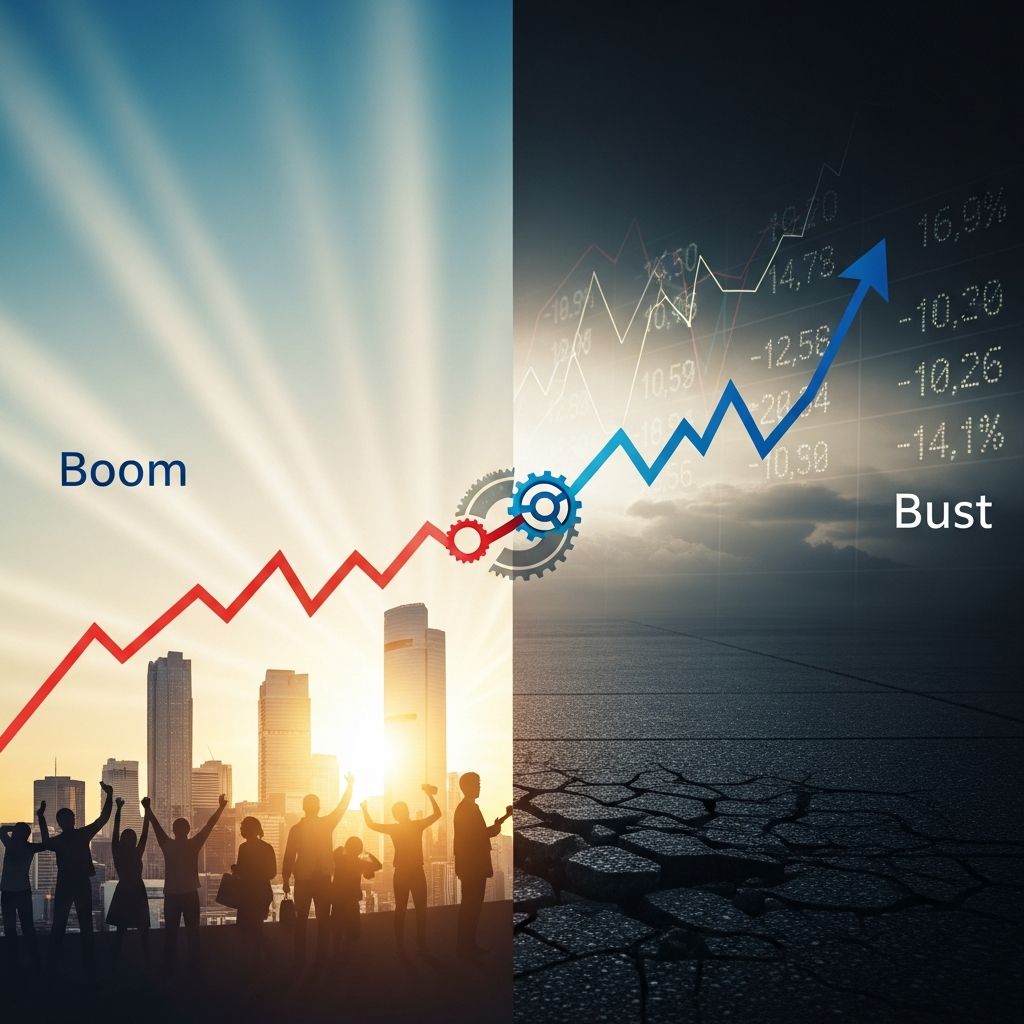
The boom and bust cycle refers to the fluctuations in economic activity that an economy experiences over time, characterized by expansion (boom) and contraction (bust) phases. These fluctuations affect various aspects of the economy, including employment rates, consumer spending, investment levels, business profitability, and asset prices. The cycle is not a random occurrence but rather a predictable pattern that has repeated throughout economic history, though the duration and intensity of each phase can vary significantly.
The Boom Phase Explained
During a boom phase, the economy experiences significant expansion and growth. Businesses thrive, employment rates rise sharply, and consumer confidence reaches elevated levels. This period of economic optimism encourages increased consumer spending on both goods and services, which in turn drives business investment and expansion. As demand for products and services increases, companies hire more workers, further boosting employment and consumer spending in a positive feedback loop.
Key characteristics of the boom phase include:
- Rising stock prices and bull markets in financial assets
- Increased business investment and expansion
- Low unemployment rates and wage growth
- Rising prices and potential inflation pressures
- Increased consumer confidence and discretionary spending
- Growing government tax revenues
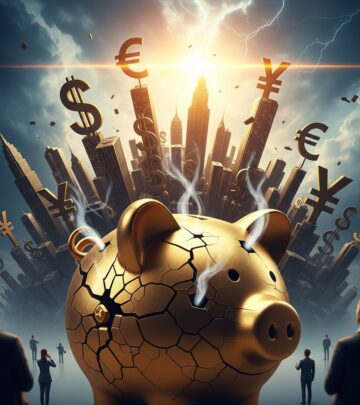
However, booms can become problematic when the economy grows too quickly, leading to economic overheating. This occurs when the growth rate becomes unsustainable, creating excessive inflation and economic imbalances. During overheating, asset prices—particularly stocks and real estate—can rise significantly above their intrinsic values, creating asset bubbles. When these bubbles eventually burst, they can trigger severe economic downturns and financial crises that ripple throughout the economy.
The Bust Phase Explained
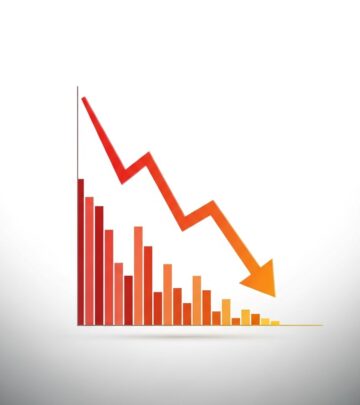
The bust phase represents the contraction period of the economic cycle, characterized by declining economic activity and reduced growth. During a bust, businesses struggle with reduced demand, employment rates decline, and consumer confidence and spending decrease substantially. This negative economic activity leads to reduced demand for goods and services, putting downward pressure on prices and potentially leading to deflation in severe cases.
Key characteristics of the bust phase include:
- Falling stock prices and bear markets
- Rising unemployment and potential layoffs
- Decreased consumer confidence and spending
- Reduced business investment and expansion
- Declining corporate profits and revenues
- Reduced government tax revenues
- Potential deflation or very low inflation
A recession is formally defined by the National Bureau of Economic Research as a significant decline in economic activity spread across the economy, lasting more than a few months, normally visible in real GDP, real income, employment, industrial production, and wholesale-retail sales. The simplest definition considers recessions as two consecutive quarters of negative GDP growth, though this definition has limitations in capturing the full scope of economic contraction.
Causes and Drivers of Boom and Bust Cycles
Economists have identified several key factors that drive business cycles and create the conditions for booms and busts. Understanding these drivers is crucial for predicting cycle turning points and preparing investment strategies accordingly.
Business Investment
Business investment serves as a primary engine of economic growth. When companies are optimistic about future prospects, they invest heavily in new equipment, facilities, and technology. This investment creates jobs, increases productivity, and stimulates overall economic activity. Conversely, when business confidence declines, investment falls sharply, reducing employment opportunities and slowing economic growth.
Interest Rates and Credit
The availability and cost of credit significantly influence economic cycles. During expansions, low interest rates encourage borrowing by both businesses and consumers, fueling investment and consumption. However, this can lead to excessive debt accumulation. As the economy overheats, central banks typically raise interest rates to combat inflation, making borrowing more expensive and reducing investment incentives. Higher interest rates also reduce consumer spending on big-ticket items like homes and automobiles, slowing the economy and potentially triggering a recession.
Consumer Expectations
Consumer sentiment and expectations about future economic conditions heavily influence spending behavior. When consumers feel optimistic about their job security and future income prospects, they spend more freely. Conversely, when expectations deteriorate due to economic uncertainty or negative news, consumers reduce spending and increase savings, contracting aggregate demand and slowing economic growth.
External Shocks
Random, unpredictable events can trigger boom and bust cycles. Oil price shocks, financial crises, pandemics, wars, or other geopolitical events can suddenly alter economic conditions. For example, the 2008 financial crisis and the COVID-19 pandemic both created severe economic disruptions that could not have been precisely predicted using historical data alone.
Historical Examples of Boom and Bust Cycles
Economic history provides numerous dramatic examples of boom and bust cycles, each with unique characteristics and consequences.
The Great Depression (1929-1939)
The Great Depression represents the most severe economic contraction in modern history. Following the stock market crash of 1929, the economy entered a prolonged and severe depression lasting nearly a decade. Unemployment reached approximately 25%, businesses failed en masse, and consumer spending collapsed. The boom of the 1920s had created unsustainable asset price inflation, and when the bubble burst, it triggered a cascade of economic failures and social hardship.
The Dot-Com Bubble (1995-2001)
The rapid growth of internet technology and e-commerce companies created an investment boom in the 1990s. Stock prices of technology companies soared to astronomical levels despite many companies having no profits or clear paths to profitability. This bubble burst in 2000-2001, causing significant losses for investors and a recession that lasted several years. The crash demonstrated how technological enthusiasm can create unsustainable asset valuations.
The Housing Bubble and Financial Crisis (2007-2009)
Low interest rates and loose lending standards in the early 2000s created a massive boom in real estate prices. Banks issued mortgages to borrowers with poor credit, and financial institutions created complex securities based on these mortgages. When housing prices stopped rising and borrowers began defaulting, the financial system experienced a severe crisis. The resulting Great Recession was the worst economic downturn since the Great Depression.
Economic Theories of Business Cycles
Different economic schools have proposed various explanations for why boom and bust cycles occur.
Schumpeter’s Theory
Joseph Schumpeter viewed economic cycles as inherent to capitalism, calling them “methodic economic growth.” He identified four stages in the Juglar cycle: expansion (characterized by increasing production and prices with low interest rates), crisis (stock exchange crashes and business bankruptcies), recession (falling prices and output with high interest rates), and recovery (stock recovery due to falling prices and incomes).
Keynesian Theory
John Maynard Keynes held that recessions resulted from imbalances between aggregate demand and aggregate supply. According to Keynes, recessions occur when aggregate demand falls, reducing total spending in the economy and leading to reduced production and employment.
The Financial Instability Hypothesis
Post-Keynesian economist Hyman Minsky proposed that cycles result from fluctuations in credit, interest rates, and financial frailty. According to Minsky’s theory, during expansion periods, low interest rates and rising cash flows encourage excessive business borrowing. This debt accumulation eventually becomes unsustainable, forcing firms to cut investment and triggering recession. Minsky’s theory proved particularly relevant in explaining the 2008 financial crisis.
Impact on Trading and Investment
The boom and bust cycle significantly impacts trading and investment strategies. During boom phases, traders benefit from rising asset prices and increased market activity, though they must remain aware of bubble risks. During bust phases, falling asset prices present challenges, but also opportunities for value investors. Successful traders adjust their strategies based on the current phase of the cycle, focusing on growth stocks during expansions and value stocks during contractions.
Frequently Asked Questions
Q: How long do boom and bust cycles typically last?
A: Business cycles typically last between 2 to 10 years in duration, though the exact length varies considerably depending on the specific circumstances and economic conditions driving each cycle.
Q: Can boom and bust cycles be prevented?
A: While policymakers attempt to moderate cyclical fluctuations through monetary and fiscal policy, completely eliminating boom and bust cycles remains impossible. Unexpected shocks and inherent dynamics of market economies make some level of cyclical variation inevitable.
Q: What is the difference between a recession and a depression?
A: A recession is typically defined as two consecutive quarters of negative GDP growth or a significant economic decline lasting several months. A depression is a more severe and prolonged recession with greater economic damage and social hardship. The Great Depression remains the primary reference point for what constitutes a depression.
Q: How do interest rates affect boom and bust cycles?
A: Low interest rates encourage borrowing and spending, fueling economic expansion. As the economy overheats, central banks raise rates to combat inflation, making borrowing more expensive and slowing economic activity. This policy response can trigger the transition from boom to bust.
Q: Can individual investors profit from understanding boom and bust cycles?
A: Yes, investors who understand cycle dynamics can adjust their portfolios accordingly. Buying defensive stocks during busts and growth stocks during booms, or timing real estate purchases during recessions when prices are lower, can enhance long-term returns.
Conclusion
The boom and bust cycle remains a defining characteristic of modern market economies. From the catastrophic Great Depression to the recent financial crises, these cycles have shaped economic history and continue to influence business decisions and investment strategies. By understanding the causes, phases, and historical patterns of economic cycles, traders, investors, and policymakers can better anticipate market trends, manage risks, and identify opportunities. While predicting exact turning points remains challenging, recognizing the signs of economic overheating or weakness helps market participants prepare for inevitable transitions between boom and bust phases. As economies continue to evolve and face new challenges, the fundamental patterns of expansion and contraction will likely persist, making cycle analysis essential knowledge for anyone seeking to navigate the complex world of finance and economics.
References
- Boom and Bust Cycle: Explained — TIOmarkets. 2024-07-01. https://tiomarkets.com/tr/article/boom-and-bust-cycle-guide
- Boom and Bust Cycles — Fiveable. https://fiveable.me/key-terms/hs-honors-world-history/boom-and-bust-cycles
- Business Cycle — Wikipedia. https://en.wikipedia.org/wiki/Business_cycle
- Boom and Bust (Macroeconomics) — Annenberg Learner, Economics USA: 21st Century Edition. https://www.learner.org/series/economics-ua-21st-century-edition/boom-and-bust/
- Business Cycles: Boom and Bust — YouTube Educational Video. https://www.youtube.com/watch?v=rNU3ezk_OmM
Similar Articles








Read full bio of medha deb