Bond Laddering: A Strategic Investment Approach
Master bond laddering to manage interest rates, generate steady income, and reduce portfolio risk.
What Is Bond Laddering?
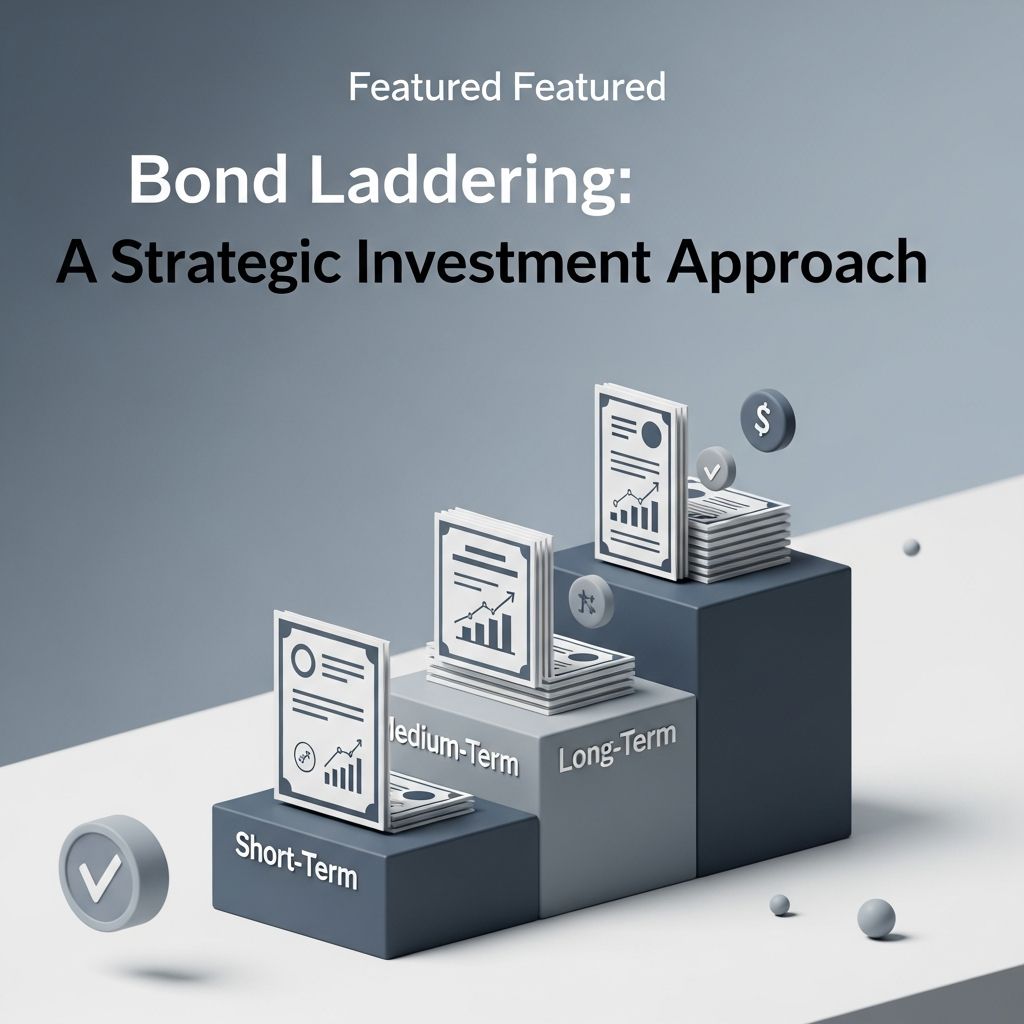
Bond laddering is an investment strategy that involves purchasing multiple bonds or certificates of deposit (CDs) that mature at different times in the future. Rather than investing in bonds that all mature during the same period, laddering spreads maturity dates across a range of timeframes, typically spanning months to years. This approach creates a structured portfolio that resembles the rungs of a ladder, where each rung represents a bond maturing at a different interval.
The primary objective of bond laddering is to provide investors with a steady stream of income while simultaneously minimizing exposure to interest rate fluctuations and reinvestment risk. By staggering maturity dates, investors can navigate changing market conditions more effectively and maintain flexibility in their investment decisions.
How Bond Laddering Works
The mechanics of bond laddering are straightforward yet effective. Picture a literal ladder where each rung represents a different bond. The bottom rung holds a bond scheduled to mature soonest, while successive rungs contain bonds maturing at progressively longer intervals.
For example, consider a bond ladder with five rungs spanning ten years. You might structure it as follows:
- Rung 1: Bond maturing in 2 years
- Rung 2: Bond maturing in 4 years
- Rung 3: Bond maturing in 6 years
- Rung 4: Bond maturing in 8 years
- Rung 5: Bond maturing in 10 years
When the first bond matures after two years, you receive the principal back. Rather than letting this money sit idle, you reinvest it into a new bond with a ten-year maturity, effectively extending the ladder upward. This continuous reinvestment process maintains your ladder structure over time while allowing you to adapt to prevailing market conditions and interest rates.
Building Your Bond Ladder
Creating an effective bond ladder requires careful planning and consideration of several key factors.
Determining the Number of Rungs
The first step involves deciding how many rungs your ladder will have. Generally, financial professionals recommend having at least six rungs to create meaningful diversification and the ability to generate income at regular intervals throughout the year. To determine the number of rungs, divide your total investment amount by the number of bonds you wish to purchase. For instance, a $100,000 investment divided into ten rungs would result in $10,000 per bond.
Setting Rung Spacing
Rung spacing refers to the time intervals between bond maturities. Ideally, spacing should be relatively equal to ensure consistent income distribution. For a ten-year ladder with five rungs, you might space them two years apart. However, spacing can be adjusted based on your income needs and investment timeline. Some investors prefer monthly income distribution, requiring more closely spaced rungs, while others are comfortable with annual or bi-annual maturity schedules.
Selecting Bond Materials
Just as real ladders can be constructed from different materials, bond ladders can be built using various types of securities. Common options include:
- U.S. Treasury bonds and notes, offering government backing and safety
- Municipal bonds, providing potential tax advantages
- Investment-grade corporate bonds, typically offering higher yields
- Certificate of deposit (CDs), providing FDIC insurance protection
Financial advisors generally recommend focusing on higher-rated bonds to maintain the strategy’s primary benefit: predictable income and capital preservation. Lower-rated, high-yield bonds introduce unnecessary default risk that contradicts the bond ladder’s core purpose.
Advantages of Bond Laddering
Bond laddering offers numerous benefits that make it an attractive strategy for many investors, particularly those seeking stable income and reduced market risk.
Interest Rate Risk Management
One of the most significant advantages is the mitigation of interest rate risk. By spreading bonds across different maturity dates, you’re not fully exposed to any single point in the interest rate cycle. If rates rise, your shorter-term bonds maturing soon allow you to reinvest at higher rates. Conversely, if rates fall, you maintain exposure to your longer-term bonds locked in at higher rates.
Consistent Income Stream
Bond ladders provide predictable, steady income as each bond reaches maturity. This regular cash flow is particularly valuable for retirees or investors with anticipated expenses, as it enables income planning with confidence. Many investors structure their ladders to generate monthly payments throughout the year.
Reinvestment Opportunities
As bonds mature at regular intervals, you have ongoing opportunities to reinvest principal at current market rates. This continuous reinvestment process removes the need to time the market, as you’re consistently deploying capital at various points in the interest rate cycle. If rates have risen, you can capture higher yields on reinvested amounts.
Diversification Benefits
Bond ladders naturally provide diversification across different maturity dates and potentially different bond types and issuers. This diversification reduces concentration risk and protects your portfolio from the performance of any single bond or issuer.
Lower Transaction Costs
Compared to active trading strategies, bond laddering can result in lower overall expenses. You’re not constantly buying and selling; instead, you’re executing a systematic plan with predetermined reinvestment schedules.
Flexibility in Changing Markets
Bond ladders offer flexibility to adapt to different market conditions. As bonds mature, you can adjust your reinvestment strategy based on current yields, credit quality concerns, or changes in your financial situation.
Disadvantages of Bond Laddering
While bond laddering offers significant benefits, it’s important to understand the potential drawbacks before implementing this strategy.
Continuous Trading Requirements
Because bonds continually mature, you must repeatedly reinvest the proceeds. This ongoing trading activity requires active management and can result in transaction costs and fees over time. For passive investors seeking minimal involvement, this may prove burdensome.
Capital Gains Limitations
Bond laddering typically involves holding bonds until maturity rather than selling them opportunistically. This approach forgoes potential capital gains that could be realized by selling bonds before maturity when their prices have risen due to falling interest rates. The focus on yield rather than price appreciation can limit total return potential.
Reinvestment Risk
When bonds mature during periods of falling interest rates, you’re forced to reinvest at lower prevailing rates. This reinvestment risk can reduce your overall portfolio yield compared to what you might achieve by holding longer-term bonds exclusively.
Vulnerability to Rising Rates
While the ladder structure helps manage interest rate risk, it’s not immune to rising rate environments. If you must sell a bond before maturity in a rising rate environment, you may experience principal losses, as bond prices fall when rates rise.
Complexity and Management Needs
Building and maintaining a bond ladder requires more effort than investing in a bond fund. You must research individual bonds, monitor their performance, track maturity dates, and execute reinvestment trades consistently.
Bond Ladder Strategy Variations
While the traditional bond ladder is straightforward, investors can modify the strategy to match their specific objectives and market outlooks.
Barbell Strategy
The barbell strategy concentrates investments at the short and long ends of the maturity spectrum while avoiding intermediate-term bonds. This approach captures higher yields from longer-term bonds while using short-term bonds to provide liquidity and reduce overall interest rate risk. However, it sacrifices the middle-of-the-road diversification that a traditional ladder provides.
Bullet Strategy
In contrast to laddering, the bullet strategy concentrates all bonds to mature at the same target date. This approach is useful when you have a specific financial goal with a known timeline, such as funding a child’s college education.
Bond Swaps
Bond swaps involve selling one bond and immediately purchasing another. This technique can help reduce tax liability by realizing losses on underperforming bonds while simultaneously acquiring better-performing securities. Bond swaps also allow you to upgrade credit quality or position your portfolio in anticipation of interest rate changes without disrupting your overall ladder structure.
Key Considerations for Building a Bond Ladder
Hold Bonds to Maturity
To maximize the benefits of bond laddering, you should maintain the temperament to hold bonds until they mature. Selling bonds early exposes you to market risk, transaction fees, and the loss of predictable income benefits that make laddering attractive.
Emphasize Quality
Bond ladders are designed to provide predictable income and capital preservation, making lower-quality bonds incompatible with the strategy’s objectives. Financial experts recommend selecting bonds rated “A” or better from major rating agencies. For corporate bonds, particularly lower-quality ones, maintain multiple issuers to ensure adequate diversification.
Monitor Your Ladder
While bond ladders require less active management than stock portfolios, regular monitoring remains important. Track upcoming maturities, watch for credit quality changes, and stay informed about market conditions to make informed reinvestment decisions.
Bond Laddering vs. Bond Funds
Investors often consider whether bond laddering or bond funds better suit their needs. Bond ladders offer predictable income and known maturity values but require active management and individual bond selection. Bond funds provide professional management and diversification with lower minimum investments but involve ongoing price fluctuations and fund expenses. The choice depends on your investment timeline, income needs, and preference for active versus passive management.
Who Should Consider Bond Laddering?
Bond laddering is particularly suitable for:
- Retirees requiring steady, predictable income
- Conservative investors seeking lower volatility
- Individuals with specific future financial obligations
- Investors who can commit to holding bonds until maturity
- Those seeking to manage interest rate risk systematically
- Investors with sufficient capital for meaningful diversification
Frequently Asked Questions
Q: What is the minimum amount needed to start a bond ladder?
A: There’s no fixed minimum, but you should have enough capital to create at least six rungs with meaningful amounts in each bond. Many investors start with $50,000 to $100,000, allowing for $10,000 per rung, though smaller ladders are possible through CDs or Treasury bonds with lower minimums.
Q: How often should I reinvest maturing bond proceeds?
A: Reinvestment should follow your predetermined ladder schedule. Many investors reinvest into a new bond extending their ladder’s longest maturity to maintain the original structure. However, you can adjust based on current market conditions and your financial needs.
Q: Can I use different types of bonds in a single ladder?
A: Yes, bond ladders can include a mix of Treasury bonds, municipal bonds, corporate bonds, and CDs. Mixing types allows you to optimize for tax efficiency, yield, and safety while maintaining the ladder structure.
Q: What happens if a bond issuer defaults?
A: Default risk is why credit quality matters in bond laddering. By selecting highly-rated bonds and diversifying across multiple issuers, you minimize default risk. For added safety, Treasury bonds backed by the U.S. government eliminate default risk entirely.
Q: Is bond laddering suitable for rising rate environments?
A: Bond laddering actually performs well during rising rates. Regular maturity dates allow you to reinvest at progressively higher rates, gradually increasing your portfolio’s yield. However, if you must sell bonds before maturity, you may face temporary losses.
Q: How does bond laddering compare to other fixed-income strategies?
A: Bond laddering offers more income predictability and interest rate management than bond funds but requires more effort than passive fund investing. Compared to holding all bonds in a single maturity (bullet strategy), laddering provides better rate flexibility. The barbell approach offers higher yields but less regular income.
References
- Bond trading strategies: Ladders, barbells, & swaps — Vanguard. 2025. https://investor.vanguard.com/investor-resources-education/online-trading/bond-strategies
- Bond Laddering – Bond Strategy — Charles Schwab. 2025. https://www.schwab.com/fixed-income/bond-ladders
- How to build a bond ladder — Fidelity. 2025. https://www.fidelity.com/viewpoints/investing-ideas/bond-ladder-strategy
- How To Build A Bond Ladder — And The Best Brokers To Help You — Bankrate. 2025. https://www.bankrate.com/investing/bond-ladder-strategy/
Similar Articles








Read full bio of medha deb