Bond Investing: Benefits and Drawbacks
Explore the key advantages and risks of bonds to decide if they fit your investment strategy for stability and income.
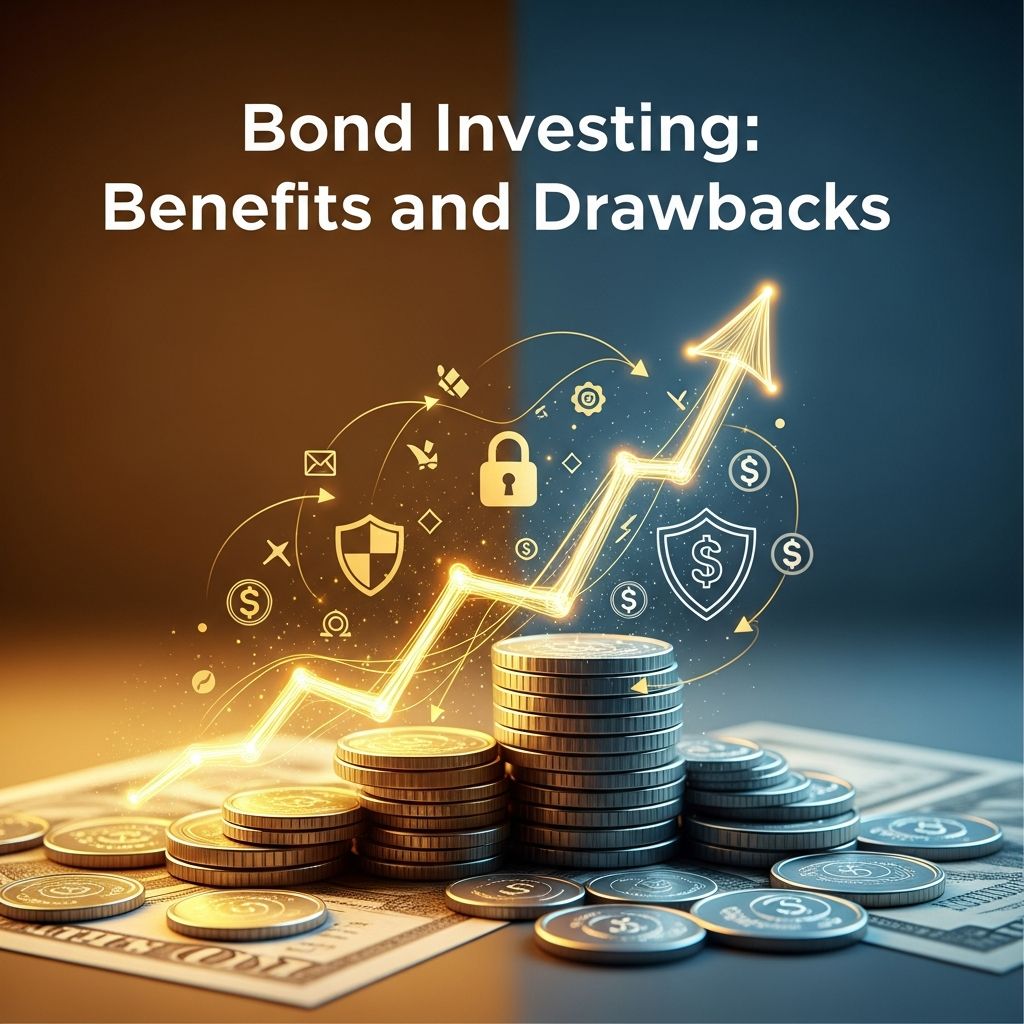
Bonds represent a cornerstone of diversified investment portfolios, offering investors a way to generate reliable income while mitigating some of the volatility associated with equities. These debt instruments allow individuals and institutions to lend money to governments or corporations in exchange for periodic interest payments and the return of principal at maturity. While they provide appealing features like predictable cash flows, they also come with specific vulnerabilities that require careful consideration.
Understanding the Fundamentals of Bonds
At their core, bonds function as IOUs issued by borrowers needing capital. When you purchase a bond, you are essentially extending a loan. The issuer promises to pay back the principal amount, known as the face or par value, on a predetermined date. In addition, most bonds pay interest, called coupons, at fixed intervals, typically semiannually. For instance, a $1,000 bond with a 3% coupon rate delivers $30 annually until maturity.
Bonds vary widely by issuer type. Government bonds, such as U.S. Treasuries, are backed by the full faith and credit of the issuing authority, making them among the safest options. Corporate bonds, issued by companies, offer higher yields to compensate for increased risk. Municipal bonds fund local projects and often provide tax exemptions, appealing to high-income investors. Zero-coupon bonds, conversely, do not pay periodic interest; instead, they are sold at a discount and mature at face value, with the difference representing the yield.
Key Advantages That Make Bonds Attractive
Bonds shine in several areas, particularly for those prioritizing preservation over aggressive growth.
- Stable Income Generation: The hallmark of bonds is their regular interest payments, providing a dependable revenue stream. This predictability suits retirees or anyone needing consistent cash flow without selling assets during market dips.
- Capital Protection: Held to maturity, bonds return the full principal, shielding against market swings. High-quality issues, especially government ones, carry minimal default probability, safeguarding investments effectively.
- Portfolio Diversification: Bonds frequently exhibit inverse movement to stocks. During equity downturns, bond values may rise or remain steady, smoothing overall portfolio performance and reducing volatility.
- Reduced Volatility: Compared to stocks, bonds experience smaller price fluctuations, offering emotional comfort and strategic balance in turbulent markets.
- Tax Efficiency in Select Cases: Municipal bonds’ interest is often free from federal taxes, and sometimes state taxes, boosting after-tax returns for eligible investors.
Significant Risks Investors Must Navigate
Despite their strengths, bonds expose holders to multiple hazards that can erode returns or principal.
- Interest Rate Sensitivity: Bond prices drop when rates climb, as newer bonds with higher yields outcompete existing ones. Long-term bonds amplify this effect.
- Inflation Erosion: Fixed payments lose buying power if inflation surges beyond the coupon rate, diminishing real returns over time.
- Credit or Default Risk: Issuers might fail to meet obligations, particularly with lower-rated corporate bonds. Ratings from agencies like Moody’s or S&P gauge this likelihood.
- Reinvestment Challenges: Maturing bonds or coupons may need reinvestment at lower prevailing rates, curtailing future income.
- Liquidity Constraints: Certain bonds, especially niche or individual issues, prove difficult to sell quickly without price concessions.
Comparing Bonds Across Major Types
Different bond categories balance rewards and risks uniquely. The table below summarizes key characteristics:
| Type | Yield Potential | Risk Level | Tax Treatment | Best For |
|---|---|---|---|---|
| Government (Treasuries) | Low to Moderate | Very Low | Federal Taxable | Conservative Investors |
| Corporate | Moderate to High | Moderate | Fully Taxable | Income Seekers |
| Municipal | Moderate | Low to Moderate | Often Tax-Exempt | High-Tax Bracket |
| High-Yield (Junk) | High | High | Fully Taxable | Risk-Tolerant |
This comparison highlights how Treasuries prioritize safety, while high-yield bonds chase greater returns at elevated risk.
Strategic Approaches to Bond Allocation
Effective bond investing hinges on alignment with goals, timeline, and risk appetite. Conservative portfolios might allocate 40-60% to bonds, increasing with age under rules like “age in bonds.” Diversify across maturities—short-term for liquidity, long-term for yield—and issuers to mitigate risks.
Laddering, purchasing bonds with staggered maturities, addresses reinvestment risk by providing periodic liquidity. Barbell strategies blend short- and long-term bonds, avoiding middling durations sensitive to rate shifts. In rising rate environments, favor shorter maturities; in falling ones, extend duration to capture price appreciation.
Inflation-protected securities like TIPS adjust principal with CPI changes, countering purchasing power loss. Active monitoring of economic indicators, such as Fed announcements, informs timing.
Tax Implications and Optimization Tips
Bonds trigger ordinary income taxes on interest, unlike qualified dividends or long-term capital gains from stocks. Holding in tax-advantaged accounts like IRAs defers or eliminates this burden. Municipal bonds shine in taxable accounts for their exemptions, effectively raising yields for top earners.
Capital gains from selling appreciated bonds before maturity receive favorable long-term rates if held over a year. Harvesting losses offsets gains elsewhere, enhancing after-tax efficiency.
Current Market Dynamics and Outlook
As of recent trends, central banks’ rate adjustments profoundly impact bonds. Post-pandemic hikes pressured prices, but anticipated cuts could spur rallies. Persistent inflation remains a wildcard, favoring floating-rate or indexed products. Geopolitical stability bolsters government bonds as safe havens.
Frequently Asked Questions
Are bonds safer than stocks?
Bonds generally carry lower volatility and default risk, especially government issues, but they are not risk-free. Stocks offer higher long-term growth potential with greater fluctuations.
How do rising interest rates affect my bonds?
Existing bond prices fall inversely with rate increases, though holding to maturity secures principal and interest.
Can bonds outperform stocks?
Rarely over long horizons due to capped returns, but they excel in preservation and income during downturns.
What is the best way to buy bonds?
Options include individual purchases via brokers, mutual funds, ETFs for diversification, or Treasuries directly from TreasuryDirect.gov.
Should retirees invest heavily in bonds?
Yes, for income stability, but balance with some equities for growth and inflation protection.
Conclusion: Fitting Bonds into Your Financial Plan
Bonds serve as vital tools for income, stability, and diversification, counterbalanced by risks demanding vigilance. By grasping mechanics, weighing trade-offs, and employing smart tactics, investors can harness bonds effectively within broader strategies. Consult professionals to tailor allocations precisely.
References
- Advantages & Disadvantages of Investing in Bonds — Forward Bank. 2023. https://www.forward.bank/about/the-hangout/investments/advantages-disadvantages-of-investing-in-bonds/
- Why and How to Invest in Bonds: Benefits, Risks, and Smart Strategies — Homaio. 2024. https://www.homaio.com/post/why-and-how-to-invest-in-bonds
- What is a Bond and How do they Work? — Vanguard. 2025-03-15. https://investor.vanguard.com/investor-resources-education/understanding-investment-types/what-is-a-bond
- Bonds – FAQs — Investor.gov (U.S. Securities and Exchange Commission). 2025. https://www.investor.gov/introduction-investing/investing-basics/investment-products/bonds-or-fixed-income-products/bonds
- Understanding bonds: what they are and how to invest in them — Saxo Bank. 2024-06-10. https://www.home.saxo/learn/guides/bonds/understanding-bonds-basics-benefits-and-risks
- Understanding bonds and their risks — Merrill Edge. 2024. https://www.merrilledge.com/article/understanding-bonds-and-their-risks
- Pros and cons of stocks and bonds — Capital Group. 2025-01-20. https://www.capitalgroup.com/retirement/participant/planning/what-is-asset-allocation/stocks-and-bonds.html
Similar Articles








Read full bio of Sneha Tete