Bond Funds: 6 Types To Build Income And Diversify
Discover how bond funds deliver steady income, portfolio stability, and diversification for long-term financial growth.
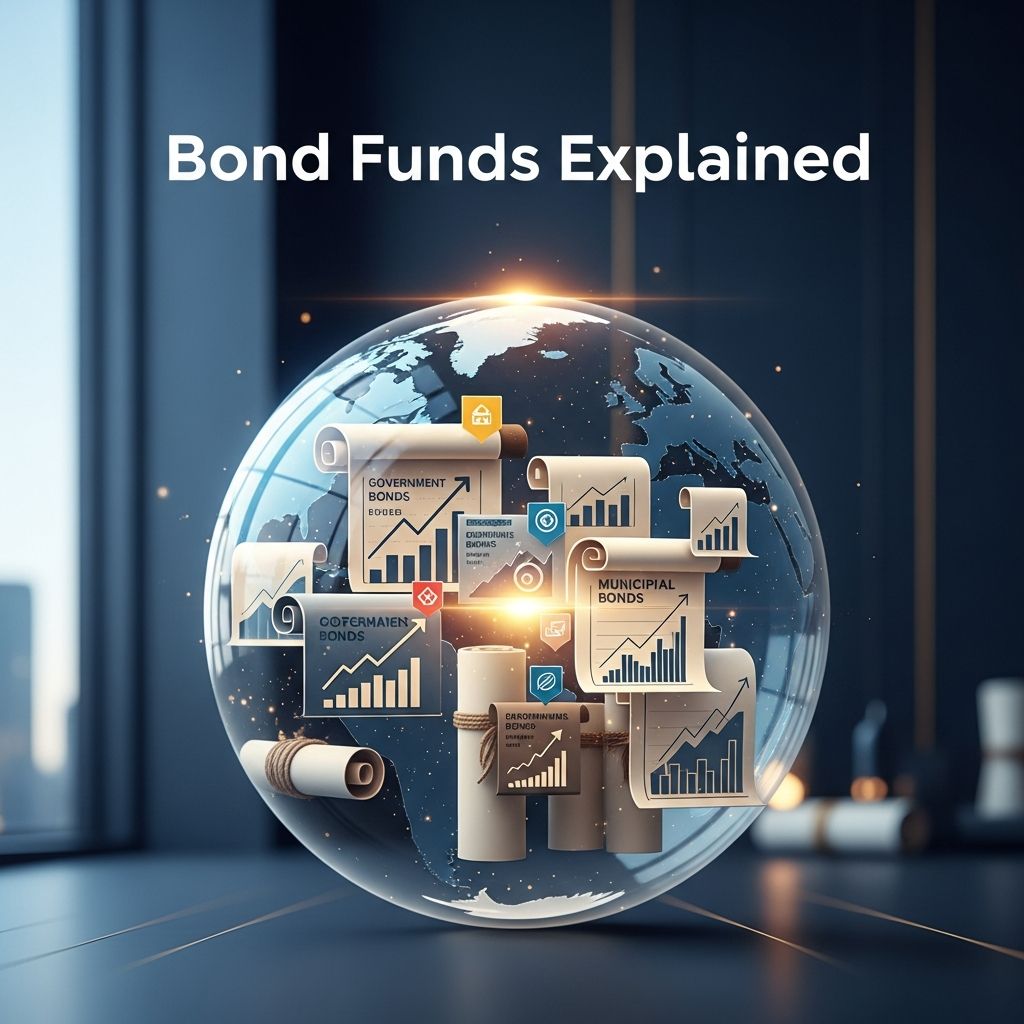
Bond funds pool investor money to purchase a diverse array of debt securities, delivering regular income streams and relative stability compared to equities. These vehicles, including mutual funds and exchange-traded funds (ETFs), enable access to professional management and broad market exposure without the need to select individual bonds.
Core Advantages of Including Bond Funds in Your Portfolio
Bond funds stand out for their ability to generate predictable income, which can compound over time to support retirement or other financial goals. Unlike stocks, they offer contractual interest payments, providing a buffer during market downturns.
- Income Generation: Funds distribute interest from underlying bonds, often monthly or quarterly, creating a reliable cash flow for expenses or reinvestment.
- Portfolio Balance: By offsetting stock volatility, bonds contribute to smoother overall returns, especially in diversified allocations.
- Enhanced Diversification: A single fund may hold thousands of bonds across issuers, maturities, and sectors, mitigating the impact of any single default.
Historical data shows that portfolios with 40-60% in bonds experience lower drawdowns during equity corrections, preserving capital for recovery.
How Bond Funds Function in Practice
At their essence, bond funds invest in debt instruments where issuers borrow capital and promise repayment with interest. The fund’s net asset value (NAV) fluctuates based on bond prices, influenced by interest rates, credit events, and economic shifts.
Investors buy shares in the fund, benefiting from collective buying power that lowers costs and expands reach into global markets. Managers actively select bonds or track indices to align with objectives like income maximization or capital preservation.
Key Metrics to Evaluate Bond Funds
Understanding fund characteristics helps match investments to personal risk tolerance and time horizons.
| Metric | Description | Implications |
|---|---|---|
| Average Maturity | Time until bonds in the portfolio mature | Longer maturities increase sensitivity to rate changes but offer higher yields |
| Duration | Weighted sensitivity to interest rate shifts | Higher duration means greater price swings when rates rise or fall |
| Credit Quality | Issuer’s ability to repay (e.g., AAA to junk) | Investment-grade safer; high-yield riskier with higher potential returns |
| Yield to Maturity | Expected return if held to bond maturities | Accounts for price, coupon, and time; key for income forecasting |
Diverse Categories of Bond Funds
Bond funds span various strategies to suit different investor needs, from conservative to aggressive profiles.
Government and Treasury-Focused Funds
These invest in U.S. Treasuries or agency debt like those from Fannie Mae, offering top-tier safety backed by government credit. Ideal for low-risk income, they feature minimal default risk but are prone to rate fluctuations.
Corporate Bond Funds
Targeting debt from companies, these provide higher yields to compensate for credit risk. Investment-grade options balance safety and return, while high-yield funds chase greater income from riskier issuers.
Municipal Bond Funds
Issued by states and localities, these often deliver tax-exempt income, appealing to high-tax-bracket investors. Revenue from projects like infrastructure secures payments.
Securitized and Asset-Backed Funds
These pool mortgages, auto loans, or credit card receivables into securities. They offer yields above Treasuries with prepayment risks tied to economic cycles.
Multi-Sector and Global Funds
Blending asset classes or geographies, these enhance diversification. Emerging market bonds add yield potential but introduce currency and political risks.
Inflation-Protected and Floating-Rate Funds
TIPS funds adjust for inflation via principal tweaks, safeguarding purchasing power. Floating-rate options, like bank loan funds, reset coupons with benchmarks, thriving in rising rate environments.
Navigating Risks in Bond Fund Investments
While safer than stocks, bond funds carry distinct hazards requiring careful consideration.
- Interest Rate Risk: Bond prices fall when rates rise, amplified in long-duration funds. No maturity date means indefinite exposure unlike individual bonds.
- Credit Risk: Issuer defaults erode principal, more prevalent in junk bonds.
- Inflation Risk: Fixed payments lose value if prices outpace yields.
- Liquidity and Call Risk: Hard-to-sell bonds or early issuer redemptions disrupt expected income.
To counter these, ladder maturities across funds, blend credit qualities, and allocate based on age—younger investors favor growth-oriented bonds, retirees prioritize income.
Strategies for Selecting and Integrating Bond Funds
Start with goals: income needs dictate yield focus; preservation emphasizes short-duration, high-quality holdings.
- Assess Fees: Opt for low-expense-ratio funds (under 0.2%) to maximize net returns.
- Review Performance Context: Compare against benchmarks like Bloomberg Aggregate Bond Index over 3-10 years.
- Consider Tax Efficiency: Municipal funds for taxable accounts; Treasuries for tax-deferred ones.
- Rebalance Regularly: Maintain target allocations, selling high and buying low.
ETFs shine for intraday trading and tax efficiency; mutual funds suit automatic investing.
Role of Bond Funds in Broader Portfolio Construction
Modern portfolios often use a 60/40 stock-bond split, but adjust for risk appetite—conservatives may go 40/60. Bonds act as a shock absorber, rallying when stocks falter due to flight-to-quality flows.
In low-rate eras, extend duration cautiously; in hikes, shorten it. Alternatives like multi-asset credit funds add resilience.
Frequently Asked Questions (FAQs)
Are bond funds safer than stocks?
Yes, they exhibit lower volatility and provide income, but face rate and credit risks absent in equities.
Can bond funds lose money?
Absolutely, particularly if sold amid rising rates or defaults, though holding long-term mitigates some volatility.
How do rising interest rates affect bond funds?
Prices drop inversely; new bonds offer higher yields, benefiting future purchases.
What’s the difference between bond mutual funds and ETFs?
Mutual funds price once daily; ETFs trade like stocks with potential tax advantages.
Should beginners invest in high-yield bond funds?
Not initially—start with investment-grade for stability before venturing into junk for yield.
Future Outlook for Bond Funds
With central banks normalizing policy post-2022 hikes, intermediate bonds may stabilize. Climate-linked and ESG bonds gain traction, blending income with sustainability. Diversified, low-cost funds remain cornerstones for enduring portfolios.
References
- What are fixed income or bond funds? — Vanguard Investor Resources. 2023-01-15. https://investor.vanguard.com/investor-resources-education/understanding-investment-types/what-are-fixed-income-or-bond-funds
- Fixed Income Funds — Franklin Templeton. 2024-05-20. https://www.franklintempleton.com/planning-and-learning/learn-about-investing/types-of-funds/fixed-income-funds
- Bond Funds and Income Funds — U.S. Securities and Exchange Commission (Investor.gov). 2023-11-10. https://www.investor.gov/introduction-investing/investing-basics/glossary/bond-funds-and-income-funds
- Fixed income & bonds — Fidelity Investments. 2024-02-28. https://www.fidelity.com/fixed-income-bonds/overview
- Bond basics — RBC Global Asset Management. 2023-09-12. https://www.rbcgam.com/en/ca/learn-plan/investment-strategies/bond-basics/detail
- Understanding Fixed Income & Bonds — Schroders. 2024-01-08. https://www.schroders.com/en-au/au/adviser/resources/understanding-fixed-income-bonds/
- Guide to Fixed Income Investments — Merrill Edge. 2023-12-05. https://www.merrilledge.com/investor-education/understanding-bonds
Similar Articles








Read full bio of medha deb