Duration: Understanding Bond Price Sensitivity
Master bond duration and learn how interest rate changes impact your investments.
What Is Duration?
Duration is a fundamental concept in fixed-income investing that measures the weighted average time it takes for an investor to receive the cash flows from a bond investment. More precisely, duration quantifies the sensitivity of a bond’s price to changes in interest rates. It is expressed in years and serves as a critical tool for bond investors seeking to understand and manage interest rate risk in their portfolios.
The duration metric combines several key elements: the timing of cash flows, the coupon payments, and the yield to maturity of the bond. Rather than simply measuring how long until a bond matures, duration accounts for the present value of all future cash flows, providing a more nuanced understanding of a bond’s true price sensitivity to market interest rate fluctuations.
Understanding the Basics of Bond Duration
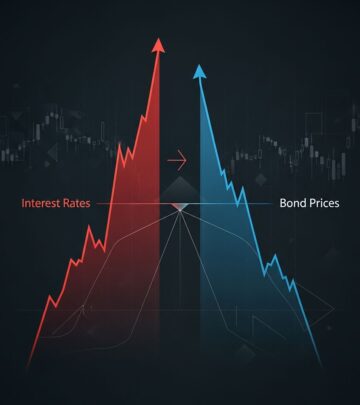
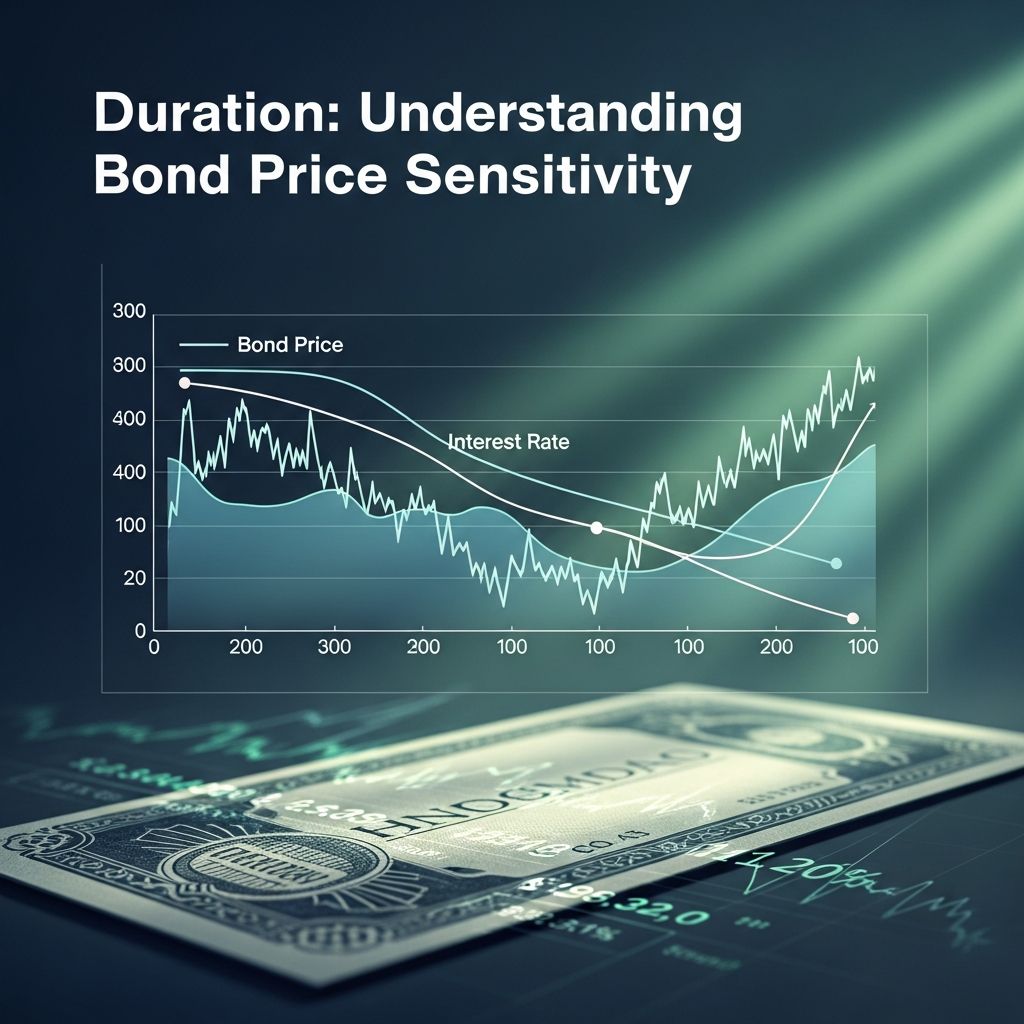
To fully comprehend duration, investors must first understand what drives bond prices. Bond prices move inversely to interest rates—when rates rise, existing bond prices fall, and when rates fall, existing bond prices rise. This inverse relationship occurs because newly issued bonds offer higher yields, making existing bonds with lower yields less attractive unless their prices decline.
Duration helps investors quantify exactly how much a bond’s price will change in response to a given change in interest rates. For example, a bond with a duration of 5 years will experience approximately a 5% price decline for every 1% increase in interest rates. Conversely, the bond would gain approximately 5% in price for every 1% decrease in interest rates.
The relationship between duration and price sensitivity is not perfectly linear, especially for larger interest rate movements, but it provides a reliable first approximation for investors making portfolio decisions.
Types of Duration Measures
There are several different ways to calculate and express duration, each offering unique insights into bond behavior:
Macaulay Duration
Macaulay duration, named after economist Frederick Macaulay, is the weighted average time to receive a bond’s cash flows. It represents the precise number of years it takes for an investor to be compensated for their bond investment through the present value of all future coupon payments and the principal repayment. This measure was the original form of duration and remains theoretically important in fixed-income analysis.
Modified Duration
Modified duration takes Macaulay duration one step further by adjusting it to account for the bond’s yield to maturity. This adjustment makes modified duration directly comparable to price sensitivity. Modified duration is calculated by dividing Macaulay duration by one plus the bond’s yield to maturity. This metric is particularly useful for investors because it directly shows the percentage change in bond price for a 1% change in yield.
Effective Duration
Effective duration, also known as option-adjusted duration, is used for bonds with embedded options, such as callable or putable bonds. These bonds have uncertain cash flows because the bondholder or issuer can make certain decisions that affect when cash flows will occur. Effective duration accounts for these possibilities and provides a more accurate measure of price sensitivity for such securities.
Key Rate Duration
Key rate duration measures the sensitivity of a bond’s price to changes in specific points along the yield curve rather than parallel shifts in the entire curve. This approach recognizes that different maturity segments of the yield curve may move differently, providing more granular risk assessment for sophisticated portfolio managers.
How Duration Is Calculated
The calculation of Macaulay duration involves determining the present value of each cash flow, multiplying by the time period in which it occurs, summing all these weighted values, and dividing by the bond’s current market price. While the mathematical formula is relatively straightforward, the computation can become complex with multiple cash flows over extended periods.
For practical purposes, most investors use financial calculators or spreadsheet software to compute duration rather than performing manual calculations. Most bond analysis platforms and financial data providers calculate duration automatically, making it readily available to investors analyzing potential investments.
The formula for Macaulay duration is:
Duration = Σ (t × PV of cash flow at t) / Current Bond Price
Where t represents the time period and PV represents the present value of cash flows received at that time.
Duration and Interest Rate Risk
Duration serves as the primary metric for quantifying interest rate risk in bond portfolios. Understanding this relationship is crucial for investors who want to manage their exposure to market rate movements.
The Duration-Risk Relationship
- Longer duration bonds carry greater interest rate risk than shorter duration bonds
- A bond with a duration of 10 years will fluctuate roughly twice as much as a bond with a duration of 5 years for the same interest rate change
- Duration increases with longer time to maturity and decreases with higher coupon payments
- Higher-yielding bonds typically have lower duration because their cash flows are weighted more heavily toward the near term
- Zero-coupon bonds have duration equal to their time to maturity since all cash flows occur at redemption
Portfolio managers use duration analysis to align their portfolios with interest rate forecasts and risk tolerance levels. If an investor expects interest rates to rise, reducing portfolio duration by shifting to shorter-maturity bonds can help protect against potential price declines. Conversely, if rates are expected to fall, increasing duration through longer-maturity bonds can enhance returns.
Factors That Influence Duration
Several key variables affect a bond’s duration, and understanding these relationships helps investors predict how their bonds will respond to market changes:
Coupon Rate
The coupon rate—the annual interest payment as a percentage of par value—inversely influences duration. Bonds with higher coupon rates have lower duration because investors receive a larger portion of their cash flows earlier through coupon payments. High-coupon bonds are therefore less sensitive to interest rate changes. Zero-coupon bonds, which pay no coupons, have the highest duration for a given maturity.
Time to Maturity
Generally, bonds with longer times to maturity have greater duration and therefore greater interest rate sensitivity. However, this relationship is not perfectly linear. Very long-maturity bonds have increasingly diminished duration increases because the present value of cash flows far in the future becomes increasingly small.
Current Yield Level
The prevailing yield environment affects duration calculations. When yields are higher, future cash flows are discounted at higher rates, reducing their present value and effectively shortening duration. Conversely, in low-yield environments, duration tends to extend because cash flows are discounted less heavily.
Call Features and Embedded Options
Bonds with call options have different durations than otherwise identical non-callable bonds. The ability of issuers to redeem bonds when rates fall limits the upside price potential, which effectively shortens duration in declining-rate scenarios. This creates complexity in duration analysis for bonds with embedded options.
Practical Applications for Investors
Investors utilize duration in several important ways to manage their fixed-income portfolios:
Portfolio Immunization
By matching the duration of bond holdings to investment horizons, investors can immunize their portfolios against interest rate risk. If an investor needs funds in 5 years, holding bonds with a duration of 5 years creates a matched-funding scenario where interest rate changes minimally impact the final value.
Yield Curve Positioning
Duration helps investors decide whether to position portfolios along the yield curve based on their interest rate expectations. Increasing duration exposure ahead of expected rate declines can amplify gains, while decreasing duration before rate increases can protect portfolio value.
Risk Assessment and Comparison
Duration provides a standardized way to compare interest rate risk across different bonds, even those with different maturities, coupon rates, and credit qualities. This comparison tool helps investors make more informed allocation decisions across their fixed-income holdings.
Performance Attribution
Portfolio managers use duration analysis to understand sources of portfolio returns, distinguishing between gains from interest rate movements versus gains from credit spread changes or other factors.
Duration Limitations
While duration is an extremely useful tool, it has important limitations that investors should understand:
- Duration assumes parallel shifts in the yield curve; real-world curve movements are often non-parallel
- The relationship between duration and price is convex, not linear, particularly for larger interest rate movements
- Duration changes over time as the bond approaches maturity
- Credit risk and other non-interest-rate factors are not captured by duration
- Bonds with embedded options require special treatment and more complex analytical approaches
- Duration does not account for reinvestment risk or liquidity considerations
Duration Compared to Other Bond Metrics
| Metric | Definition | Primary Use |
|---|---|---|
| Duration | Weighted average time to cash flows; price sensitivity to rate changes | Interest rate risk assessment |
| Yield to Maturity | Total return if held to maturity | Return comparison |
| Convexity | Rate of change of duration; price curvature | Refining duration estimates |
| Credit Spread | Yield difference between bond and risk-free rate | Credit risk assessment |
Frequently Asked Questions
Q: What is a good duration for bonds?
A: There is no universally “good” duration; it depends on your investment horizon, interest rate outlook, and risk tolerance. Conservative investors with short time horizons typically prefer shorter duration bonds, while those with longer horizons may accept higher duration for potentially better returns.
Q: How does duration affect bond fund performance?
A: Higher-duration bond funds experience greater price volatility in response to interest rate changes. In falling-rate environments, high-duration funds outperform; in rising-rate environments, they underperform. Fund prospectuses typically disclose average portfolio duration.
Q: Can duration be negative?
A: No, duration cannot be negative as it represents a time period. However, some complex securities with embedded options may have negative effective duration in certain scenarios, meaning their prices move in the same direction as interest rates.
Q: How does duration relate to convexity?
A: Duration provides a linear approximation of price sensitivity, while convexity measures the curvature of the price-yield relationship. Together, they provide a more accurate prediction of price changes for larger interest rate movements.
Q: Should I focus only on duration when selecting bonds?
A: No. While duration is important for assessing interest rate risk, you should also evaluate credit quality, yield, liquidity, issuer fundamentals, and how the bond fits within your overall portfolio strategy.
References
- Fixed Income Analysis — CFA Institute. 2024. https://www.cfainstitute.org
- Bond Duration: Understanding Interest Rate Sensitivity — U.S. Securities and Exchange Commission. 2024. https://www.sec.gov
- Duration and Convexity in Bond Portfolio Management — Financial Industry Regulatory Authority. 2024. https://www.finra.org
- The Handbook of Fixed Income Securities — Fabozzi, F. J. Academic Publisher. 2020. https://www.wiley.com
- Bond Market Analysis and Strategy — Bloomberg L.P. 2024. https://www.bloomberg.com
Similar Articles








Read full bio of medha deb