Bond Convexity: Understanding Price-Yield Relationships
Master bond convexity to manage interest rate risk and optimize portfolio returns effectively.

What Is Bond Convexity?
Bond convexity is a fundamental concept in fixed income investing that measures the curvature in the relationship between bond prices and interest rates. Specifically, convexity represents the second derivative of the bond price with respect to changes in yield, demonstrating how the duration of a bond changes as interest rates fluctuate. Unlike duration, which assumes a linear relationship between bond prices and yields, convexity captures the non-linear nature of bond price movements, providing investors with a more accurate picture of interest rate sensitivity and market risk.
In practical terms, convexity serves as a crucial risk-management tool that helps investors and portfolio managers measure and manage the amount of market risk to which a bond portfolio is exposed. As interest rates change in either direction, bonds with higher convexity will experience more favorable price movements compared to those with lower convexity, all else being equal. This makes understanding convexity essential for anyone involved in fixed income investing or portfolio management.
Understanding the Relationship Between Bond Prices and Yields
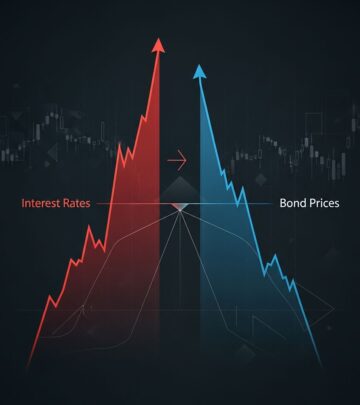
The relationship between bond prices and yields is inverse but non-linear. When interest rates rise, bond prices fall, and when interest rates decline, bond prices rise. However, the magnitude of these price changes is not uniform across different yield levels. Convexity explains why this curvature exists and how it affects bond valuation.
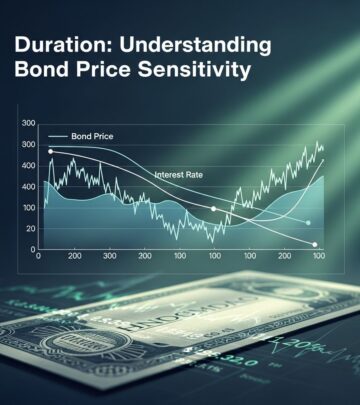
Duration measures only the first-order effect of interest rate changes on bond prices, treating the relationship as if it were linear. However, in reality, as interest rates move further from the current level, the curvature becomes increasingly important. A bond’s price function is curved rather than straight, meaning that duration becomes less accurate as yields move by larger increments. Convexity measures this curvature or second-order effect, providing investors with a more precise understanding of how bond prices will respond to significant interest rate movements.
Duration vs. Convexity: Key Differences
While duration and convexity are often discussed together, they serve different purposes in bond analysis:
Duration is the first derivative of the bond price function with respect to interest rates. It measures the linear relationship between bond prices and yield changes, indicating how many years it will take for a bond’s cash flows to repay the investor. Duration is expressed in years and serves as a linear approximation of interest rate sensitivity.
Convexity is the second derivative of the bond price function. It measures the curvature in the price-yield relationship, indicating how duration itself changes as yields change. Convexity is expressed as a number without units and captures the non-linear effects that duration misses.
Together, duration and convexity provide a complete picture of a bond’s interest rate sensitivity. Duration controls the first-order price sensitivity, while convexity controls the second-order term. For small interest rate changes, duration alone may provide sufficient accuracy. However, for larger yield movements, both measures are necessary to estimate bond price changes accurately.
The Mathematical Foundation of Convexity
Convexity is formally defined mathematically, allowing investors to calculate it precisely. If the flat, continuously compounded yield is represented as ( r ) and the bond price is represented as ( B(r) ), then convexity is defined as:
[ C(r) = frac{1}{B(r)} frac{d^2B(r)}{dr^2} ]
This mathematical definition shows that convexity measures how the slope of the price function changes as yields change. The second derivative captures this rate of change, while dividing by the bond price normalizes the result, making convexity comparable across different bonds.
For practical bond calculations, convexity can be approximated using effective convexity, which employs a centered finite difference approach:
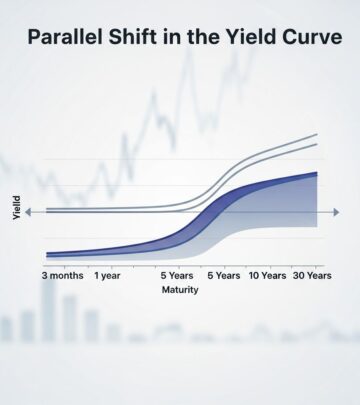
[ text{Effective convexity} = frac{V_{-Delta y} – 2V_0 + V_{+Delta y}}{V_0 (Delta y)^2} ]
In this formula, ( V ) represents the bond price at different yield levels, ( V_0 ) is the current price, and ( Delta y ) represents the size of the parallel yield curve shift. This approach allows analysts to calculate convexity without complex mathematical derivatives by simply observing how prices change at different yield levels.
Key Characteristics of Bond Convexity
Positive Convexity
For option-free bonds (bonds without embedded options), convexity is always positive. This means that bond prices curve upward relative to a straight line, creating a favorable asymmetry for bondholders. With positive convexity, bond price gains when yields fall exceed the price losses when yields rise by the same magnitude. This characteristic makes positive convexity extremely valuable in a portfolio.
Coupon Rate Effects
The coupon rate of a bond directly influences its convexity. In general, the higher the coupon rate, the lower the convexity of a bond. This occurs because higher coupon payments mean that market rates would have to increase significantly to surpass the coupon on the bond. Since there is less risk to the investor when receiving higher coupons, the bond experiences less price volatility, resulting in lower convexity.
Duration and Convexity Relationship
Bonds with longer durations typically exhibit higher convexity. Duration measures the weighted average time to receive cash flows, and bonds with longer durations have greater sensitivity to interest rate changes. These longer-duration bonds also tend to have more pronounced curvature in their price-yield relationships, resulting in higher convexity values.
Comparing Bonds Using Convexity
When comparing two bonds with similar characteristics, convexity becomes a differentiating factor. Consider Bond A and Bond B with the same par value, coupon rate, and maturity date. If Bond A has higher convexity than Bond B, then all else being equal, Bond A will always have a higher price than Bond B as interest rates rise or fall. This superior price performance comes from the favorable asymmetry created by positive convexity.
An investor choosing between these two bonds would typically prefer Bond A because it offers better price appreciation when yields decline and smaller price depreciation when yields increase. The additional convexity acts as a form of implicit optionality that benefits bondholders.
Convexity Comparison Table
| Characteristic | Higher Convexity Bond | Lower Convexity Bond |
|---|---|---|
| Price performance when rates fall | Greater price appreciation | Smaller price appreciation |
| Price performance when rates rise | Smaller price depreciation | Greater price depreciation |
| Coupon rate | Lower coupons | Higher coupons |
| Duration | Typically longer | Typically shorter |
| Market risk exposure | Greater systemic risk | Lower systemic risk |
Convexity in Portfolio Management
Risk Management Applications
Convexity serves as an essential tool in portfolio risk management. As convexity increases, the systemic risk to which the portfolio is exposed also increases. Conversely, as convexity decreases, the exposure to market interest rate changes decreases, and the bond portfolio can be considered more hedged against interest rate volatility.
Portfolio managers use convexity metrics to hedge portfolios against interest rate risk. A portfolio is first-order hedged when its dollar duration is close to zero versus a benchmark. However, adding a convexity match reduces second-order exposure for larger shifts in interest rates. This two-layer hedging approach provides protection against both small and large interest rate movements.
Duration and Convexity Hedging Strategy
Professional bond managers employ a dual-hedging strategy using both duration and convexity. First, they match the duration of the portfolio to the benchmark or liability profile to neutralize first-order interest rate sensitivity. Then, they adjust convexity positions to manage second-order effects. This approach ensures that the portfolio performs well across a range of yield scenarios, not just in the base case.
Bonds with Embedded Options
Effective Convexity
Many bonds include embedded options, such as call or put features, which complicate convexity analysis. For bonds with embedded options, the relationship between price and yield is affected by the option’s value. As the yield curve moves and alters expected cash flows through option exercise, the bond’s price-yield relationship changes in ways that traditional duration and convexity models cannot capture.
To address this challenge, analysts use effective convexity, which is obtained numerically rather than through standard yield-to-maturity-based formulas. Effective convexity considers how the embedded option’s value changes at different yield levels, providing a more accurate measure of the bond’s true interest rate sensitivity.
Negative Convexity
Callable bonds often exhibit negative convexity over certain yield ranges. When yields fall, the call option becomes more valuable to the issuer, potentially capping the bond’s price appreciation. This creates unfavorable asymmetry for bondholders: they receive limited price gains when yields fall but still experience significant losses when yields rise. Understanding and avoiding negative convexity exposure is crucial for portfolio managers.
Practical Applications of Convexity Analysis
Bond Selection
Investors can use convexity analysis to make more informed bond selection decisions. When comparing bonds with similar yields, favoring those with higher convexity can enhance returns over time. This is particularly important in volatile interest rate environments where larger yield movements are more likely.
Relative Value Assessment
Convexity helps investors assess the relative value of different bonds. A bond with slightly lower yield but significantly higher convexity may offer better risk-adjusted returns than a higher-yielding bond with lower convexity. This analysis goes beyond simple yield comparisons to capture the full picture of a bond’s expected performance.
Scenario Analysis
Portfolio managers use convexity in scenario analysis to stress-test portfolios under different interest rate environments. By calculating how portfolios will perform under scenarios involving large yield movements in both directions, managers can better understand portfolio resilience and make adjustments accordingly.
Factors Influencing Bond Convexity
Several factors affect a bond’s convexity:
Maturity: Longer-maturity bonds generally have higher convexity than shorter-maturity bonds.
Coupon Rate: Lower-coupon bonds have higher convexity than higher-coupon bonds.
Yield Level: Bonds trading at discount have higher convexity than bonds trading at premium.
Embedded Options: Call options reduce convexity, while put options increase it.
Credit Risk: As credit spreads widen, convexity can become distorted for corporate bonds.
Frequently Asked Questions About Bond Convexity
Q: Why is positive convexity beneficial for bondholders?
A: Positive convexity creates favorable asymmetry in price performance. When yields fall, bond prices rise more than the linear duration model predicts. When yields rise, prices fall less than predicted. This asymmetry consistently benefits bondholders.
Q: How does convexity differ from duration?
A: Duration measures the linear, first-order relationship between bond prices and yields. Convexity measures the curvature or second-order relationship. Together, they provide a complete picture of interest rate sensitivity.
Q: Can a bond have negative convexity?
A: Yes, callable bonds can exhibit negative convexity when yields fall significantly, as the embedded call option limits price appreciation. This creates unfavorable asymmetry for bondholders.
Q: How should investors use convexity in portfolio construction?
A: Investors should favor bonds with higher convexity when yields are similar, as this enhances long-term returns. Portfolio managers should also match convexity with liabilities or benchmarks to manage second-order interest rate risk effectively.
Q: What is the relationship between coupon rates and convexity?
A: Higher-coupon bonds have lower convexity because their higher cash flows reduce the percentage price volatility. Lower-coupon bonds have higher convexity and greater price sensitivity to interest rate changes.
Q: How is effective convexity calculated for bonds with embedded options?
A: Effective convexity uses a numerical approximation comparing bond prices at different yield levels: (Price when yields fall minus twice the current price plus price when yields rise) divided by the current price times the squared yield change.
Q: Why do longer-duration bonds typically have higher convexity?
A: Longer-duration bonds have more weighted average time to maturity, resulting in greater price volatility and more pronounced curvature in the price-yield relationship, both characteristics of higher convexity.
References
- Bond Convexity — Wikipedia. Accessed 2025. https://en.wikipedia.org/wiki/Bond_convexity
- Investopedia Explains ‘Convexity’ — The Financial Engineer. 2015-01-18. https://thefinancialengineer.org/2015/01/18/investopedia-explains-convexity/
Similar Articles








Read full bio of Sneha Tete