Bollinger Bands: Technical Analysis Tool for Trading
Master Bollinger Bands: Essential technical indicator for identifying volatility, trends, and trading opportunities.

Understanding Bollinger Bands: A Complete Guide to Technical Analysis
Bollinger Bands represent one of the most widely used technical analysis tools in the financial markets. Developed by John Bollinger in the 1980s, this indicator combines price movement data with volatility measurements to help traders identify potential buy and sell signals. Whether you’re trading stocks, futures, commodities, or currencies, Bollinger Bands provide valuable insights into market behavior and price dynamics across all time frames.
The beauty of Bollinger Bands lies in their versatility and visual clarity. Unlike indicators that focus solely on trend or volatility alone, Bollinger Bands integrate both elements into a single, easy-to-interpret visual representation on price charts. This comprehensive approach makes them particularly valuable for traders seeking to understand not just where prices are heading, but also how stable or volatile that movement might be.
What Are Bollinger Bands?
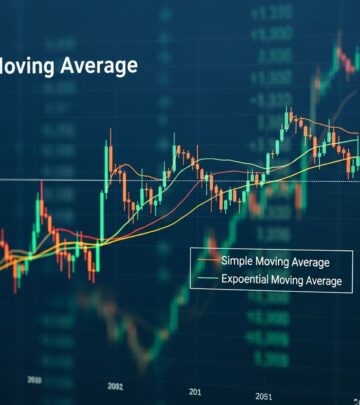
Bollinger Bands consist of three lines plotted on a price chart: a middle band, an upper band, and a lower band. The middle band represents a simple moving average (SMA) of the asset’s price over a specific period, typically 20 days. The upper and lower bands are positioned at distances calculated using standard deviations from this moving average.
These bands serve as dynamic support and resistance levels that expand and contract based on market volatility. When markets become more volatile, the bands widen, creating more space between the upper and lower boundaries. Conversely, during periods of low volatility, the bands contract, bringing them closer together. This dynamic nature makes Bollinger Bands particularly effective for recognizing changes in market conditions.
The Mechanics of Bollinger Bands: How They Work
To fully appreciate Bollinger Bands, it’s essential to understand their three fundamental components and how they interact to create this powerful technical indicator.
Simple Moving Average (SMA)
The simple moving average forms the foundation of Bollinger Bands. Calculated by summing a specific number of closing prices and dividing by the period length, the SMA provides the centerline around which the bands fluctuate. For example, a 20-day SMA adds together the closing prices from the past 20 trading days and divides the total by 20. This average serves as a baseline trend indicator, smoothing out short-term price fluctuations to reveal the underlying price trend.
Standard Deviation
Standard deviation measures how dispersed prices are from the average, quantifying the volatility of price movements. When prices deviate significantly from the moving average, the standard deviation increases, indicating higher volatility. Conversely, when prices cluster closely around the moving average, the standard deviation decreases, suggesting lower volatility. The standard deviation is typically calculated using the same period as the SMA, maintaining consistency in the analysis.
Upper and Lower Bands
The upper and lower bands are created by adding and subtracting standard deviations (usually two) from the simple moving average. This creates an envelope around the price series that expands during volatile periods and contracts during calm market conditions. The standard practice uses two standard deviations, which statistically encompasses approximately 95% of price action within the bands.
The Bollinger Bands Formula
Understanding the mathematical foundation helps traders apply the indicator more effectively. Here’s the standard formula for calculating Bollinger Bands with a 20-day simple moving average:
- Upper Band: 20-day SMA + (20-day Standard Deviation × 2)
- Middle Band: 20-day SMA
- Lower Band: 20-day SMA − (20-day Standard Deviation × 2)
While the 20-day period is standard, traders can adjust this parameter based on their trading timeframe and preferences. Shorter periods create more sensitive bands that react quickly to price changes, while longer periods produce smoother, less reactive bands suitable for identifying longer-term trends.
Bollinger Bands Versus Other Technical Indicators
While numerous technical indicators exist in traders’ toolkits, Bollinger Bands occupy a unique position due to their dual functionality.
| Indicator Type | Examples | Primary Function |
|---|---|---|
| Volatility-Only Indicators | Average True Range (ATR), CBOE Volatility Index (VIX) | Measure price volatility levels |
| Trend-Only Indicators | Moving Averages, Parabolic SAR, ADX | Identify directional price trends |
| Dual-Function Indicators | Bollinger Bands | Combine trend analysis with volatility measurement |
Bollinger Bands’ unique advantage is their combination of both trend identification through the moving average and volatility measurement through standard deviations. This dual nature allows traders to simultaneously understand where prices are heading and how volatile those movements might be. The visual clarity of Bollinger Bands makes these dynamic changes easy to spot on charts, particularly at extreme price levels.
Using Bollinger Bands in Trading Strategies
Mean Reversion Strategy
One of the most popular applications of Bollinger Bands is based on mean reversion, the concept that asset prices tend to return to their average over time. When price trades near the upper band, it suggests the asset is overbought and may be due for a price correction downward. Conversely, when price approaches the lower band, it indicates the asset is oversold and may be ready for a rebound upward.
This principle provides a foundation for range-bound trading strategies, where traders go long (buy) when price touches the lower band and initiate short positions (sell) when price touches the upper band. However, this approach requires careful consideration of market conditions.
Trading in Range-Bound Markets
Range-bound markets, where prices oscillate between defined support and resistance levels, provide ideal conditions for Bollinger Bands strategies. In these sideways-moving markets, the mean reversion principle works effectively, as prices repeatedly bounce between the upper and lower bands without establishing a strong directional trend.
Adapting to Trending Markets
While effective in range-bound conditions, Bollinger Bands require adaptation when markets enter strong trending phases. During uptrends or downtrends, prices can ”walk” along the upper or lower bands for extended periods without reverting to the mean. In these scenarios, traditional mean reversion signals may generate false signals.
Successful traders adapt their Bollinger Bands strategy by identifying the trend direction first. In uptrends, they buy when price touches the lower (rising) band but avoid shorting at the upper band. Instead, they look for opportunities to add to long positions on subsequent touches of the rising lower band. The opposite approach applies to downtrends.
Key Advantages of Bollinger Bands
- Visual Clarity: Easy to spot extreme price levels and volatility changes on charts
- Versatility: Applicable to stocks, futures, commodities, currencies, and cryptocurrencies
- Time-Frame Agnostic: Works effectively across all chart timeframes, from minutes to years
- Dual Function: Combines trend identification with volatility measurement in one indicator
- Customizable: Parameters can be adjusted to suit different trading styles and timeframes
- Risk Management: Helps identify support and resistance levels for stop-loss placement
Practical Applications and Considerations
Traders should note that Bollinger Bands work best when combined with other technical analysis tools and indicators. Analyzing band width—the distance between the upper and lower bands—provides insights into volatility expansion and contraction. Where price is positioned relative to the bands indicates overbought or oversold conditions. Combining these observations with volume analysis, momentum indicators, or other confirming signals enhances the reliability of trading decisions.
Professional traders often use Bollinger Bands as part of a comprehensive technical analysis framework rather than relying on them exclusively. The indicator’s strength lies in its ability to provide context about market conditions and price extremes, making it particularly valuable for identifying potential reversal points and establishing appropriate entry and exit levels.
Frequently Asked Questions
Q: What time period should I use for Bollinger Bands?
A: The standard 20-day period works well for most traders, but adjustments depend on your trading timeframe. Shorter periods create more sensitive bands for day traders, while longer periods suit swing or position traders better.
Q: Can Bollinger Bands be used for all types of securities?
A: Yes, Bollinger Bands are time-frame agnostic and can be applied to stocks, futures, commodities, currencies, and cryptocurrencies across all chart timeframes.
Q: What does it mean when Bollinger Bands squeeze?
A: A ”squeeze” occurs when the bands contract due to low volatility. This often precedes a significant price move and is watched closely by traders as a potential signal for increased volatility ahead.
Q: How do I distinguish between range-bound and trending markets using Bollinger Bands?
A: In range-bound markets, price bounces between bands multiple times. In trending markets, price walks along one band for extended periods. Recognizing these patterns helps determine which trading strategy to apply.
Q: Should I trade Bollinger Bands signals alone without confirmation?
A: No, it’s recommended to use Bollinger Bands alongside other technical indicators for confirmation. This approach reduces false signals and improves the probability of successful trades.
References
- Bollinger Bands Explained: Formula & Trading Strategies — Britannica. 2024. https://www.britannica.com/money/bollinger-bands-indicator
Similar Articles








Read full bio of Sneha Tete